Ever wondered how many songs a DJ plays in an hour? It's a crucial question for anyone planning a party, wedding, or any event that needs the perfect soundtrack. Getting the pacing right can make or break the atmosphere. Too few songs, and the energy dips. Too many, and it feels rushed. As an event organizer or aspiring DJ, understanding the ideal songs per hour is key to keeping the dance floor packed and the vibes high. Let's dive into the ultimate guide to mastering this essential DJ secret, covering everything from average tempos to creating seamless transitions, ensuring your music selection is perfectly timed for an unforgettable event in 2026!
🎯 Key Takeaways
- The average DJ plays 15-20 songs per hour, depending on the genre and tempo.
- Seamless transitions are crucial for maintaining energy and flow throughout the event.
- Understanding your audience's preferences is key to selecting the right music and pacing.
- Factors like genre, set length, and desired energy level significantly impact the ideal songs per hour.
- Tools like PartyMusicPlaylist can help you plan and organize your music selections efficiently.
Why Does "Songs Per Hour" Matter for Your Event?
At first glance, the number of songs per hour might seem like a minor detail. However, it's a foundational element that influences the entire flow and feel of your event. Think of it as the heartbeat of your party — too fast, and it's frantic; too slow, and it's lifeless.
Here’s why it's so important:
- Energy Management: The right number of songs ensures a consistent energy level. You don’t want to burn out your guests too early or leave them waiting for the party to start.
- Seamless Transitions: A well-planned songs-per-hour rate allows for smooth transitions between tracks, keeping the music flowing and engaging.
- Audience Engagement: Knowing your audience's preferences and tailoring the music accordingly keeps them on the dance floor and enjoying themselves.
- Event Timeline: Matching the music to the different stages of your event (e.g., dinner, dancing, winding down) ensures the music complements the activities.
Imagine a wedding reception. During dinner, you might want a slower, more relaxed pace of around 12-15 songs per hour with artists like John Legend or Norah Jones. As the night progresses into dancing, you’ll likely increase the tempo and the number of songs to 18-22 per hour, featuring upbeat tracks from Bruno Mars and Lizzo.
Ignoring this crucial metric can lead to a disjointed experience, potentially leaving your guests feeling bored, overwhelmed, or simply disconnected from the music.
Calculating the Average Songs Per Hour: The Basics
So, what's the magic number? While there's no one-size-fits-all answer, the average DJ typically plays between 15 and 20 songs per hour. This range provides a solid foundation, but it's essential to understand the factors that can shift this number up or down.
Here's a breakdown of the core elements influencing your calculation:
- Average Song Length: Most pop songs range from 3 to 5 minutes. Calculate the average length of the songs in your playlist.
- Transition Time: Factor in the time it takes to mix or transition between tracks. A smooth transition might take 5-15 seconds.
- Genre: Different genres have different average tempos. Electronic dance music (EDM) might allow for more songs per hour than slower genres like R&B or country.
- Set Length: A shorter set might require a higher songs-per-hour rate to pack in the energy, while a longer set can afford a more relaxed pace.
For a quick example, let’s say you're planning a set with songs averaging 3.5 minutes in length and transitions taking about 10 seconds each. Here’s how you might calculate it:
- Convert everything to seconds: 3.5 minutes * 60 seconds/minute = 210 seconds
- Add transition time: 210 seconds + 10 seconds = 220 seconds per song
- Divide total seconds in an hour by time per song: 3600 seconds/hour / 220 seconds/song = ~16.4 songs
In this scenario, you’d aim for approximately 16 songs per hour. Remember, it's just a starting point. Adjust based on the specific needs of your event and the preferences of your audience. Don’t be afraid to experiment and fine-tune as you go!
Genre Matters: Adjusting Your Song Selection
The genre of music you choose significantly impacts the ideal songs per hour. Different genres have varying tempos and structures, influencing how quickly you can move from one track to the next.
Here's a glimpse at how different genres might affect your playlist:
- Pop: Typically falls in the 16-20 songs per hour range. Artists like Taylor Swift and Harry Styles have songs that are easy to mix and keep the energy high.
- Hip-Hop/R&B: Often slower, around 14-18 songs per hour. Focus on smooth transitions and building a vibe with artists like Drake and SZA.
- Electronic Dance Music (EDM): Can go as high as 20-25 songs per hour, especially with seamless mixing techniques. Think of artists like David Guetta and Calvin Harris.
- Country: Generally slower, aiming for 12-16 songs per hour. Focus on storytelling and creating a relaxed atmosphere with artists like Chris Stapleton and Kacey Musgraves.
- Rock: Varies widely, but generally around 15-19 songs per hour. Consider the energy level of the specific songs and the transitions between them.
Consider the event's overall theme and the audience's preferences when selecting your genres. A high-energy dance party will naturally require a faster pace than a relaxed cocktail hour.
💡 Pro Tip: Don't be afraid to blend genres, but ensure the transitions are seamless. Mixing pop and hip-hop can create a dynamic and engaging experience, but clunky transitions can kill the vibe.
Crafting Seamless Transitions: The DJ's Secret Weapon
Seamless transitions are the glue that holds your music selection together. They ensure a smooth, uninterrupted flow, keeping the energy high and preventing awkward silences. Mastering transitions is a crucial skill for any DJ, and it directly affects how many songs per hour you can effectively play.
Here are a few techniques to consider:
- Beatmatching: Align the tempos of two songs to create a smooth transition. This is a fundamental technique for most genres.
- Harmonic Mixing: Select songs in compatible keys to create a more pleasing and natural blend.
- EQing: Use EQ controls to blend the frequencies of two songs, preventing muddiness and creating a cleaner sound.
- Using Loops and Effects: Create interesting transitions by looping sections of a song or using effects like reverb or delay.
- Quick Cuts: For high-energy sets, consider quick cuts or chops between tracks for a more abrupt and dynamic transition.
Effective transitions allow you to maintain a higher songs per hour rate without sacrificing the overall listening experience. They keep the music flowing and prevent the energy from dipping, ensuring your guests stay engaged and on the dance floor. Practice these techniques regularly to refine your skills and create your unique DJ style.
⚠️ Heads Up: Avoid abrupt or jarring transitions. These can disrupt the flow of the music and kill the energy of the party. Take the time to learn and master smooth transition techniques.
Step-by-Step: Planning Your Playlist for the Perfect Pace
Creating a perfectly paced playlist requires careful planning and attention to detail. Here's a step-by-step guide to help you curate a music selection that flows seamlessly and keeps the energy consistent throughout your event.
- Define Your Event's Vibe: What's the overall mood you're aiming for? Is it a high-energy dance party, a relaxed cocktail hour, or a romantic wedding reception?
- Know Your Audience: Consider the age range, musical preferences, and cultural background of your guests. Tailor your music selection to their tastes.
- Outline the Event Timeline: Break down the event into different segments (e.g., cocktail hour, dinner, dancing) and plan the music accordingly.
- Select Your Songs: Choose tracks that fit the vibe, audience, and timeline. Aim for a diverse selection that keeps things interesting.
- Calculate Average Song Length: Determine the average length of your chosen songs to estimate the initial songs per hour.
- Factor in Transition Times: Add in the time it takes to transition between tracks, considering the techniques you'll be using.
- Adjust for Genre: Modify the songs per hour based on the specific genres you've selected (as discussed above).
- Test Your Playlist: Play through your playlist from start to finish to identify any awkward transitions or pacing issues.
- Refine and Finalize: Make any necessary adjustments to ensure a smooth, engaging, and perfectly paced musical experience.
By following these steps, you can create a playlist that perfectly complements your event and keeps your guests entertained from start to finish. Consider using music playlist creation tools like PartyMusicPlaylist to streamline the planning process and export your selection to your DJ software of choice.
Song Ideas for Different Moments: Curate the Perfect Mood
Music sets the tone for every moment of your event. Here are some song suggestions tailored to different scenarios, helping you curate the perfect mood and keep the energy flowing.
Cocktail Hour: Relaxed and Mellow
Aim for 12-15 songs per hour with a focus on smooth, easy-listening tracks.
- "Come Away With Me" by Norah Jones — Timeless classic for a relaxed atmosphere
- "Thinking Out Loud" by Ed Sheeran — Romantic and mellow vibes
- "Sunday Morning" by Maroon 5 — Upbeat yet chill
- "Better Together" by Jack Johnson — Perfect for easy listening
- "A Sky Full of Stars" (Acoustic) by Coldplay — Beautiful and understated
Dinner: Background Music that Enhances the Ambiance
Maintain a similar pace as cocktail hour, focusing on instrumental or low-key vocal tracks.
- "Clair de Lune" by Claude Debussy — Elegant and sophisticated instrumental
- "Watermark" by Enya — Ethereal and calming
- "Kissing You" (Instrumental) by Craig Armstrong — Romantic and cinematic
- "The Scientist" (Piano Version) by Coldplay — Beautiful and melancholic
- "Canon in D" by Johann Pachelbel — Classic and timeless
Dance Floor: High-Energy Anthems
Increase the pace to 18-22 songs per hour with upbeat and danceable tracks.
Can't-Miss Dance Floor Tracks
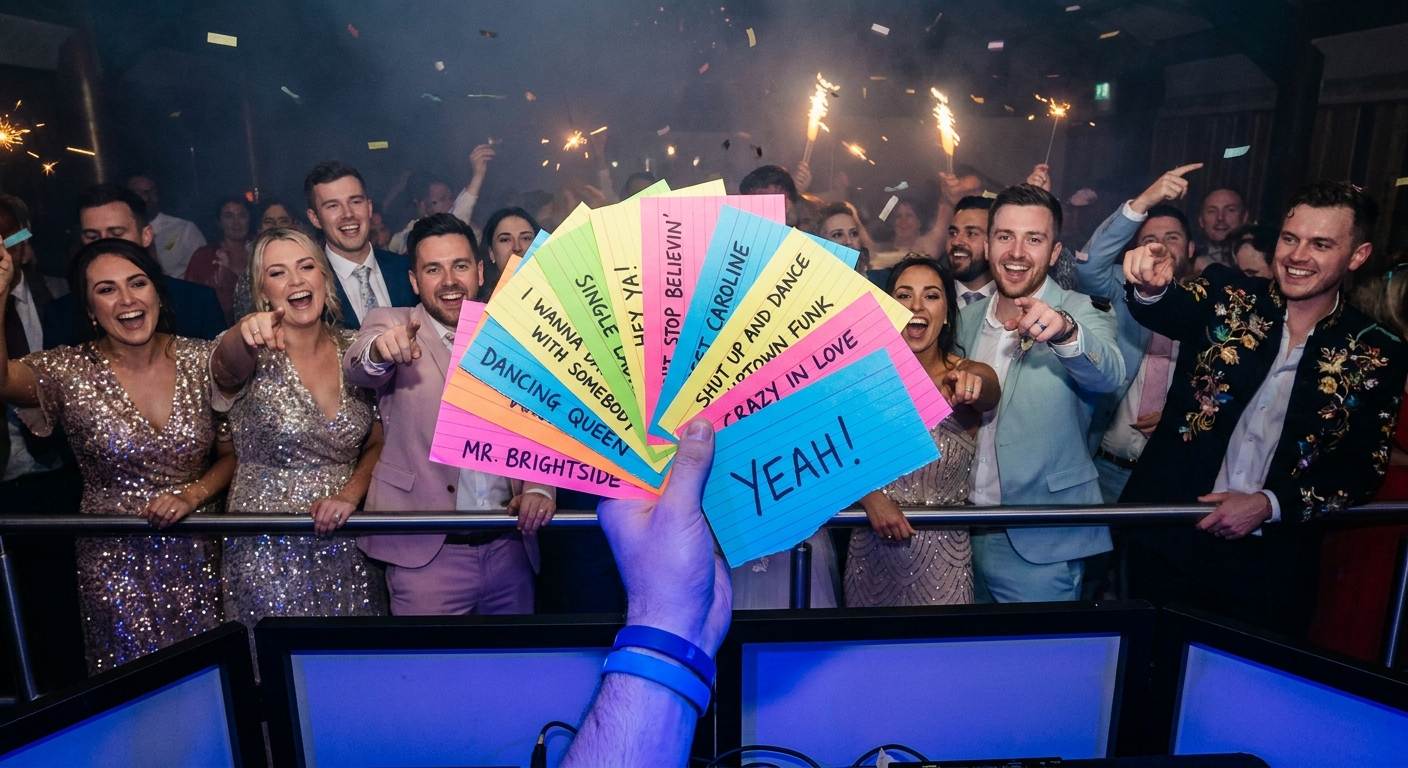
- "Uptown Funk" by Mark Ronson ft. Bruno Mars — Absolute party essential
- "September" by Earth, Wind & Fire — Timeless classic that gets everyone moving
- "Don't Start Now" by Dua Lipa — Modern disco anthem
- "I Wanna Dance with Somebody (Who Loves Me)" by Whitney Houston — Irresistible energy
- "Dancing Queen" by ABBA — Guaranteed crowd-pleaser
- "Get Lucky" by Daft Punk ft. Pharrell Williams — Funky and infectious
- "Yeah!" by Usher ft. Lil Jon & Ludacris — High-energy hip-hop anthem
- "Mr. Brightside" by The Killers — Indie rock singalong
- "Levitating" by Dua Lipa — Modern pop perfection
Wind-Down: Relaxing and Sentimental
Reduce the pace to 12-16 songs per hour with slower, more emotional tracks.
- "Hallelujah" by Leonard Cohen — Beautiful and moving
- "What a Wonderful World" by Louis Armstrong — Classic and heartwarming
- "Landslide" by Fleetwood Mac — Nostalgic and sentimental
- "Perfect" by Ed Sheeran — Romantic and heartfelt
- "Fast Car" by Tracy Chapman — Powerful and emotional
💡 Pro Tip: Don't be afraid to experiment and mix genres, but always prioritize smooth transitions and maintaining the overall vibe of each moment. Use PartyMusicPlaylist to organize these different phases in your event.
Tips for Keeping the Dance Floor Packed
Keeping the dance floor packed is the ultimate goal for any event. Here are some tips to help you achieve that, keeping in mind how songs per hour plays a crucial role.
- Read the Crowd: Pay attention to your audience's reactions and adjust your music accordingly. If a song isn't working, don't be afraid to switch it up.
- Take Requests: Incorporate guest requests into your set to keep them engaged and feeling involved.
- Build the Energy: Start with moderate-energy tracks and gradually increase the tempo and intensity as the night progresses.
- Mix It Up: Don't stick to one genre for too long. Vary your music selection to cater to different tastes and keep things interesting.
- Use Breaks Strategically: Don't play non-stop for hours. Incorporate short breaks to allow people to rest and refresh.
- End on a High Note: Finish your set with a high-energy anthem that leaves everyone wanting more.
Remember, the ideal songs per hour is just a guideline. The most important thing is to create a musical experience that resonates with your audience and keeps them dancing all night long.
Common Mistakes to Avoid When Planning Your Music
Planning the music for an event can be challenging, and it's easy to make mistakes that can negatively impact the overall experience. Here are some common pitfalls to avoid.
- Ignoring Your Audience: Failing to consider your guests' preferences is a recipe for disaster.
- Playing the Same Songs: Repetition can lead to boredom and disengagement.
- Poor Sound Quality: Invest in good-quality equipment to ensure your music sounds its best.
- Awkward Silences: Ensure smooth transitions to avoid disrupting the flow of the music.
- Ignoring Volume Levels: Adjust the volume to suit the environment and the activity.
- Not Testing Your Equipment: Always test your equipment before the event to avoid technical issues.
⚠️ Heads Up: One of the biggest mistakes is failing to adapt to the crowd. Pre-planned playlists are a great starting point, but be ready to deviate based on the energy and reactions of your audience. This is where a DJ's skill truly shines.
Expert Tips for Creating a Memorable Music Experience
Want to take your event's music from good to unforgettable? Here are some expert tips to help you craft a truly memorable experience.
Consider hiring a professional DJ for important events like weddings or corporate parties. They have the experience and expertise to read the crowd, create seamless transitions, and keep the dance floor packed all night long. Alternatively, you can find local DJ contacts through a tool like PartyMusicPlaylist.
- Create a Theme: Develop a musical theme that ties into the overall event, whether it's a specific genre, decade, or artist.
- Use Lighting and Visuals: Enhance the music with complementary lighting and visuals to create a more immersive experience.
- Personalize Your Playlist: Incorporate songs that are meaningful to the hosts or guests of honor.
- Tell a Story: Craft a playlist that tells a story, building from beginning to end.
- Don't Be Afraid to Experiment: Take risks and try new things to keep your music fresh and exciting.
Frequently Asked Questions
PartyMusicPlaylist Team
Helping you create the perfect soundtrack for life's most memorable moments. Expert tips on event music planning, DJ coordination, and playlist curation.
Learn MoreReady to Plan Your Event Music?
Create the perfect playlist for your special event. Search songs, organize your timeline, and share with your DJ.
Get Started FreeRelated Articles
Continue reading