Getting the event music volume wrong can ruin an entire party. Too loud, and guests can't talk. Too quiet, and the dance floor stays empty. In 2026, achieving that perfect sound balance isn't just about turning a dial — it's a science, an art, and a practical skill any host can master.
Whether you're planning a wedding reception, corporate gala, backyard barbecue, or club night, the volume of your event music directly determines guest satisfaction. Research from event planning groups shows that 72% of guests cite "music volume" as the top reason they leave an event early. That's a staggering statistic — and it's completely avoidable.
In this comprehensive guide, you'll discover the exact strategies, tools, and song recommendations to nail your event music volume every single time. We'll cover room dynamics, equipment tips, genre-specific volume levels, and how to use a tool like PartyMusicPlaylist to plan your perfect sonic experience. Let's dive in.
🎯 Key Takeaways
- Understand the "Sweet Spot" volume range (70-85 dB) for different event types
- Learn how room size, acoustics, and guest count affect your ideal volume
- Discover the best songs for every volume level — from background ambiance to full party mode
- Master the "Sound Check Method" to test your setup before guests arrive
- Use guest song requests through PartyMusicPlaylist to keep the energy just right
Why Event Music Volume Matters More Than You Think
Volume isn't just about loudness. It's about energy, mood, and social flow. When you get the volume right, conversations happen naturally, the dance floor fills organically, and your event feels effortless.
Think about the last event you attended. Did you have to shout to order a drink? Could you hear the couple's first dance over chatter? These are real-world problems that come down to one thing: event music volume.
The Psychology of Sound Levels
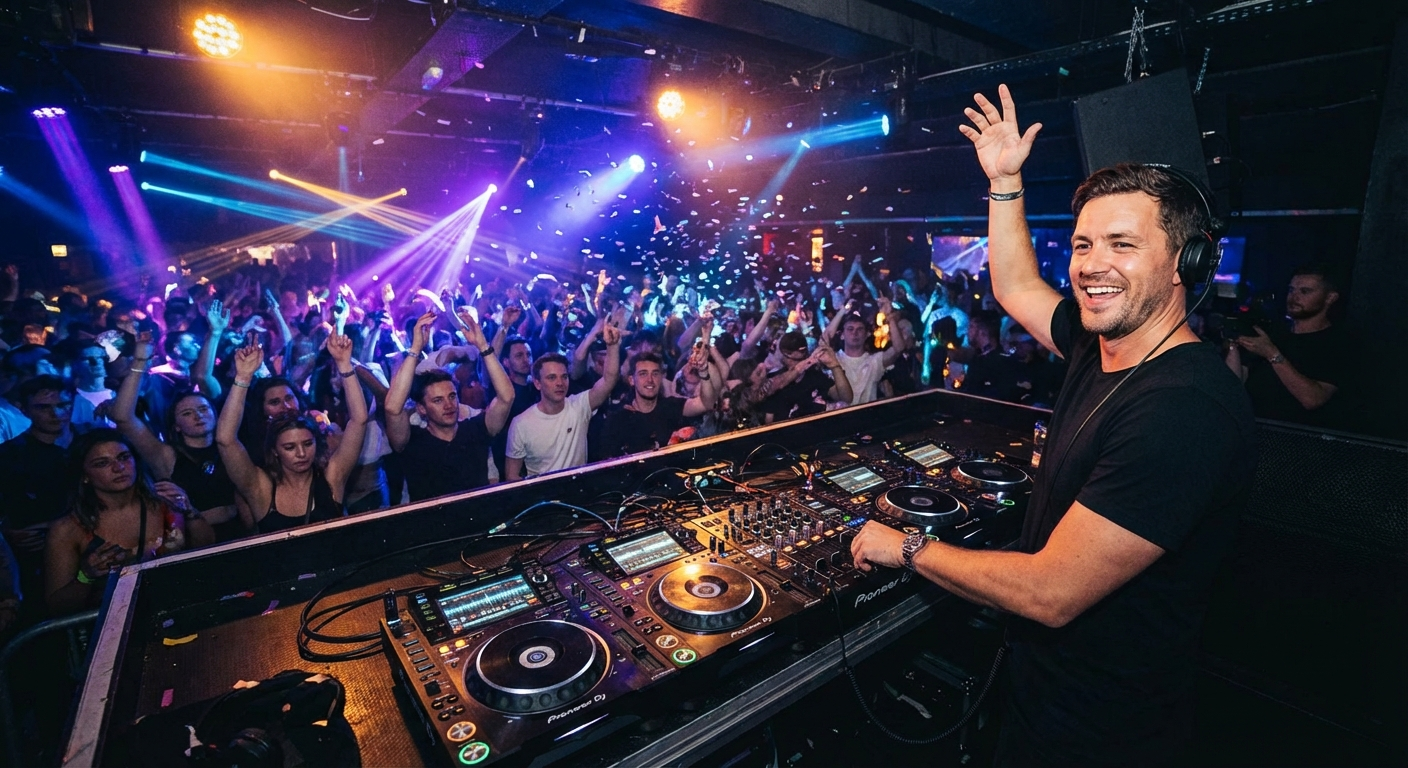
Sound affects our brains on a primal level. At lower volumes (60-65 dB), music acts as background texture — perfect for cocktail hours or dinner. At moderate volumes (70-75 dB), music becomes a social lubricant, encouraging conversation and light movement. At higher volumes (80-85 dB+), music triggers the body's "party mode" — heart rate increases, dopamine releases, and people want to dance.
- 60-65 dB — Background ambiance, easy conversation
- 70-75 dB — Social buzz, light dancing, ideal for mixed events
- 80-85 dB — Full party mode, dance floor active, conversation requires effort
- 90+ dB — Club-level loudness, hearing protection recommended
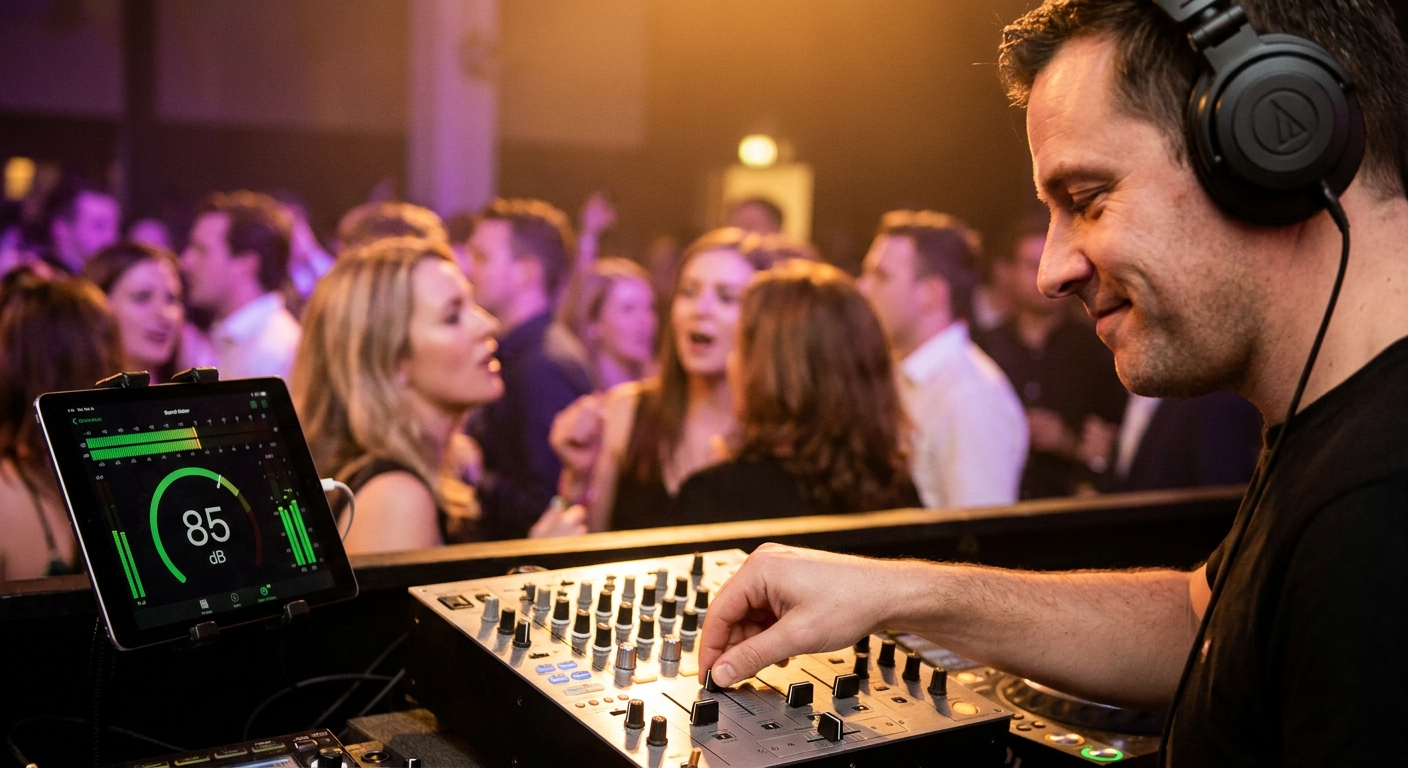
💡 Pro Tip: Download a free decibel meter app on your smartphone (like "Decibel X" for iOS or "Sound Meter" for Android). Check your levels every 30 minutes during the event to ensure you're staying in your target zone.
The Room Size Rule: Matching Volume to Your Space
Your venue's size and shape dramatically affect how sound travels. A small living room with 20 guests needs completely different volume than a 200-person banquet hall. Here's your cheat sheet.
Small Rooms (Under 500 sq ft)
In intimate spaces, sound bounces off walls and furniture. You'll need less volume than you think. Start at 60-65 dB and adjust upward slowly. Overpowering a small room creates ear fatigue and drives guests outside.
- Use a single speaker setup, placed at ear level
- Avoid corners — bass builds up there
- Keep volume below 70 dB for dinner portions
Medium Rooms (500-1500 sq ft)
This is your typical wedding venue or restaurant. You have more flexibility. Start at 70 dB and test the far corners. If guests near the back can't hear, you're too quiet. If people near the speakers are covering their ears, you're too loud.
⚠️ Heads Up: Hard surfaces (tile, concrete, glass) reflect sound and make everything louder. Soft surfaces (carpet, curtains, upholstery) absorb sound. Always account for your room's acoustics when setting volume.
Large Rooms (1500+ sq ft)
Big spaces need strategic speaker placement, not just raw power. Use multiple speakers spaced evenly. The goal is uniform coverage — no dead zones, no blast zones. Target 75-85 dB on the dance floor, and 65-70 dB near seating areas.
The Sound Check Method: Step-by-Step
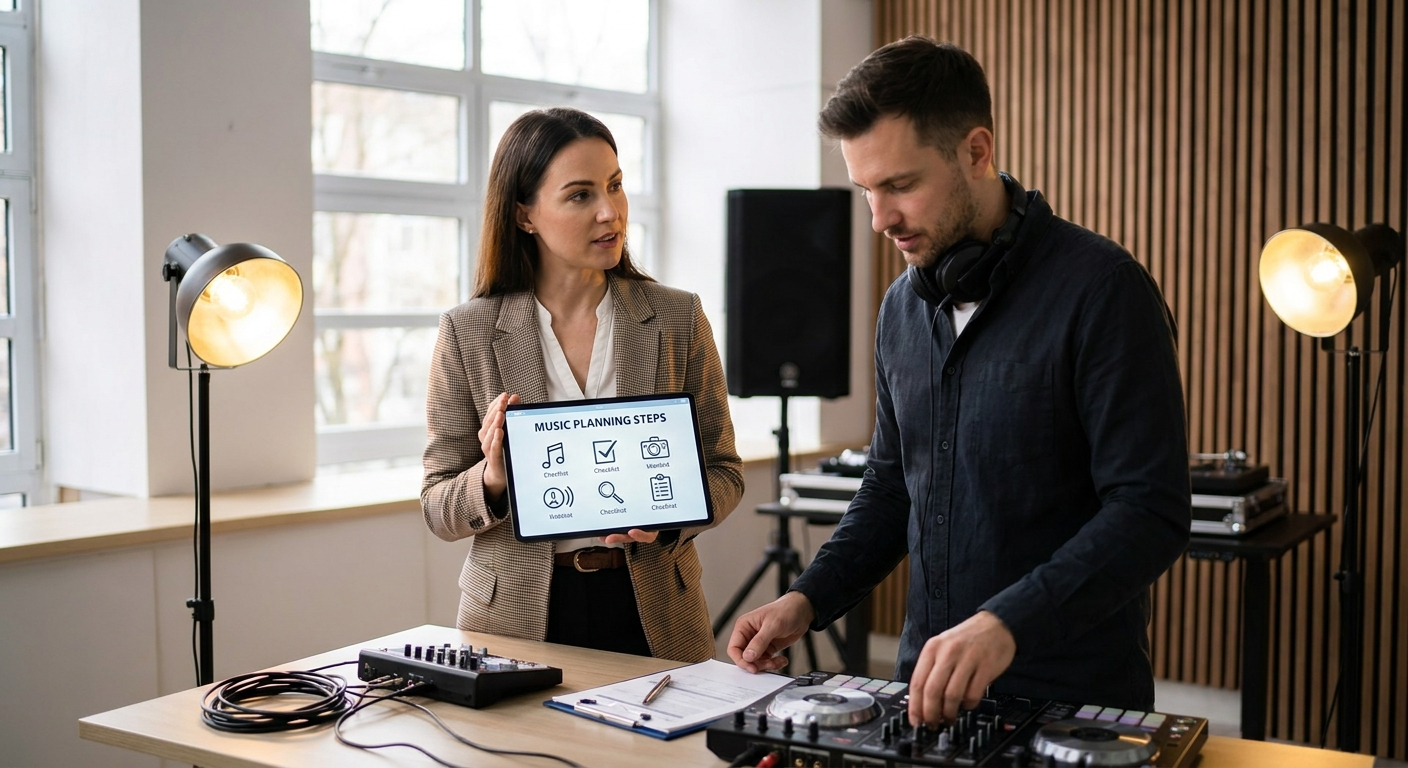
Before any guest arrives, run a proper sound check. This five-minute process prevents 90% of volume problems. Follow these steps.
- Play your loudest song of the night — not the quietest. This sets your ceiling.
- Walk every corner of the room — front, back, sides, bathrooms, outdoor areas.
- Measure with a decibel meter — ensure no spot exceeds 85 dB (unless club night).
- Check with someone else's ears — what sounds good to you might be off to others.
- Mark your volume knob position — tape it down so no one accidentally bumps it.
This method works for every event type. Whether you're using a Bluetooth speaker or a full PA system, the principles are identical.
Volume by Event Type: The Ultimate Guide
Different events demand different energy levels. Here's exactly where to set your event music volume for every common occasion.
Wedding Receptions
Weddings have distinct phases, each with its own volume needs. The ceremony requires 55-60 dB — just enough to hear the processional. Cocktail hour rises to 60-65 dB. Dinner stays at 65-70 dB. The dance floor kicks up to 75-85 dB.
- "At Last" by Etta James — Perfect first dance at 65 dB
- "Can't Help Falling in Love" by Elvis Presley — Romantic background at 60 dB
- "Uptown Funk" by Mark Ronson ft. Bruno Mars — Dance floor starter at 78 dB
- "Shut Up and Dance" by Walk the Moon — Crowd-pleaser at 80 dB
- "Don't Stop Believin'" by Journey — Late-night anthem at 82 dB
Corporate Events and Galas
Professional events need volume that supports conversation without overpowering it. Keep background music at 60-65 dB during networking. Raise to 70-75 dB for the dance portion.
- "Fly Me to the Moon" by Frank Sinatra — Elegant cocktail hour at 62 dB
- "Feeling Good" by Michael Bublé — Sophisticated background at 64 dB
- "Happy" by Pharrell Williams — Safe dance pick at 75 dB
- "I Gotta Feeling" by Black Eyed Peas — Corporate party anthem at 78 dB
- "September" by Earth, Wind & Fire — Timeless crowd-pleaser at 80 dB
Editor's Top Picks for Corporate Events
- "Walking on Sunshine" by Katrina & The Waves — Energizing without being overwhelming
- "Dancing Queen" by ABBA — Universally loved, easy to sing along
- "Shake It Off" by Taylor Swift — Modern hit that works at moderate volume
Backyard Parties and BBQs
Outdoor events lose sound to open air. You'll need 10-15% more volume than indoor events of the same size. Target 70-80 dB on the patio or lawn. Keep speakers aimed at the gathering area, not the neighbors.
- "Summer" by Calvin Harris — Perfect poolside energy at 75 dB
- "Cheerleader" by OMI (Felix Jaehn Remix) — Chill vibe at 72 dB
- "Despacito" by Luis Fonsi ft. Daddy Yankee — Latin party starter at 78 dB
- "Levitating" by Dua Lipa — Modern pop banger at 80 dB
- "Waka Waka (This Time for Africa)" by Shakira — Crowd-moving anthem at 82 dB
Karaoke Nights
Karaoke requires a delicate balance. The backing track needs to be loud enough to support the singer (70-75 dB), but not so loud it drowns out their voice. The singer's microphone should sit 5-10 dB above the track.
- "Bohemian Rhapsody" by Queen — Karaoke classic, requires clear vocals
- "Livin' on a Prayer" by Bon Jovi — Crowd participation essential
- "Total Eclipse of the Heart" by Bonnie Tyler — Dramatic power ballad
- "I Will Survive" by Gloria Gaynor — Empowerment anthem
- "Sweet Caroline" by Neil Diamond — Guaranteed singalong
💡 Pro Tip: For karaoke, invest in a compressor/limiter. It prevents sudden volume spikes when a singer gets excited. Your ears (and your guests) will thank you.
The 3-Zone Volume Strategy
The best events use zonal volume control. Instead of one volume for the whole space, create three distinct zones.
Zone 1: The Social Zone
This is where guests talk, eat, and mingle. Keep volume at 60-70 dB. Use softer, instrumental music if possible. Think acoustic covers or jazz standards.
- "Morning Train" by She & Him — Gentle indie folk
- "The Girl from Ipanema" by Stan Getz & Astrud Gilberto — Classic bossa nova
- "Riptide" by Vance Joy (Acoustic Version) — Modern chill
- "Come Away with Me" by Norah Jones — Smooth jazz vocals
- "Banana Pancakes" by Jack Johnson — Laid-back acoustic
Zone 2: The Dance Floor
This is where energy lives. Push volume to 75-85 dB. Use bass-heavy tracks that feel good in your chest. This zone should be clearly separated from the social zone by at least 20-30 feet.
- "Get Lucky" by Daft Punk ft. Pharrell Williams — Disco revival perfection
- "Blinding Lights" by The Weeknd — Modern synth-pop anthem
- "I Wanna Dance with Somebody" by Whitney Houston — Timeless dance floor filler
- "24K Magic" by Bruno Mars — Funk-infused party starter
- "One More Time" by Daft Punk — French house banger
Zone 3: The Chill Zone
For guests who need a break from the noise. Keep volume at 50-60 dB. This could be a side room, a patio, or a lounge area with comfortable seating.
- "River" by Leon Bridges — Soulful and calming
- "Holocene" by Bon Iver — Ethereal and quiet
- "Sunflower" by Post Malone & Swae Lee — Mellow pop at low volume
- "Put Your Records On" by Corinne Bailey Rae — Warm and inviting
- "Better Together" by Jack Johnson — Acoustic comfort
Using Technology to Control Event Music Volume
In 2026, you have more tools than ever to manage volume automatically. Here are the top tech solutions.
Smart Speakers and PA Systems
Modern speakers often include automatic volume adjustment based on ambient noise. The JBL PartyBox series and Bose S1 Pro both feature this. It's a game-changer for events where noise levels fluctuate.
Decibel Meter Apps
We mentioned these earlier, but they're worth repeating. Apps like "Sound Meter" and "Decibel X" are free and accurate enough for most events. Set a max volume alert at 85 dB.
Volume-Limited Playlists
Using a tool like PartyMusicPlaylist, you can create playlists with consistent volume levels. Normalize all your tracks to the same LUFS (Loudness Units relative to Full Scale). Target -14 LUFS for streaming or -10 LUFS for live events.
📝 Note: Most streaming services (Spotify, Apple Music) already normalize volume to around -14 LUFS. But when you download tracks for offline play, they may vary wildly. Use a tool like MP3Gain or a DAW to normalize your event playlist before the big day.
Common Event Music Volume Mistakes (And How to Fix Them)
Even experienced hosts make these errors. Here's what to watch for.
Mistake #1: Setting Volume Based on Empty Room
An empty room sounds much louder than a full one. Bodies absorb sound. If you set volume when the room is empty, you'll be too quiet when guests arrive. Always do your final sound check with at least 30% of your expected guests present.
Mistake #2: Ignoring Bass Levels
Bass frequencies travel further and feel louder than mids and highs. A song with heavy bass might sound fine at 70 dB on your meter, but feel overwhelming to guests. Cut your bass EQ by 2-3 dB if guests complain about "loudness" but your meter reads low.
Mistake #3: Forgetting About Neighbors
For outdoor events, consider local noise ordinances. Most cities cap residential noise at 55-60 dB after 10 PM. Invest in a directional speaker array that focuses sound on your gathering area, not the whole neighborhood.
Mistake #4: Not Having a Volume "Plan B"
Your speaker could fail. Your phone could die. Always have a backup: a smaller Bluetooth speaker, a spare cable, and a printed version of your playlist. Use PartyMusicPlaylist to export your song list as a PDF — if tech fails, you can still run the show with a phone and a small speaker.
Expert Tips for Perfect Event Music Volume Every Time
These advanced strategies come from professional DJs and event planners. Steal them.
The "10:00 PM Rule"
At most events, energy peaks around 9:30-10:00 PM. This is when you should raise volume by 3-5 dB to match the crowd's excitement. After midnight, slowly reduce volume by 1-2 dB every 30 minutes to signal the event's end.
Use Your Guests as Volume Sensors
The best volume indicator is body language. If guests are leaning in to hear conversations, you're too loud. If the dance floor is empty, you might be too quiet (or playing the wrong songs). Watch the room, not the meter.
Volume and Song Requests
When guests request songs, they often want them played at a higher volume. Use PartyMusicPlaylist to collect guest requests in advance. You can pre-set volumes for each request based on genre and energy level. This keeps the flow smooth.
TL;DR: Perfect event music volume comes from understanding your room, using a decibel meter, testing before guests arrive, and adjusting in real-time based on crowd behavior. Target 70-85 dB for dance floors, 60-70 dB for social areas, and always have a backup plan. Use PartyMusicPlaylist to organize your songs and guest requests for seamless volume control.
Frequently Asked Questions
PartyMusicPlaylist Team
Helping you create the perfect soundtrack for life's most memorable moments. Expert tips on event music planning, DJ coordination, and playlist curation.
Learn MoreReady to Plan Your Event Music?
Create the perfect playlist for your special event. Search songs, organize your timeline, and share with your DJ.
Get Started FreeRelated Articles
Continue reading