Planning an event's music is like curating a movie soundtrack — each song needs to land at the right moment to create the perfect emotional arc. But most people just hit shuffle and hope for the best. You deserve better.
Think back to the last party you attended. Was there a lull where the dance floor emptied? Or a moment where the energy peaked too early? That's what happens when you don't follow an event music timeline. Your song choices need to match the mood of each phase — from pre-event mingling to the final goodbye. In this guide, you'll get a minute-by-minute blueprint for the perfect 2026 event, complete with real song examples, pro tips, and the exact order to play them. Plus, you'll discover how PartyMusicPlaylist can help you build this timeline in minutes for free.
🎯 Key Takeaways
- An event music timeline is a structured sequence of songs that builds energy in waves — not a random playlist
- You need 5 distinct phases: pre-event, welcome, cocktail, dinner, and dance party
- Each phase requires a specific BPM range and song genre to match the mood
- Using guest song requests prevents playlist flops and keeps everyone engaged
- Tools like PartyMusicPlaylist let you export your timeline directly to DJ software
What Is an Event Music Timeline — and Why Does It Matter?
An event music timeline is a strategic sequence of songs organized by time and mood. It's not a random playlist. It's a curated journey that takes your guests from arrival to exit with seamless energy shifts. Think of it as the musical architecture of your event.
Without a timeline, you risk playing high-energy bangers during cocktail hour when people are trying to chat. Or worse — playing slow jams during the dinner rush when the dance floor should be packed. A proper timeline eliminates these awkward moments.
💡 Pro Tip: Always plan your timeline in 15-minute blocks. This gives you granular control over energy levels and makes it easy to swap songs if something isn't working.
The Science Behind Music Timing
Research shows that music tempos between 100-130 BPM are ideal for social settings. Faster tempos (130-150 BPM) trigger movement and dancing. Slower tempos (60-90 BPM) encourage conversation. Your timeline should gradually increase BPM as the night progresses.
Here's the golden rule: Never play your best song before the peak moment. If you drop the biggest hit at 8 PM when only half the guests have arrived, you've wasted your energy spike.
Phase 1: Pre-Event Setup (60-30 Minutes Before)
This is the soundcheck phase. No one is dancing yet. You're testing your equipment, adjusting volume levels, and creating an inviting atmosphere. The music here should be background noise — pleasant but not demanding attention.
Choose instrumental tracks, lo-fi beats, or ambient electronic music. The BPM should be between 60-80 BPM. Think coffee shop vibes with a touch of sophistication.
- "Weightless" by Marconi Union — Scientifically designed to reduce anxiety
- "Sunset Lover" by Petit Biscuit — Chill electronic with a warm feel
- "Opus" by Eric Prydz (Instrumental Mix) — Building energy without vocals
- "Intro" by The xx — Minimalist and atmospheric
- "Cherry" by Chromatics — Dreamy synth-pop that sets a mood
⚠️ Heads Up: Don't start with vocals-heavy songs. Guests will feel pressured to listen instead of socializing. Keep it instrumental until at least 15 minutes before the official start time.
Phase 2: Welcome & Mingling (First 60 Minutes)
Guests are arriving, grabbing drinks, and catching up. The music should be upbeat but not distracting. Think soft indie pop, acoustic covers of popular songs, or light funk. BPM range: 80-100 BPM.
This is the time to use crowd-pleasing but familiar songs that people can hum along to without shouting over. Avoid anything too niche or experimental.
- "Banana Pancakes" by Jack Johnson — Easygoing and warm
- "Put Your Records On" by Corinne Bailey Rae — Feel-good and recognizable
- "Sunday Morning" by Maroon 5 — Upbeat but mellow
- "Here Comes the Sun" by The Beatles — Timeless and positive
- "Better Together" by Jack Johnson — Acoustic perfection for social settings
Pro DJs call this the "warm-up" phase. You're setting the emotional temperature of the room. If your warm-up music is too intense, guests will feel rushed. Too slow, and they'll feel bored before the party even starts.
Phase 3: Cocktail Hour (Next 60-90 Minutes)
Now the energy needs to gently rise. Cocktail hour is about conversation, laughter, and anticipation. The music should have a slight groove — think soulful R&B, classic funk, or upbeat jazz. BPM: 90-110 BPM.
This is where you can introduce iconic songs that people know but don't dominate the room. Think Frank Sinatra meets Daft Punk's "Get Lucky" (the slowed-down version works wonders).
- "Fly Me to the Moon" by Frank Sinatra — Classic cocktail hour staple
- "Feeling Good" by Nina Simone — Powerful and uplifting
- "Lovely Day" by Bill Withers — Soulful and infectious
- "How Sweet It Is (To Be Loved by You)" by James Taylor — Warm and inviting
- "Uptight (Everything's Alright)" by Stevie Wonder — Groovy without being overwhelming
💡 Pro Tip: Use PartyMusicPlaylist's cocktail hour template to automatically generate a 90-minute sequence with perfect BPM transitions. It's free and takes 30 seconds.
Why BPM Matters Here
At 90-110 BPM, your music matches the natural rhythm of human conversation. Studies show people speak at around 120-150 words per minute, and music at 100 BPM creates a comfortable background pulse that doesn't fight with speech.
Phase 4: Dinner & Toasts (60-90 Minutes)
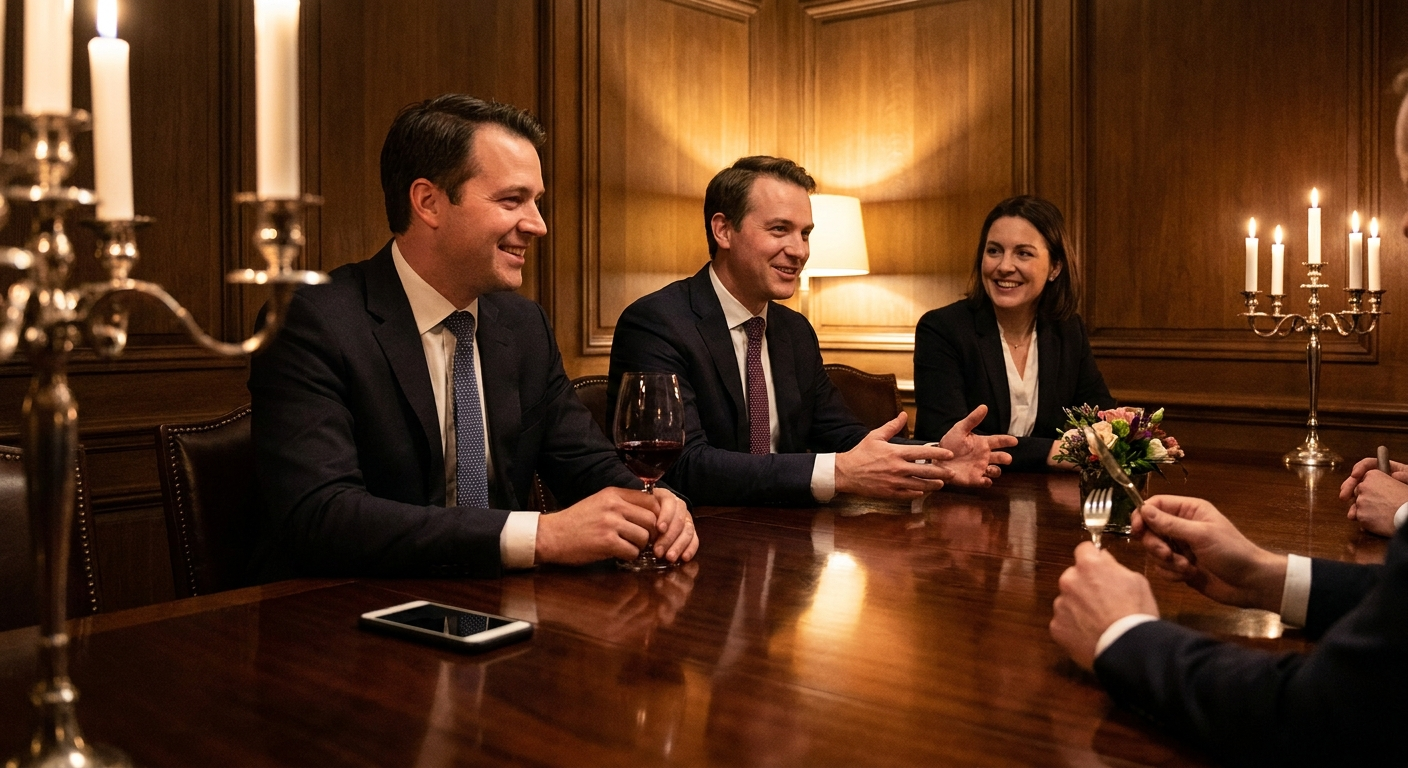
This is the most delicate phase. People are eating, and you need music that enhances the dining experience without competing with conversation. The BPM drops slightly to 70-90 BPM, and the genre shifts to soft acoustic, jazz standards, or classical.
Avoid anything with heavy bass or complex arrangements. The goal is to create a warm, romantic, or elegant atmosphere depending on your event type.
- "At Last" by Etta James — The ultimate romantic standard
- "Can't Help Falling in Love" by Elvis Presley — Timeless and tender
- "The Way You Look Tonight" by Frank Sinatra — Elegance personified
- "La Vie En Rose" by Édith Piaf — French charm for sophistication
- "What a Wonderful World" by Louis Armstrong — Heartwarming and universal
If you're planning a toast or speech, fade the music completely during the announcement. Then play a short instrumental bridge (15-30 seconds) to transition back to dinner music.
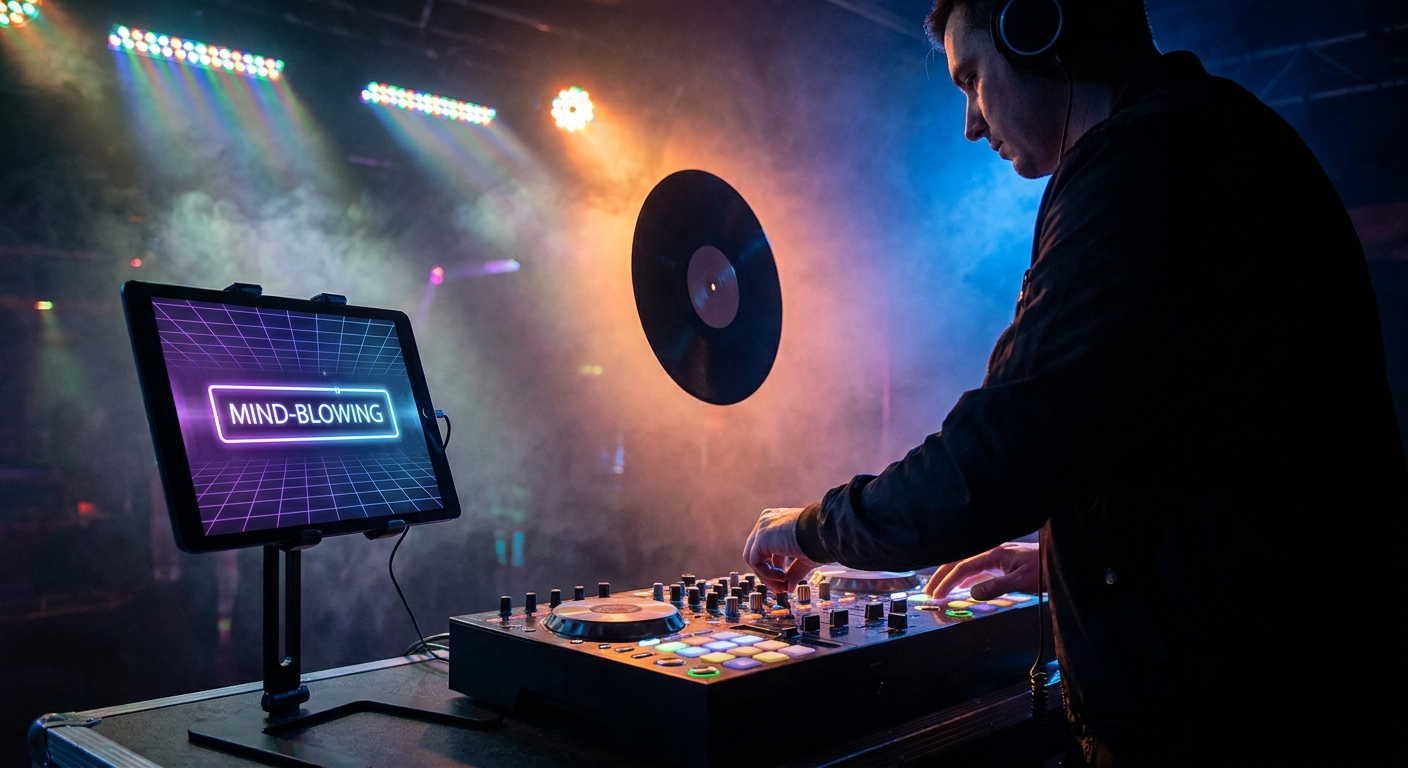
🔥 The #4 Mind-Blowing Tip: During the dinner-to-dance transition, use a song mashup that blends the last dinner song with the first dance song. For example, fade "At Last" into "Uptown Funk" using a 10-second instrumental bridge. This creates a seamless energy shift that feels intentional and professional. Most DJs miss this — and it's the secret to a flawless event music timeline.
Phase 5: The Dance Party (2-4 Hours)
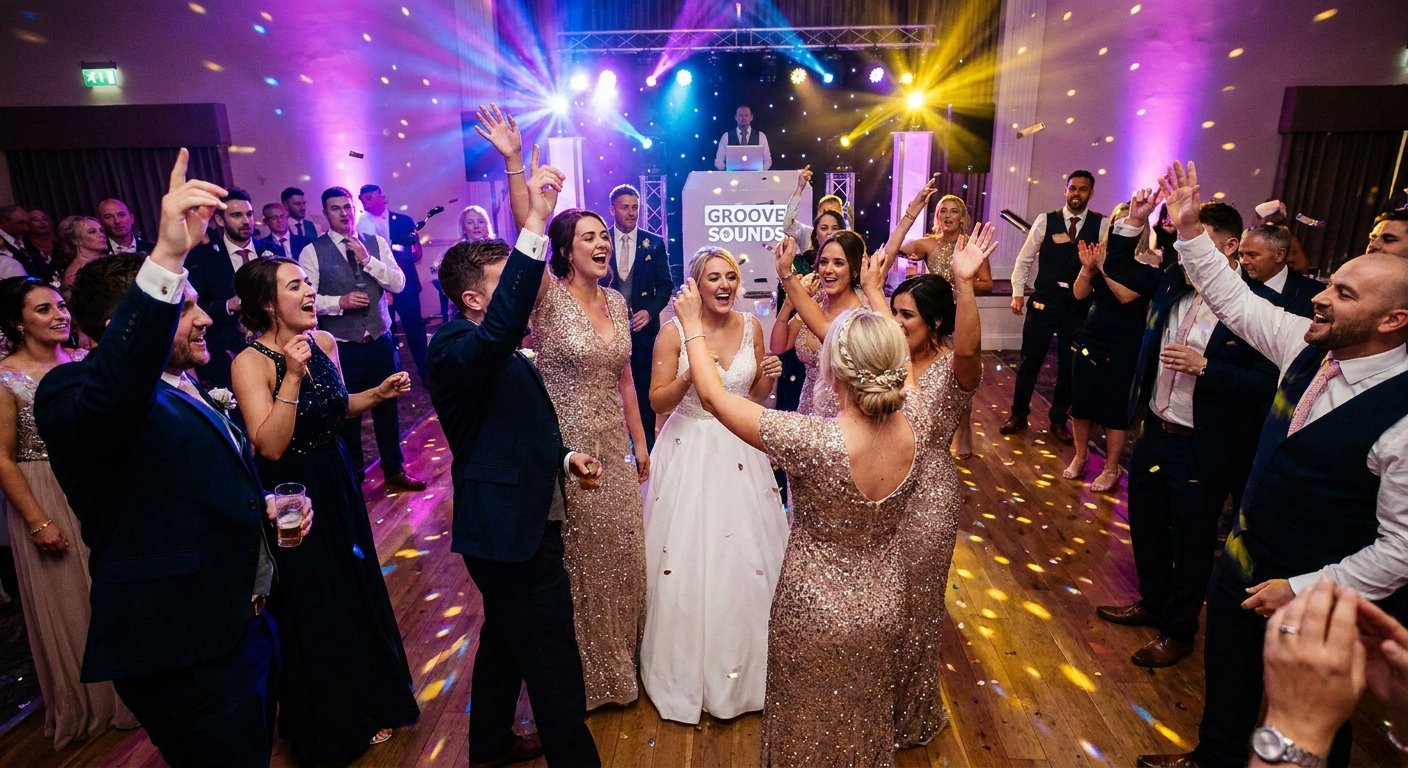
This is what everyone came for. The dance floor opens, and your timeline needs to build in waves. Start with mid-tempo bangers (110-120 BPM), peak with high-energy anthems (130-150 BPM), and include recovery songs (100-110 BPM) every 30-45 minutes to let people catch their breath.
The Wave Structure
Every 30-45 minutes, your playlist should follow this pattern:
- Peak (3-4 songs): High-energy, crowd-favorite bangers
- Plateau (2-3 songs): Slightly lower energy, still danceable
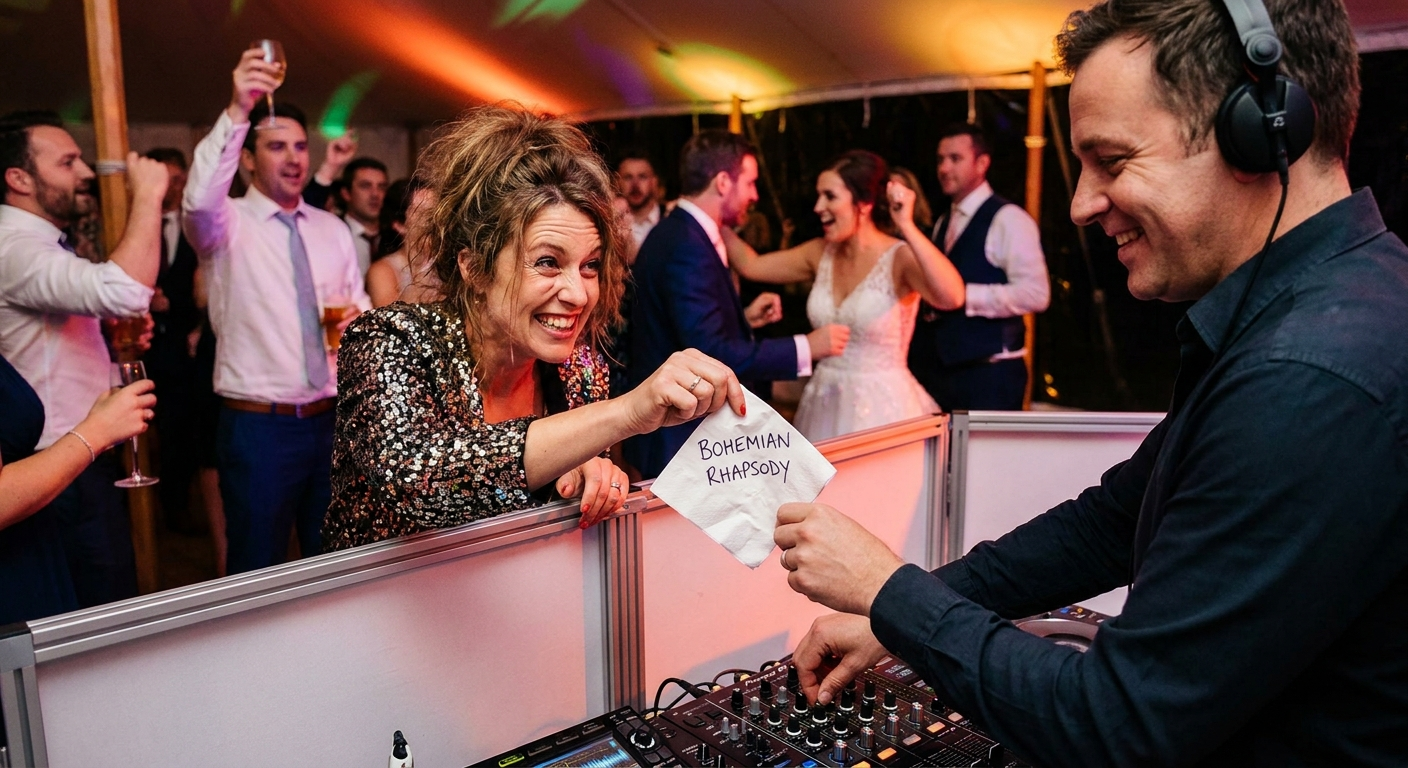
- Recovery (1-2 songs): Slower tempo, sing-along vibes (e.g., "Bohemian Rhapsody")
- Build-up (2-3 songs): Gradually increasing BPM back to peak
This prevents energy burnout and keeps the dance floor fresh all night.
Can't-Miss Dance Floor Tracks
- "Uptown Funk" by Mark Ronson ft. Bruno Mars — The ultimate party starter
- "Blinding Lights" by The Weeknd — Modern classic with unstoppable energy
- "Get Lucky" by Daft Punk ft. Pharrell Williams — Disco-funk perfection
- "Don't Stop Believin'" by Journey — The crowd-singalong anthem
- "Levitating" by Dua Lipa — Current pop hit with dance floor power
⚠️ Heads Up: Don't play "Don't Stop Believin'" too early. Save it for the third or fourth hour when the crowd is fully warmed up. Playing it at 9 PM wastes its peak potential.
Phase 6: The Wind-Down (Last 30-60 Minutes)
The event is ending, and you need to gradually reduce energy so guests can transition to leaving. BPM drops to 60-80 BPM. Think soft rock, acoustic covers, or mellow pop.
This is also a great time to play requested songs from earlier in the night that you didn't get to. Use PartyMusicPlaylist to collect guest song requests during the event so you always have a bank of music that people love.
- "Time After Time" by Cyndi Lauper — Nostalgic and gentle
- "Hallelujah" by Jeff Buckley — Emotional and beautiful
- "Closing Time" by Semisonic — The obvious but perfect choice
- "The Night We Met" by Lord Huron — Dreamy and reflective
- "Piano Man" by Billy Joel — A sing-along that feels like a warm hug
Common Mistakes to Avoid in Your Event Music Timeline
Even experienced planners make these errors. Here's what to watch for:
- Playing your best song too early — Save the biggest hit for the peak energy moment (usually hour 3-4)
- Ignoring BPM transitions — A sudden jump from 80 BPM to 140 BPM sounds jarring. Use 10-15 BPM increases per transition
- Forgetting to collect guest requests — People love hearing songs they chose. Use PartyMusicPlaylist's request feature
- Playing too many slow songs in a row — Two slow songs back-to-back kills the dance floor. Alternate with up-tempo tracks
- Not testing your equipment — Soundcheck at least 2 hours before guests arrive
💡 Pro Tip: Always have a backup playlist ready. If the crowd isn't responding to your planned timeline, you can pivot in seconds. PartyMusicPlaylet lets you save multiple versions of your timeline for this exact reason.
How to Build Your Event Music Timeline in 5 Steps
- Define your event type and duration — Wedding? Birthday party? Corporate event? Each has different energy expectations. Write down exactly how many hours you need to fill.
- Map out the phases — Use the 5-phase structure above (pre-event, welcome, cocktail, dinner, dance). Allocate time blocks for each phase based on your event schedule.
- Select songs for each phase — Choose 10-15 songs per hour. Focus on BPM ranges and mood matching. Use PartyMusicPlaylist's templates for instant recommendations.
- Create energy waves — Within the dance phase, structure songs in 30-45 minute waves (peak, plateau, recovery, build-up).
- Test your timeline — Listen to the full sequence from start to finish. Does the energy feel natural? Are there any awkward jumps? Adjust as needed.
Using PartyMusicPlaylist, you can drag and drop songs, adjust BPM filters, and share your timeline with your DJ in one click. It's the easiest way to go from idea to execution.
Expert Tips for a Flawless Event Music Timeline
Here are advanced strategies from professional event DJs:
- Use key matching — Songs in the same musical key transition more smoothly. PartyMusicPlaylist shows key info for every song.
- Create a "moment" every 60 minutes — Plan one standout song or transition each hour. For example, a confetti drop during "Happy" by Pharrell Williams.
- Record your timeline as a mix — If you can't have a live DJ, pre-record your timeline as a continuous mix. This ensures perfect transitions.
- Get a second opinion — Ask a friend to listen to your timeline and give honest feedback. You're too close to it to be objective.
💡 Pro Tip: The best event music timelines include surprise moments. At the 2-hour mark of your dance phase, drop a song that no one expects but everyone loves — like "Africa" by Toto or "Mr. Brightside" by The Killers. These unpredictable hits create viral dance floor energy.
Frequently Asked Questions
PartyMusicPlaylist Team
Helping you create the perfect soundtrack for life's most memorable moments. Expert tips on event music planning, DJ coordination, and playlist curation.
Learn MoreReady to Plan Your Event Music?
Create the perfect playlist for your special event. Search songs, organize your timeline, and share with your DJ.
Get Started FreeRelated Articles
Continue reading