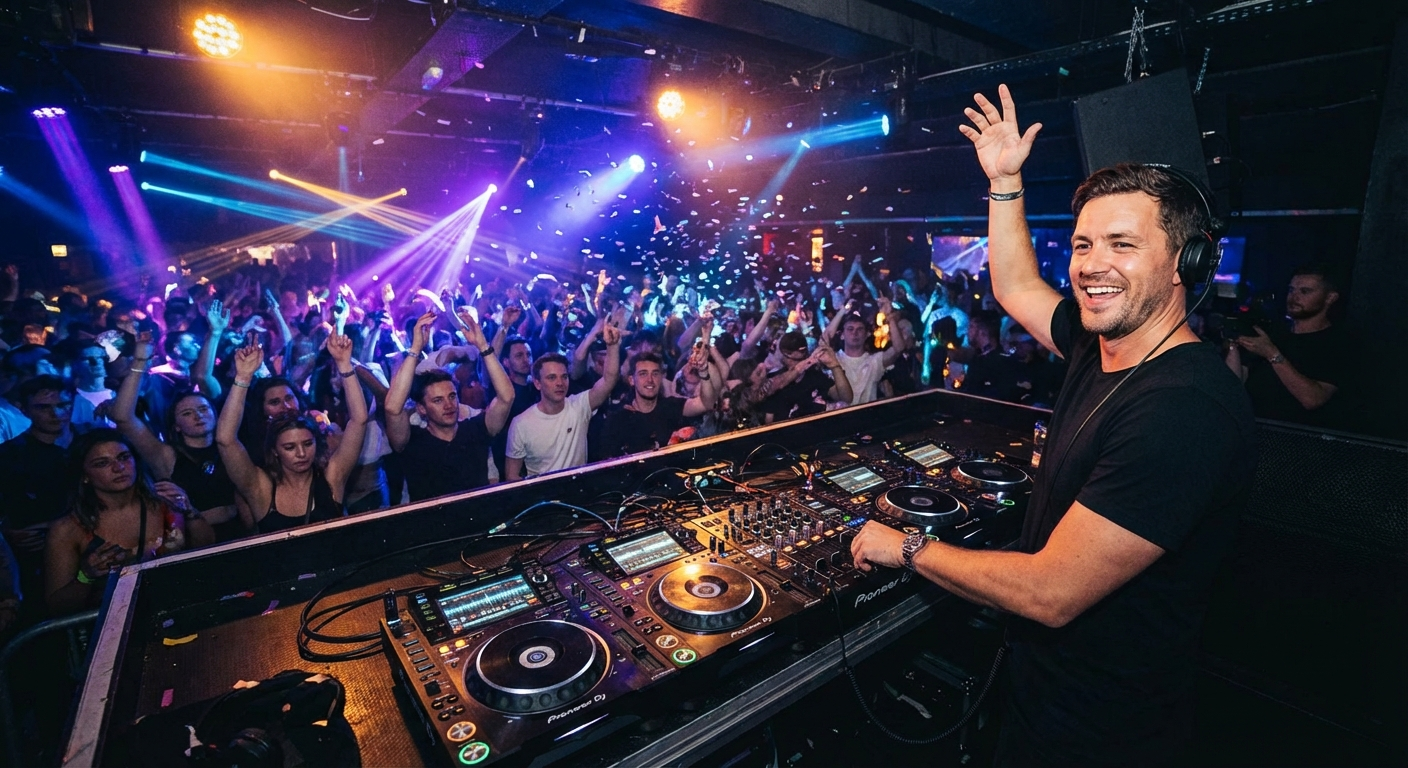
Planning a party or event and wondering about song counts?
You've probably spent hours curating the perfect playlist. But then a nagging question hits you: how many songs per hour do you actually need? Get this wrong, and your dance floor empties. Get it right, and your guests remember your party for years.
In 2026, the rules of event music planning have shifted. Streaming playlists, shorter attention spans, and advanced DJ software mean song counts aren't just about filling time. They're about crafting a journey. Whether you're DJing a wedding, hosting a backyard BBQ, or planning a corporate mixer, understanding song pacing is your secret weapon.
This guide breaks down everything. You'll learn exact song counts for every event type, how to adjust for different genres, and the pro tools that make playlist creation effortless. Let's dive into the math and the magic behind how many songs per hour you should plan.
🎯 Key Takeaways
- Most events need 15-20 songs per hour, but this varies by genre and vibe
- Fast songs (125-140 BPM) pack more tracks per hour than slow ballads
- Your first 30 minutes and last 30 minutes need different song densities
- Tools like PartyMusicPlaylist let you automate song counting and guest requests
- Always plan for 20% more songs than you think you need — better safe than silent
Why Song Count Per Hour Matters More Than You Think
Imagine this: your dance floor is packed. "Uptown Funk" by Bruno Mars is blasting. Then, silence. You forgot to queue the next track. The energy evaporates in seconds. That three-second gap feels like an eternity.
Song count per hour isn't just a number. It's the backbone of your event's energy flow. Every song is a building block. Too few tracks? Awkward pauses. Too many? Your guests get whiplash from constant transitions.
In 2026, event attendees expect seamless experiences. They've been trained by Spotify playlists and TikTok trends. They want non-stop momentum. Your job is to deliver that without overloading them.
Here's the hard truth: most amateur DJs and playlist makers get this wrong. They either overpack their playlist (causing fatigue) or underpack it (causing dead air). The sweet spot? It depends on your event, but the baseline is 15-20 songs per hour.
But that's just the starting point. Let's break it down by genre, event type, and moment.
The Simple Math: Average Song Length in 2026
Before we calculate, we need to know the average song length. In 2026, popular songs average 3:00 to 3:30. That's shorter than the 4-minute standard of the 1990s. Streaming culture favors shorter, punchier tracks.
Here's the basic formula: 60 minutes ÷ average song length = songs per hour. For a 3:15 song, that's roughly 18.5 songs. But you're not just stacking songs back-to-back. You need transitions, announcements, and maybe a dinner break.
💡 Pro Tip: When calculating how many songs per hour, always subtract 10-15% for transitions, pauses, and crowd interaction. If your math says 18 songs, plan for 15-16.
How Many Songs Per Hour by Event Type
Not all events are created equal. A wedding reception moves differently than a gym workout playlist. Here's a breakdown by event type so you can plan with precision.
Wedding Reception
Weddings are complex. You have dinner, speeches, first dance, and open dancing. Each segment needs a different song density.
- Cocktail Hour — 12-15 songs per hour (slower, background music)
- Dinner — 12-15 songs per hour (low energy, conversational)
- Open Dancing — 18-22 songs per hour (fast-paced, high energy)
- Late Night — 20-25 songs per hour (shorter tracks, mashups)
For a typical 5-hour wedding reception, plan 80-100 songs total. The first two hours are slower, the last three are peak energy.
Nightclub or DJ Set
Club DJs play shorter tracks with quick transitions. You'll often see 20-25 songs per hour. Remixes, edits, and mashups keep things fresh.
- Opening Set (first hour) — 15-18 songs, building energy
- Peak Hour — 22-25 songs, maximum energy
- Closing Set — 18-20 songs, winding down
Corporate Event or Conference
Background music at corporate events is subtle. You want 12-15 songs per hour. Instrumental or low-vocal tracks work best. The goal is ambiance, not a dance floor.
Workout or Fitness Class
High-energy workouts need 20-25 songs per hour. Short tracks (2:30-3:00) keep the tempo up. Think "Eye of the Tiger" by Survivor and "Can't Hold Us" by Macklemore.
House Party or Backyard BBQ
Casual gatherings need flexibility. Plan 15-18 songs per hour. Mix crowd-pleasers like "Shut Up and Dance" by Walk the Moon with chill tracks for conversation.
"The difference between a good party and a great one is often just 3-4 songs per hour. Too few, and the energy drops. Too many, and guests feel overwhelmed. Find your sweet spot." — Professional DJ, 15 years experience
How Genre Affects Your Song Count
Genre isn't just about taste. It directly impacts how many songs per hour you can play. Different genres have different average song lengths and structural norms.
Pop and Top 40
Average length: 3:00-3:30. Pop songs are built for radio and streaming. They're punchy, hook-heavy, and perfect for parties. Expect 18-20 songs per hour.
- "Flowers" by Miley Cyrus — 3:20, perfect for singalongs
- "Cruel Summer" by Taylor Swift — 2:58, high energy
- "As It Was" by Harry Styles — 2:47, modern classic
EDM and Dance
Average length: 3:30-5:00. DJs often play extended mixes. But many tracks have build-ups and drops that keep energy high. Expect 14-18 songs per hour.
Hip-Hop and R&B
Average length: 3:00-4:00. Hip-hop often features verses, hooks, and bridges. Club hits like "Sicko Mode" have multiple sections. Expect 15-18 songs per hour.
Rock and Indie
Average length: 3:30-4:30. Rock songs tend to be longer, with instrumental breaks. Expect 13-16 songs per hour.
Country
Average length: 3:00-3:30. Country songs are storytelling-driven. Expect 17-19 songs per hour.
Jazz and Lounge
Average length: 4:00-6:00. Instrumental jazz tracks are long and atmospheric. Expect 10-13 songs per hour.
📝 Note: When mixing genres in one playlist, calculate based on the dominant genre for each time block. A hip-hop hour followed by an EDM hour will have different song counts.
The BPM Factor: How Tempo Changes Song Count
BPM (beats per minute) is a hidden variable. Faster songs are often shorter. Slower songs are often longer. But there's more to it.
At 120 BPM (typical dance tempo), a 32-bar phrase lasts about 64 seconds. A full song might have 4-5 phrases. That's roughly 3:20. At 140 BPM, the same structure is only 2:45. That means you can fit more songs in an hour.
BPM and Song Count Quick Guide:
- 80-100 BPM (slow jams, ballads) — 12-14 songs per hour
- 100-120 BPM (mid-tempo, pop) — 15-18 songs per hour
- 120-140 BPM (dance, house) — 18-22 songs per hour
- 140+ BPM (drum and bass, hardstyle) — 22-28 songs per hour
⚠️ Heads Up: Don't just stack fast songs. A playlist of nothing but 140 BPM tracks will exhaust your guests. Mix in slower songs for dynamic contrast. Your dance floor needs peaks and valleys.
Building Your Playlist: A Step-by-Step Guide
Now you know the numbers. But how do you actually build a playlist that works? Follow these steps to nail how many songs per hour for your specific event.
- Determine your event duration. How many hours will music play? Include setup, dinner, dancing, and wind-down.
- Divide into time blocks. Break your event into 30-minute or 1-hour segments. Each segment has a different purpose.
- Assign energy levels. Use a scale of 1-10. Dinner is 2-3. Peak dancing is 8-9. Late night is 7-8.
- Calculate song count per block. Use the formulas above based on genre and BPM.
- Curate your songs. Pick tracks that match the energy level. Use PartyMusicPlaylist to organize and share with guests for requests.
- Add buffer songs. Plan for 20% more songs than your calculation. You might need to extend a block or fill an unexpected gap.
- Test your playlist. Run through it at home. Time it. Adjust transitions.
💡 Pro Tip: Use the 3-song rule. Never play more than 3 songs from the same genre in a row. This keeps the energy fresh and prevents monotony.
Song Lists by Event Moment
Let's get specific. Here are curated song lists for different moments, complete with how many songs per hour you should aim for.
Dinner or Cocktail Hour (12-15 songs per hour)
Keep it mellow. Guests are eating, talking, and settling in.
- "At Last" by Etta James — timeless and romantic
- "Can't Help Falling in Love" by Elvis Presley — gentle and familiar
- "Fly Me to the Moon" by Frank Sinatra — classic lounge vibe
- "Lovely Day" by Bill Withers — warm and upbeat
- "Put Your Records On" by Corinne Bailey Rae — modern chill
Peak Dance Floor (18-22 songs per hour)
Energy is high. Guests are moving. Keep the momentum.
Can't-Miss Dance Tracks
- "Uptown Funk" by Bruno Mars — guaranteed crowd-pleaser
- "Blinding Lights" by The Weeknd — modern anthem
- "Shape of You" by Ed Sheeran — dance floor filler
- "Get Lucky" by Daft Punk — timeless groove
- "Levitating" by Dua Lipa — high-energy banger
Wind-Down or Last Dance (14-16 songs per hour)
Guests are tired. Slow it down. End on a high note.
- "Don't Stop Believin'" by Journey — epic singalong finale
- "Piano Man" by Billy Joel — intimate and nostalgic
- "Closing Time" by Semisonic — cheeky and perfect
- "Wonderwall" by Oasis — group chant moment
- "Auld Lang Syne" by Traditional — for New Year's or goodbyes
Common Mistakes to Avoid
Even experienced planners mess up how many songs per hour. Here are the biggest pitfalls.
⚠️ Heads Up: Mistake #1 — Overpacking your playlist. You think more songs = more fun. But rapid transitions can feel chaotic. Guests need moments to breathe.
⚠️ Heads Up: Mistake #2 — Ignoring transitions. A song ends, and you have 5 seconds of silence. That kills energy. Use crossfades or plan seamless transitions.
⚠️ Heads Up: Mistake #3 — Playing the same genre all night. Your guests have diverse tastes. Mix pop, hip-hop, dance, and throwbacks. Keep it unpredictable.
⚠️ Heads Up: Mistake #4 — Forgetting to test your playlist. You can't fix a bad playlist in real-time. Test it at home. Time it. Adjust.
⚠️ Heads Up: Mistake #5 — Not having a backup plan. What if a song gets a negative reaction? Have 2-3 "rescue" tracks ready. "Sweet Caroline" by Neil Diamond is a universal save.
Expert Tips for Perfect Playlist Timing
You've got the basics. Now let's level up with pro advice from experienced DJs and event planners.
"I always plan for 20% more songs than I think I'll need. If the crowd is loving a moment, I can extend it. If they're not, I can pivot. Flexibility is key." — Wedding DJ, 10 years
💡 Pro Tip: Use the 5-song rule for peak energy. Every 5 songs, change the energy level. Go from high to medium to high. This creates a natural ebb and flow that keeps guests engaged.
Another pro trick: stack your first 3 songs. The opening tracks set the tone. Make them strong, familiar, and high-energy. "Don't Stop Me Now" by Queen, "Happy" by Pharrell, and "Shut Up and Dance" by Walk the Moon is a killer opening trio.
For longer events (4+ hours), plan energy peaks every 45-60 minutes. Your dance floor shouldn't be at 100% the whole time. Let it dip to 60-70% before building back up.
"The best sets I've ever played had exactly 18 songs per hour. Not 15, not 20. 18. It's the Goldilocks number for club music." — Club DJ, 8 years
Using Technology to Nail Your Song Count
In 2026, you don't have to guess how many songs per hour. Tools like PartyMusicPlaylist do the heavy lifting for you.
Here's how technology helps:
- Automatic song counting — Input your playlist, and the tool calculates exact duration
- Guest request integration — Let guests suggest songs, and the tool adjusts your count
- BPM analysis — See the tempo of every song and plan energy transitions
- Export to DJ software — Take your playlist to professional tools like Serato or Rekordbox
- Find local DJs — If you need a pro, the platform connects you with vetted talent
📝 Note: Check out our blog for more music planning tips, including how to handle song requests on the fly.
The Future of Playlist Planning in 2026
AI is changing everything. Smart playlists now adapt in real-time to crowd reactions. But the human element still matters. You need to understand how many songs per hour before you can trust an algorithm.
Trends to watch:
- Shorter songs — TikTok culture is pushing average song lengths below 3 minutes
- Live remixing — DJs are blending tracks live, making song counts less rigid
- Genre-blending — Playlists are mixing genres more freely, requiring flexible planning
- Interactive playlists — Guest voting and real-time requests are becoming standard
Your job as a planner is to stay flexible. Know the math, but trust your instincts. If the dance floor is packed, don't switch to a slow song just because your schedule says so.
Frequently Asked Questions
PartyMusicPlaylist Team
Helping you create the perfect soundtrack for life's most memorable moments. Expert tips on event music planning, DJ coordination, and playlist curation.
Learn MoreReady to Plan Your Event Music?
Create the perfect playlist for your special event. Search songs, organize your timeline, and share with your DJ.
Get Started FreeRelated Articles
Continue reading