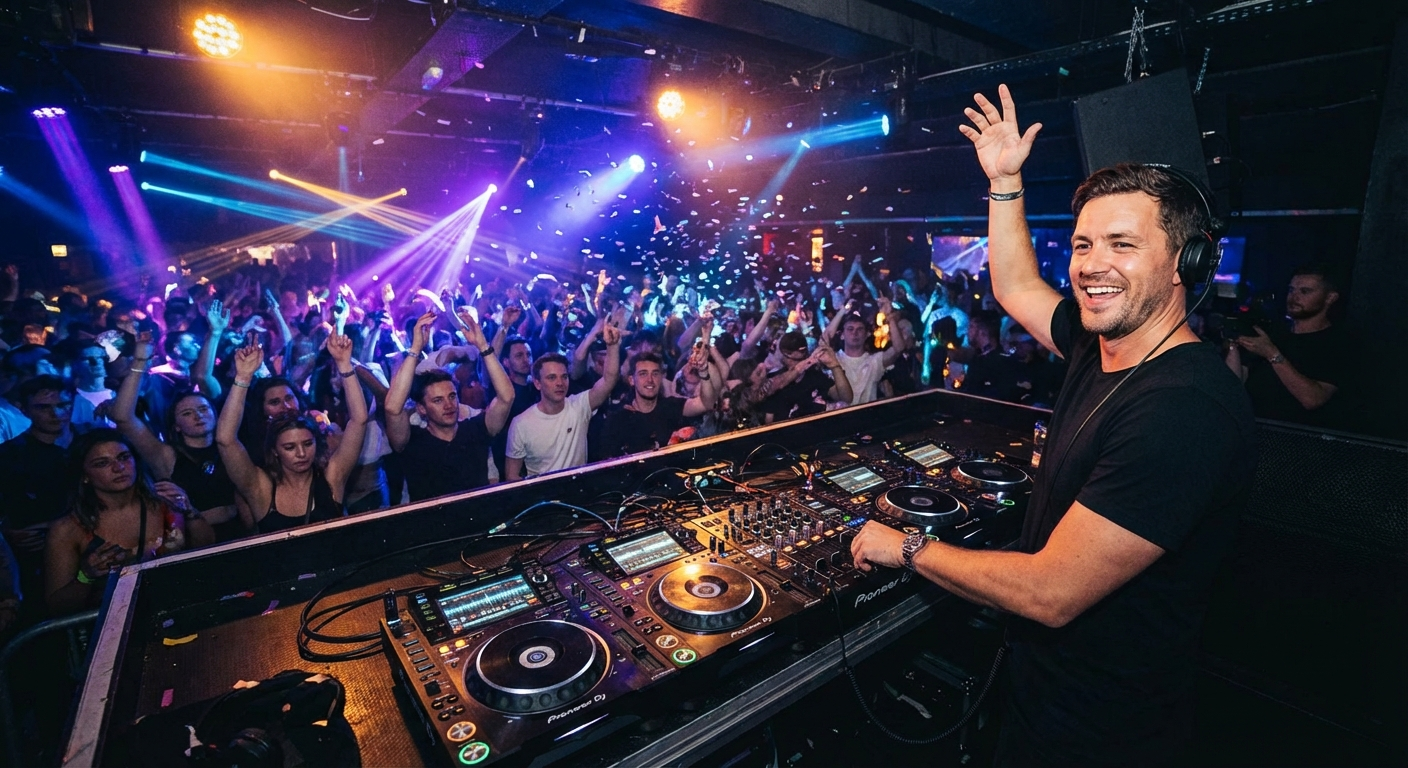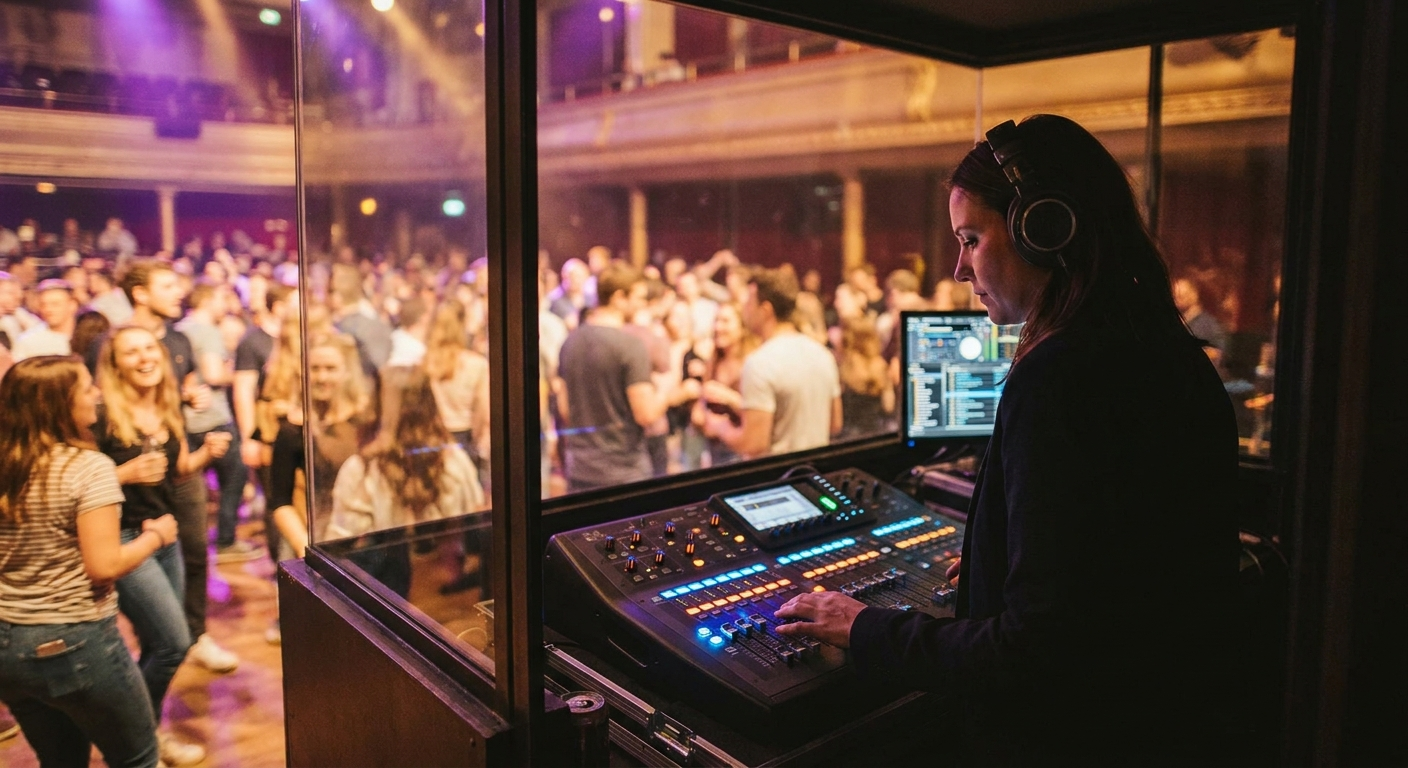
Getting the volume wrong can ruin an entire event. Too loud and guests leave early. Too quiet and the dance floor stays empty. Finding that perfect sweet spot is an art and a science.
You have spent weeks crafting the ideal playlist for your wedding, birthday party, or corporate event. You have agonized over each song choice, balanced genres for different generations, and timed every transition to perfection. But when the big moment arrives, none of that matters if your event music volume is off.
Event music volume is the single most overlooked element in party planning. Yet it makes or breaks the entire experience. In this comprehensive guide, you will learn exactly how to set, adjust, and maintain the perfect audio level for any occasion. We will cover room size, crowd density, speaker placement, time-of-day adjustments, and specific song-leveling techniques. You will walk away with a repeatable system that works every time.
🎯 Key Takeaways
- The ideal event music volume fluctuates throughout the event — start lower, build gradually
- Room acoustics and crowd size dramatically affect perceived loudness
- Proper gain staging prevents distortion before guests even arrive
- Use a decibel meter app to find your baseline 70-85 dB range
- Song-by-song volume leveling creates seamless energy flow
Why Event Music Volume Matters More Than You Think
Volume is not just about loudness. It is about emotional control of the room. When you nail the volume, guests naturally gravitate toward the dance floor. When you miss it, conversations become strained, body language shifts, and people start looking at their watches.
Think about the last event you attended. Was there a moment when the music suddenly felt too loud? Did people stop talking mid-sentence and lean in to hear each other? That is the exact point where event music volume crosses from energizing to exhausting.
Conversely, have you been at a wedding where the DJ played dinner music at the same volume as the dance set? The result is a flat, lifeless experience. Guests eat quickly and leave early. The volume curve should mirror the emotional arc of your event.
"Volume is not a setting — it is a journey. The best DJs and hosts treat volume like a dimmer switch, not an on/off button."
The Psychology of Sound Levels
Research in environmental psychology shows that background music at 70 dB encourages social interaction. At 80 dB, the same music starts to dominate the space. At 85 dB or higher, conversation becomes difficult, and the brain enters a fight-or-flight response for extended exposure.
Your goal is not to blast music. Your goal is to match volume to activity. Cocktail hour at 65-70 dB. Dinner at 60-65 dB. Dance floor opening at 75 dB. Peak party energy at 80-85 dB. Each transition signals a new phase of the event without jarring guests.
This is why event music volume requires real-time attention. You cannot set it once and walk away. Every time the crowd size changes, the acoustics shift. Every time the energy dips, you need to adjust.
Understanding Decibels and Room Acoustics
Before you can master event music volume, you need to understand the basic physics at play. Decibels (dB) measure sound pressure level. But here is the tricky part: human perception of loudness is not linear.
A 3 dB increase requires roughly double the amplifier power but sounds only slightly louder to your ears. A 10 dB increase sounds twice as loud to humans. This means small adjustments on your mixer can have outsized effects on guest comfort.
Room Size and Speaker Placement
The same speaker system sounds completely different in a 500-square-foot room versus a 2,000-square-foot ballroom. In small spaces, sound waves bounce off walls, creating standing waves and bass buildup. In large spaces, volume dissipates quickly, requiring more power to fill the room.
- Measure your room dimensions — length, width, ceiling height
- Calculate square footage — this determines speaker power needs
- Identify reflective surfaces — glass, hardwood floors, tile amplify sound
- Note absorption materials — carpet, curtains, upholstered furniture dampen volume
- Map the dance floor location — speakers should point toward it
💡 Pro Tip: Place speakers at ear level when guests are standing. Too high and the sound disperses upward. Too low and it gets absorbed by bodies. Aim for speaker tweeters at 5-6 feet off the ground.
The Crowd Density Factor
Here is something most planners miss: bodies absorb sound. A room with 20 people sounds much louder than the same room with 200 people at the same volume setting. As guests arrive, the acoustic environment changes in real time.
This is why you should start your soundcheck with an empty room, then plan to increase volume by 3-5 dB as guests fill the space. Professional DJs call this "growing into the room."
Setting Your Baseline Volume Before Guests Arrive
Every successful event starts with a proper soundcheck. You need to establish your event music volume baseline before the first guest walks through the door. Here is the exact process:
- Download a decibel meter app — NIOSH SLM or Decibel X are accurate
- Play a mid-energy song — something like "Levitating" by Dua Lipa works well
- Stand at the center of the dance floor — measure dB levels
- Adjust master volume until you read 70-75 dB
- Walk to all corners of the room — check for dead spots or hot zones
- Repeat with a bass-heavy track — "Blinding Lights" by The Weeknd
- Note your mixer settings — this becomes your starting point
⚠️ Heads Up: Never rely on your phone's built-in microphone for critical measurements. The microphones on iPhones and Android devices are not calibrated for professional use. A $20 external measurement microphone dramatically improves accuracy.
Gain Staging for Clean Sound
Distorted sound feels harsh and fatiguing, even at moderate volumes. Proper gain staging ensures your signal chain stays clean from source to speakers. Here is the golden rule: keep your input levels at 80% of maximum, then use the master volume for overall level control.
If you hear crackling, buzzing, or clipping, your gain is too hot. Turn it down immediately. Distorted event music volume sounds amateurish and drives guests away.
The Volume Curve: Matching Music to Event Phases
A great event has a natural energy arc. Your event music volume should follow this curve precisely. Think of it as a gentle upward slope with plateaus at key moments.
Cocktail Hour (65-70 dB)
This is the social lubrication phase. Music should be present but not dominant. Guests need to hear each other speak without raising their voices. Jazz, acoustic covers, or light funk work perfectly here.
- "Fly Me To The Moon" by Frank Sinatra — timeless and unobtrusive
- "Banana Pancakes" by Jack Johnson — warm, conversational vibe
- "Sunday Morning" by Maroon 5 — familiar but not distracting
- "Valerie" by Amy Winehouse — soulful without being overpowering
- "Put Your Records On" by Corinne Bailey Rae — effortless charm
Dinner Service (60-65 dB)
Volume drops slightly to accommodate table conversations and food service. This is the quietest part of the evening. Resist the urge to turn up — guests are eating and connecting.
- "At Last" by Etta James — romantic and classic
- "Can't Help Falling in Love" by Elvis Presley — universal appeal
- "L-O-V-E" by Nat King Cole — sophisticated dinner backdrop
- "The Way You Look Tonight" by Frank Sinatra — timeless elegance
- "Come Away With Me" by Norah Jones — intimate and warm
Dance Floor Opening (75-80 dB)
This is the energy inflection point. You turn up the volume by 10 dB from dinner levels. This signals to guests that the party is beginning. Start with mid-tempo tracks that invite movement without overwhelming.
- "Uptown Funk" by Mark Ronson ft. Bruno Mars — the ultimate opener
- "Happy" by Pharrell Williams — impossible not to move to
- "Shut Up and Dance" by Walk the Moon — instant energy boost
- "I Gotta Feeling" by The Black Eyed Peas — iconic party starter
- "Can't Stop the Feeling" by Justin Timberlake — pure joy
Peak Party (80-85 dB)
This is the maximum comfortable volume for most events. At this level, conversation is difficult, but the dance floor is packed. You should not stay here for more than 45-60 minutes without a brief reset.
Peak Energy Essentials
- "Turn Down for What" by DJ Snake & Lil Jon — floor-filling anthem
- "Party Rock Anthem" by LMFAO — guaranteed crowd reaction
- "Yeah!" by Usher ft. Lil Jon & Ludacris — timeless club banger
- "Get Low" by Lil Jon & The East Side Boyz — peak energy moment
- "Levels" by Avicii — euphoric peak hour track
Reading the Room: When to Adjust Volume
No amount of planning replaces real-time observation. You must read the room continuously and adjust event music volume accordingly. Here are the key signals to watch for:
- Guests leaning in to hear each other — volume is too high
- Empty dance floor — might be too loud or too quiet
- People standing near speakers — they want more volume
- Guests leaving the room — check if volume is the cause
- Bartenders giving you "the look" — volume is interfering with service
💡 Pro Tip: Station a trusted friend or assistant at the bar area. If they cannot hear drink orders easily, your event music volume needs to come down by 2-3 dB. The bar is always the canary in the coal mine.
The 15-Minute Rule
Every 15 minutes, walk the perimeter of the room. Stand in different zones — near the bar, at the back of the room, next to the dance floor. Your ears will acclimate to the current volume, so fresh perspective from different locations reveals what guests are actually experiencing.
Song-by-Song Volume Leveling
This is where most playlists fail. Some songs are mastered louder than others. A 1980s rock track might need +3 dB to match a modern pop song. Uneven song levels create jarring transitions that kill momentum.
Using PartyMusicPlaylist for Automatic Leveling
Our platform includes a smart volume leveling feature that analyzes each track's RMS (average loudness) and normalizes them to a consistent target. This means every song hits the same perceived volume, so you never get a sudden blast or a quiet spot.
When you Create Your Playlist on PartyMusicPlaylist, the system automatically adjusts gain for each track. You can then export a perfectly leveled playlist directly to your DJ software or streaming platform.
Manual Leveling Tips
If you are building a playlist manually, follow these steps:
- Sort songs by genre — similar genres have similar mastering levels
- Identify outliers — use a spectrum analyzer to spot loud/quiet tracks
- Adjust gain by ±2-3 dB — never more than ±5 dB to avoid distortion
- Test transitions — play song A into song B at your target volume
- Mark your adjustments — note gain changes in your playlist notes
Common Event Music Volume Mistakes
Even experienced planners make these errors. Avoid them at all costs.
⚠️ Heads Up: The "One More Song" Trap. You turn it up for one more banger, then forget to bring it back down. Suddenly the room is at 88 dB and guests are covering their ears. Always reset volume after a peak moment.
⚠️ Heads Up: Ignoring the Bass. Low frequencies carry differently than mids and highs. A song with heavy bass might feel twice as loud as a vocal track at the same master volume. Use the EQ to control bass separately from overall volume.
⚠️ Heads Up: The Empty Room Soundcheck. As mentioned earlier, an empty room sounds louder than a full one. If you set volume perfectly during soundcheck, it will feel quiet when guests arrive. Plan to increase by 3-5 dB as the room fills.
Technology Tools for Perfect Volume Control
Modern tools make event music volume management easier than ever. Here is what we recommend:
Recommended Tool Stack: Decibel meter app (NIOSH SLM) + Spectrum analyzer (Audacity or OBS) + PartyMusicPlaylist for leveling. This combination gives you measurement, visualization, and automation in one workflow.
- Decibel Meter App — real-time SPL readings
- Spectrum Analyzer — visual frequency distribution
- Compressor/Limiter — prevents sudden volume spikes
- Volume Normalizer — consistent song-to-song levels
- Remote Volume Control — adjust from anywhere in the room
Special Scenarios: Volume Adjustments for Different Events
Weddings
Weddings have the most volume-sensitive moments. The first dance, cake cutting, bouquet toss, and speeches all require different levels. Create presets for each moment and practice the transitions.
- Processional — 55-60 dB (intimate, emotional)
- Recessional — 70-75 dB (celebratory)
- Toasts — music off or 45-50 dB (must hear speakers)
- First Dance — 65-70 dB (romantic focus)
- Open Dance Floor — 75-85 dB (gradual build)
Corporate Events
Corporate events prioritize conversation and networking. Volume should never exceed 75 dB except during designated dance portions. Keep background music at 60-65 dB during networking.
Birthday Parties
Birthday parties are more flexible. You can push to 85 dB during peak hours, but be mindful of older guests and children. Provide a quiet zone if possible.
Frequently Asked Questions
PartyMusicPlaylist Team
Helping you create the perfect soundtrack for life's most memorable moments. Expert tips on event music planning, DJ coordination, and playlist curation.
Learn MoreReady to Plan Your Event Music?
Create the perfect playlist for your special event. Search songs, organize your timeline, and share with your DJ.
Get Started FreeRelated Articles
Continue reading