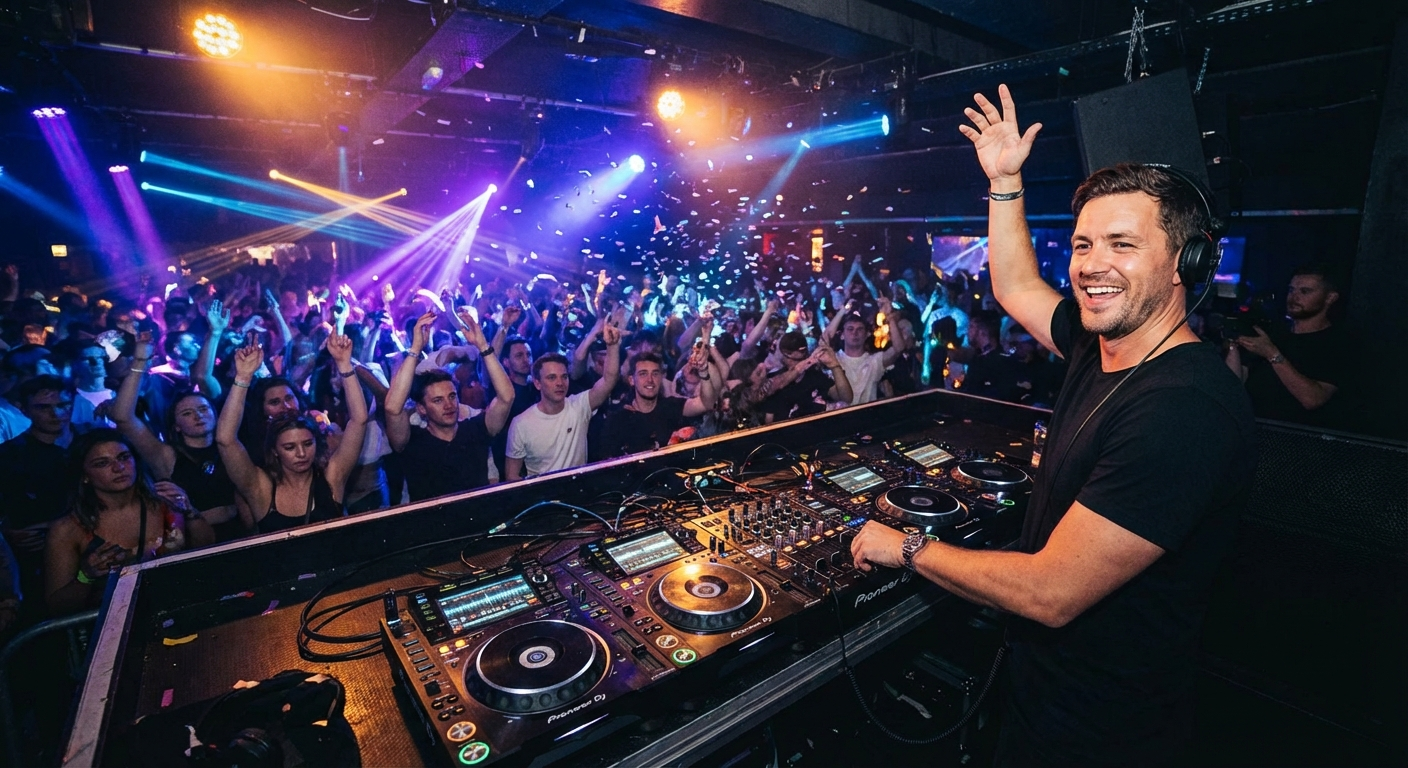
You're a DJ in 2026. The pressure is on. The crowd is waiting. Your reputation is on the line with every song you play. You can't just hit shuffle on a streaming service playlist and hope for the best. The modern audience is savvy, connected, and expects a curated, intelligent musical journey.
What separates a forgettable DJ from a legendary one? It's not just the gear. It's the secret formula behind the playlist. The invisible architecture that guides a crowd from polite chatter to a packed, euphoric dance floor. This isn't about having every song ever made; it's about having the right songs in the right order.
This guide is your blueprint. We're breaking down the 2026 DJ's ultimate playlist formula, from the foundational theory to the practical, actionable steps you can use for your next gig. Whether you're spinning at a wedding, a club, or a corporate event, these principles will transform how you build your sets.
🎯 Key Takeaways
- Master the "Energy Arc" framework to structure your entire set like a story.
- Learn how to read a room and pivot your playlist in real-time, a critical 2026 skill.
- Discover the must-have song categories and specific tracks for every event phase.
- Utilize free digital tools like PartyMusicPlaylist to collaborate with clients and organize your music efficiently.
- Avoid the five most common playlist mistakes that amateur DJs make every weekend.
What Is The "Energy Arc" Playlist Formula?
Think of your DJ set as a three-act movie or a great novel. It has a beginning, a middle, and an end. Each part serves a specific purpose and builds upon the last. This is the Energy Arc.
You don't start a movie with the climactic battle scene. You establish characters, build tension, and then deliver the payoff. Your playlist should do the same with music. A flat, one-energy-level set is boring. A chaotic, random set is confusing. The Energy Arc is your map to a satisfying, memorable experience.
The classic Energy Arc has three core phases:
- The Warm-Up (Act I): Lower energy, familiar tunes, setting the vibe.
- The Peak (Act II): High-energy, dance-floor fillers, the main event.
- The Cool-Down (Act III): Gradual wind-down, nostalgic hits, leaving on a high note.
Within this framework, you'll create smaller "mini-arcs" – building energy over 3-4 songs, then giving a brief moment of release before building again. This ebb and flow is what keeps people engaged and dancing for hours.
The 2026 Mindset: Today's audiences consume music through perfectly engineered algorithmic playlists. They subconsciously expect a smart flow. Your job is to be a better algorithm—one with human intuition, empathy, and the ability to read a live room.
Phase 1: The Art of the Warm-Up (Building Your Foundation)
The first hour is everything. It sets the tone, attracts people to the floor, and builds trust. Play something too aggressive too early, and you'll clear the room. Play something too boring, and you'll lose their interest forever.
Your warm-up playlist should be a collection of "recognizable but not urgent" songs. Think grooves over drops. Think vocals over instrumentals. The goal is to create a welcoming atmosphere where conversation can still happen, but toes start tapping.
💡 Pro Tip: For weddings and private events, your warm-up starts during dinner or cocktail hour. This is background music, but it should still be intentional. Use this time to subconsciously signal the event's overall vibe—is it chic and modern? Retro and funky? Your song choices here plant the seed.
Warm-Up Playlist Essentials
Build a crate of 50-100 go-to warm-up tracks. Here are the categories and examples to get you started.
- "Levitating" by Dua Lipa — Upbeat, universally liked, perfect mid-tempo groove.
- "Blinding Lights" by The Weeknd — That iconic 80s synth vibe gets everyone nodding.
- "CUFF IT" by Beyoncé — Disco-infused and joyful, an instant mood-lifter.
- "Late Night Talking" by Harry Styles — Catchy, modern, and friendly.
- "Good as Hell" by Lizzo — Positive vibes and a confident strut.
- "September" by Earth, Wind & Fire — The ultimate feel-good, sing-along classic.
- "I Wanna Dance with Somebody" by Whitney Houston — Familiar energy that invites participation.
- "Dancing Queen" by ABBA — Timeless and impossible to dislike.
- "Put Your Records On" by Corinne Bailey Rae — Chill, sunny, and perfect for early evening.
- "Sunday Best" by Surfaces — Upbeat and relaxed at the same time.
Phase 2: Engineering the Peak Dance Floor
This is where you earn your fee. The peak phase is a sustained period of high energy, typically spanning 60-90 minutes. It's not one massive song after another—that's exhausting. It's a carefully constructed rollercoaster.
You'll use a technique called energy stacking. Play two or three big crowd-pleasers in a row to lock in the dance floor. Then, switch genres or drop the energy slightly with a "breaker" track (like a sing-along classic or a change in tempo) to give people a quick breather. Then, stack another set of bangers, perhaps from a different era or style, to launch the energy even higher.
The Peak Phase Power Categories
Your peak crate needs variety. Organize your music into these power categories for easy access during your set.
Can't-Miss Peak Anthems (2026 Essentials)
- "Flowers" by Miley Cyrus — A modern empowerment anthem with massive cross-generational appeal.
- "As It Was" by Harry Styles — That driving synth beat creates an undeniable, euphoric rush.
- "Bad Guy" by Billie Eilish — The drop is still one of the most effective crowd-hypers in recent history.
- "Uptown Funk" by Mark Ronson ft. Bruno Mars — Perhaps the most reliable party starter of the last decade.
- "Yeah!" by Usher ft. Lil Jon & Ludacris — The command. The energy. It still works every single time.
- Throwback Hip-Hop & R&B: "Ignition (Remix)" by R. Kelly, "Hot In Herre" by Nelly, "No Scrubs" by TLC. These songs are guaranteed sing-alongs.
- Modern Pop Dominators: "Levitating" by Dua Lipa, "About Damn Time" by Lizzo, "Watermelon Sugar" by Harry Styles.
- EDM/Pop Crossovers: "Where Are Ü Now" by Skrillex & Diplo with Justin Bieber, "Titanium" by David Guetta ft. Sia.
- Line Dance & Group Favorites: "Cha Cha Slide" by DJ Casper, "Cupid Shuffle" by Cupid. Don't underestimate the power of organized fun—it gets everyone involved.
⚠️ Heads Up: Avoid playing two songs from the same genre or era back-to-back for too long. You'll isolate parts of your audience. The key to a long peak is variety within the high-energy spectrum.
Phase 3: The Strategic Cool-Down & Last Call
How you end the night is just as important as how you start it. A jarring, abrupt stop feels unprofessional. A thoughtful cool-down leaves guests feeling satisfied and ends the event on a positive, nostalgic high note.
Start your cool-down about 30-45 minutes before the scheduled end time. Begin to gradually lower the energy. Shift from fist-pumping anthems to heartfelt sing-alongs and classic slow jams. This is the time for those iconic, emotional tracks that bring everyone together one last time.
- "Don't Stop Believin'" by Journey — The ultimate group sing-along finale.
- "Sweet Caroline" by Neil Diamond — "So good! So good!" Need we say more?
- "Wonderwall" by Oasis — A millennial and Gen Z anthem that fills a dance floor with phones-as-lighters.
- "All of Me" by John Legend — A powerful, modern love ballad everyone knows.
- "Closing Time" by Semisonic — The literal signal that the night is wrapping up, in the best way possible.
- "I Gotta Feeling" by The Black Eyed Peas — A hopeful, celebratory note to end on.
📝 Note: Always confirm the official end time with your client or venue manager. Your final song should end right at, or 1-2 minutes after, the contracted time. Playing too late can cause issues with the venue.
Step-by-Step: Building Your Playlist in 2026
Let's translate theory into action. Here is your practical, step-by-step workflow for building a bulletproof playlist for any event.
- Client Consultation & Discovery: This is your most important step. Use a tool like PartyMusicPlaylist to have your client build a "Must-Play" and "Do-Not-Play" list. Ask about the guest demographic—ages, cultural backgrounds, musical tastes.
- Blueprint Your Energy Arc: Open a spreadsheet or note-taking app. Create three columns: Warm-Up, Peak, Cool-Down. Based on your consultation, jot down 10-15 song ideas for each phase. Don't build the full list yet—just brainstorm.
- Crate Digging & Organization: In your DJ software (Rekordbox, Serato, etc.), create a dedicated folder for the event. Start pulling tracks that fit your blueprint. Tag them clearly (e.g., "Warm-Up Pop," "Peak Hip-Hop," "Cool-Down Singalong").
- Sequencing & Flow: Now, build the sequence within each phase. Focus on smooth transitions. Consider key, BPM, and vibe. Use the "energy stacking" method for the peak phase. Aim for 12-15 songs per hour of dance time.
- Create Backup Branches: For each key moment in your peak phase, have 2-3 alternative song options. If the crowd isn't feeling the hip-hop block, you can pivot to pop or throwback rock without breaking a sweat.
- Tech Check & Export: Ensure all your files are properly analyzed and beatgridded. Create a backup playlist on a separate USB drive. If using a streaming service contingency, have it pre-loaded and ready.
Reading the Room & Pivoting in Real-Time
Your pre-made playlist is a plan, not a prison. The mark of a pro DJ is the ability to abandon the plan when necessary. In 2026, with audiences' tastes fragmenting, this skill is non-negotiable.
How do you read the room? Get out from behind the booth. Watch body language. Are people singing along? Are they on their phones? Is a particular age group dominating the floor? Your eyes are your best analytics tool.
- If the floor is thinning: Play a guaranteed, cross-generational hit. Go back to a proven anthem like "Uptown Funk" or "I Wanna Dance with Somebody."
- If a group requests a genre-specific song: Don't just play their one song. Use it as a clue. If they ask for a 2000s emo song, that might be your signal to play a 3-song pop-punk/emo block to cater to that cohort.
- If energy is peaking too early: Intentionally bring it down with a mid-tempo sing-along. Let people rest, get a drink, and then build it back up. This extends the life of your dance floor.
💡 Pro Tip: Use the "three-track test." If you play three songs in a row from a particular genre or era and the crowd response is lukewarm, it's time for a hard pivot. Don't stubbornly stick to a failing strategy.
Must-Have Song Lists for Every Event Type
While the Energy Arc is universal, the song selection varies dramatically by event. Here are your cheat sheets.
The Wedding Reception Power List
Weddings are a multi-generational puzzle. You need songs for grandparents, parents, and the couple's friends. These are the non-negotiable categories.
- First Dance & Formal Dances: Have the couple's picks cued and ready. Have backups for parent dances in case they change their mind.
- The "Open Floor" Catalyst: This is the first danceable song after formalities. It needs to be upbeat, positive, and widely appealing. "Dancing Queen" or "I Wanna Dance with Somebody" are classic choices.
- The Anniversary Dance / Slow Song Block: Have 3-4 classic slow jams ready ("At Last" by Etta James, "Unchained Melody" by The Righteous Brothers, "Can't Help Falling in Love" by Elvis).
Wedding Reception Must-Plays
- "Shut Up and Dance" by WALK THE MOON — The title is literally the instruction.
- "Love on Top" by Beyoncé — Joyful, building energy, and thematically perfect.
- "Twist & Shout" by The Beatles — Gets every generation moving.
- "Wobble" by V.I.C. — The modern line dance standard.
- "Tennessee Whiskey" by Chris Stapleton — For that crucial country moment in many regions.
The Corporate & Private Party List
The goal here is usually "classy fun." Avoid explicit lyrics. Focus on positive, upbeat, and widely recognizable hits. You're creating a vibe, not a rave.
- Focus on 80s, 90s, and 2000s Throwbacks: This is safe, nostalgic territory. Think "Livin' on a Prayer," "Billie Jean," "Mr. Brightside."
- Incorporate "Smart" Pop: Songs like "Get Lucky" by Daft Punk or "Blinding Lights" by The Weeknd feel cool and current without being aggressive.
- Have a "Networking" Background Playlist: For cocktail hour, lean into jazz, soft rock, or acoustic covers.
Leveraging Technology: The 2026 DJ's Toolkit
Your software and digital tools are force multipliers. They're not a crutch; they're your strategic advantage.
- Playlist Collaboration Tools: Stop emailing song lists back and forth. Use a free platform like PartyMusicPlaylist to let your client or event planner submit their must-plays and do-not-plays directly into a shared list. It saves hours and prevents miscommunication.
- Intelligent Crate Management: Use tags and comments in your DJ software religiously. Tag songs by energy level, genre, era, and special moment (e.g., "first dance," "cake cutting," "last call").
- BPM & Key Analysis: Let the software do the grunt work. Sorting your library by key (Camelot wheel notation) makes finding harmonically compatible transitions effortless.
- Streaming Integration (As Backup): Have a Tidal or SoundCloud Go+ subscription linked as a backup crate. If you get an obscure request, you can often pull it live. Warning: Never rely on streaming as your primary source due to potential lag or Wi-Fi failure.
5 Common Playlist Mistakes That Kill the Vibe
See an DJ making these errors? That's an amateur. Avoid these pitfalls at all costs.
⚠️ Mistake #1: The Ego Playlist. Playing only what you think is cool, regardless of the crowd. Your taste is a guide, not a mandate. Serve the audience.
⚠️ Mistake #2: No Dynamic Range. Playing at a single, relentless energy level for hours. It's exhausting. Remember the arc—you need valleys to make the peaks feel higher.
⚠️ Mistake #3: Ignoring Demographics. Playing deep house at a 50th birthday party. Playing only classic rock at a college formal. Do your homework on who will be in the room.
⚠️ Mistake #4: Poor Pacing. Playing all the biggest hits in the first hour. You have nowhere to go but down. Space out your "A++" tracks to maintain momentum.
⚠️ Mistake #5: Being Unprepared to Pivot. Staring blankly at your laptop when a song flops. Have your backup branches ready. Your ability to recover is a sign of true professionalism.
Expert Level: Advanced Playlist Strategies
Ready to go beyond the basics? These are the techniques that separate the good from the legendary.
The "Bait and Switch": Start a song in its well-known intro or verse, then as it builds to the expected chorus, mix into the drop of a high-energy electronic track. It creates a moment of surprise and euphoria. (Example: Fade the intro of "Sweet Dreams" by Eurythmics into the drop of "Tremor" by Dimitri Vegas & Like Mike).
- Acapella Layering: Isolate the vocal track from a popular song and layer it over the instrumental of a current dance track. This creates a unique, custom mashup live on the fly.
- Nostalgia Bombing: Identify the defining musical era for the majority of the crowd (e.g., 2006 pop-punk for a 30th birthday). Dedicate a 15-minute block to deep cuts from that era, not just the biggest hits. It creates a powerful, shared "you had to be there" moment.
- Strategic Silence: Right before the drop of the biggest song of the night, pull the volume fader all the way down for one beat of absolute silence, then slam it back in. The crowd will erupt.
Mastering the playlist is a lifelong pursuit. But with this 2026 formula—the Energy Arc framework, the phase-specific strategies, and the mindset of a room reader—you have the foundation to build unforgettable sets for any crowd. Now, go put it into practice. Your next dance floor is waiting.
Start building your next winning set with our free tools. Create a collaborative playlist for your next event or browse our professional templates to get inspired.
Frequently Asked Questions
PartyMusicPlaylist Team
Helping you create the perfect soundtrack for life's most memorable moments. Expert tips on event music planning, DJ coordination, and playlist curation.
Learn MoreReady to Plan Your Event Music?
Create the perfect playlist for your special event. Search songs, organize your timeline, and share with your DJ.
Get Started FreeRelated Articles
Continue reading