Let's be real for a second. Planning a wedding is expensive. Between the venue, the dress, the catering, and the florist, costs pile up faster than you can say "I do." But here's the thing most couples get wrong: they either blow their entire budget on a live band or panic and plug in a smartphone speaker. Neither works.
You need a wedding music budget that actually makes sense. One that balances quality, atmosphere, and your bank account. In this guide, I'm walking you through a proven 5-step system to plan your wedding music budget. No fluff. No guesswork. Just actionable steps you can use today.
By the end, you'll know exactly how much to spend, where to save, and what songs absolutely need to be on your playlist. Let's dive in.
🎯 Key Takeaways
- A realistic wedding music budget ranges from $500 to $5,000+ depending on your choice of DJ, band, or DIY playlist
- You can save 40-60% by using a hybrid approach — hiring a DJ for key moments and creating your own playlist for the rest
- Your reception music should be divided into 5 distinct phases: cocktail hour, dinner, first dances, open dancing, and send-off
- Using a tool like PartyMusicPlaylist lets you crowdsource guest song requests and build a perfect playlist for free
- Common budget mistakes include ignoring sound system rental costs and not planning for overtime fees
Why Most Wedding Music Budgets Fail (And How Yours Won't)
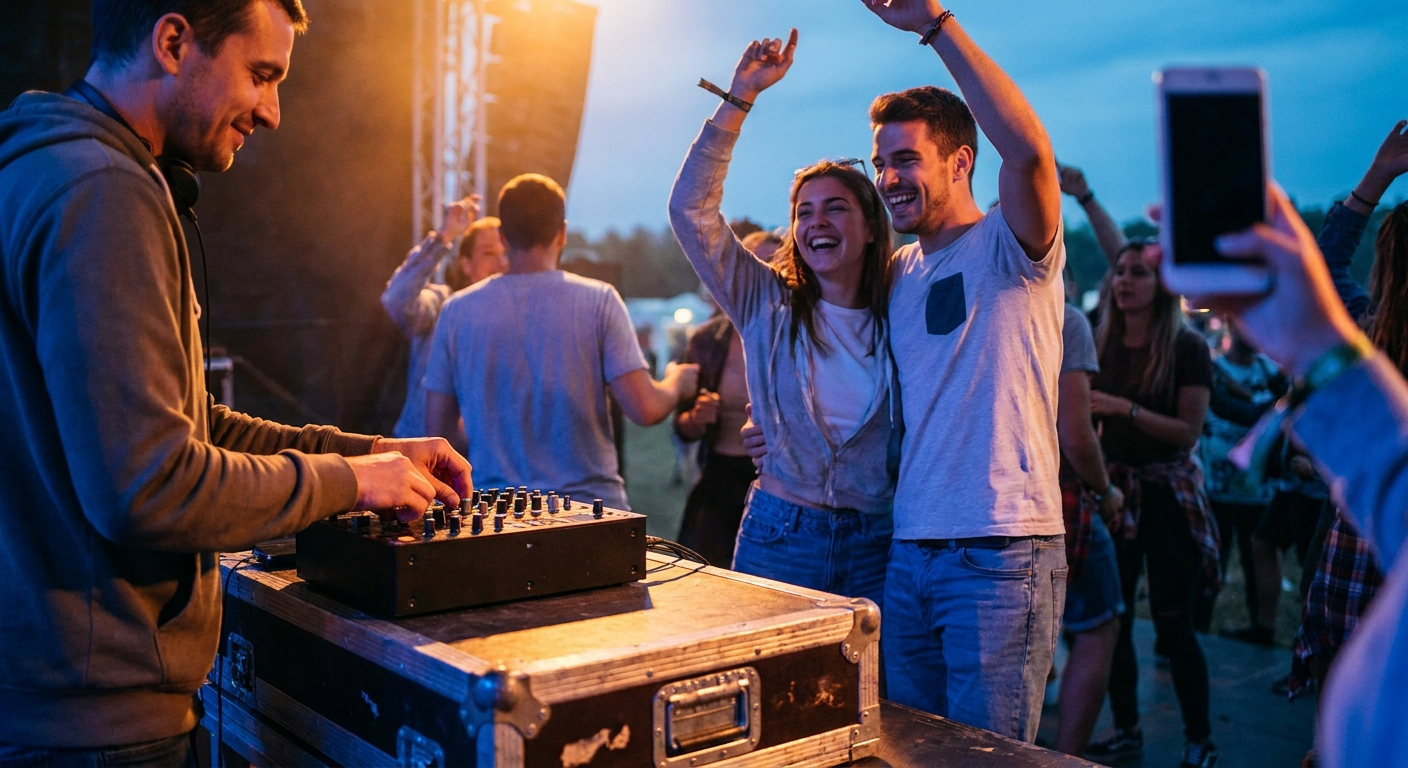
Here's the brutal truth: most couples don't think about music until two weeks before the wedding. Then they panic-spend on the first DJ they find or rely on Uncle Bob's Spotify playlist. Both approaches lead to disaster.
Why? Because music sets the entire tone of your wedding. A bad DJ kills the dance floor. A mismatched playlist makes guests check their watches. And an unprepared sound system turns your first dance into a feedback nightmare.
Your wedding music budget isn't just a number on a spreadsheet. It's a strategic decision that affects every single moment of your big day. From the ceremony processional to the last song of the night, every dollar you spend (or save) has a direct impact on your guests' experience.
The Real Cost of Getting It Wrong
Let me paint you a picture. You spend $3,000 on a DJ who shows up late, plays the wrong genre, and clears the dance floor by 9 PM. Or you spend $0 on a DIY playlist that dies halfway through the reception because your phone runs out of battery. Both scenarios cost you something far more valuable than money: memories.
According to industry surveys, 73% of couples say music was the most important factor in their wedding's overall atmosphere. Yet only 40% of couples plan their music budget before booking other vendors. That's a recipe for regret.
💡 Pro Tip: Treat your music budget like you treat your venue budget. Lock it in early. Research options. And never, ever leave it to the last minute. Your guests will thank you.
Step 1: Define Your Wedding Music Vision (Before You Spend a Dime)
Before you look at a single DJ or band, you need to answer one question: What kind of wedding atmosphere do you want?
This isn't a trick question. Your answer determines everything about your wedding music budget. Let me break it down into three common scenarios.
- The High-Energy Dance Party — You want a packed dance floor all night. Think Top 40 hits, throwback jams, and crowd singalongs. Budget: $1,500-$5,000+ for a pro DJ or band.
- The Elegant, Romantic Affair — You want background music that sets a mood. Think jazz, classical, or acoustic covers. Budget: $800-$3,000 for a live musician or curated playlist.
- The Intimate, Low-Key Celebration — You want music that's present but not dominant. Think folk, indie, or singer-songwriter vibes. Budget: $300-$1,500 for a small band or high-quality DIY setup.
Your wedding music budget scales directly with your vision. A DJ who specializes in high-energy events costs more than a solo guitarist. A live band costs more than a playlist. That's fine — as long as you know what you're paying for.
Why This Step Matters for Your Budget
Here's a hard truth: you cannot budget for something you haven't defined. If you tell a DJ "we want good music," they'll quote you their standard rate. If you tell them "we want a 4-hour set with 80s and 90s hits, a dedicated cocktail hour mix, and a grand entrance song," they'll quote you something specific — and potentially lower.
Take 30 minutes with your partner. Write down your ideal wedding music experience. Be specific. Then use that vision to guide every budget decision going forward.
Step 2: Choose Your Wedding Music Format (DJ, Band, or DIY)
Now that you have a vision, it's time to pick your weapon. There are three main formats for wedding music. Each has a different impact on your wedding music budget.
Option 1: The Professional DJ ($800 - $3,500)
A professional DJ is the most common choice for a reason. They bring experience, equipment, and the ability to read a room. A good DJ can save a dying dance floor by switching genres on the fly.
- Pros: Professional equipment, backup gear, MC services, crowd reading ability
- Cons: Can be expensive, quality varies widely, you're trusting one person's taste
- Best for: Couples who want a guaranteed dance floor without managing logistics
Option 2: The Live Band ($2,500 - $10,000+)
A live band brings energy that no DJ can replicate. Live musicians create a unique, electric atmosphere that gets people moving. But they come with a premium price tag.
- Pros: Unmatched energy, visual entertainment, unique renditions of songs
- Cons: Expensive, limited song repertoire, need breaks, require more space
- Best for: Couples with larger budgets who want a show-stopping experience
Option 3: The DIY Playlist ($0 - $500)
With modern tools, creating your own wedding playlist is easier than ever. A DIY playlist lets you control every single song and save thousands of dollars. But it requires serious planning.
- Pros: Free or cheap, total song control, no personality conflicts
- Cons: No crowd reading, sound system rental needed, no MC, potential technical issues
- Best for: Couples on tight budgets who are willing to invest time in planning
⚠️ Heads Up: If you choose DIY, do NOT rely on a single phone or laptop. Always have a backup device and a backup playlist. Technical failures are the #1 reason DIY wedding playlists fail.
Step 3: Build Your Wedding Music Budget Line by Line
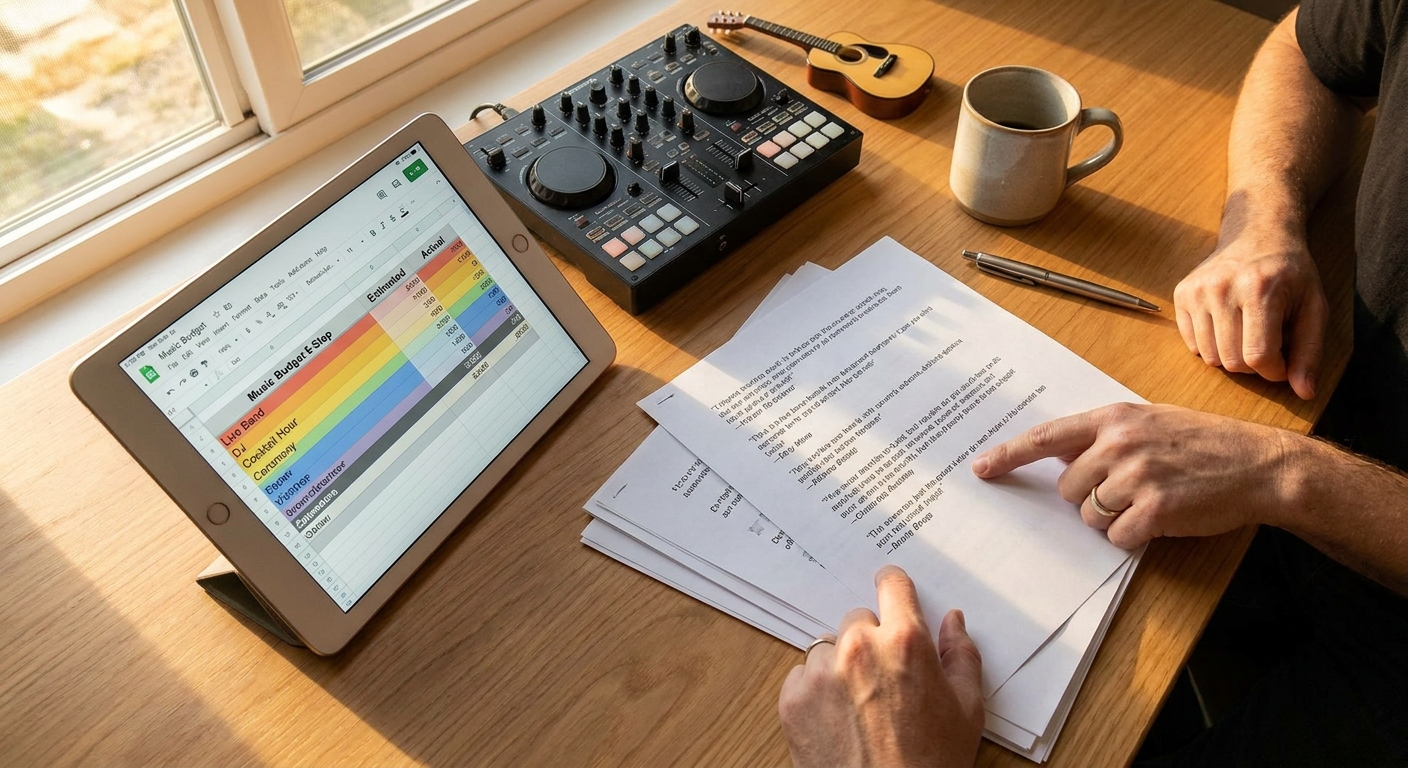
Here's where the rubber meets the road. A complete wedding music budget isn't just "DJ costs $1,500." There are hidden costs that most couples forget. Let's break it down.
The Complete Wedding Music Budget Breakdown
- Professional Services (DJ or Band): $800 - $5,000 (the main cost)
- Sound System Rental (if DIY): $200 - $800 (speakers, mixer, microphones)
- Lighting Package: $200 - $1,500 (uplighting, dance floor lights, gobos)
- Ceremony Music: $0 - $500 (solo musician, string quartet, or playlist)
- Cocktail Hour Music: $0 - $400 (jazz trio, acoustic guitar, or curated playlist)
- Overtime Fees: $100 - $500 per hour (if your reception runs long)
- Travel Expenses: $0 - $300 (if your DJ/band is coming from out of town)
- Backup Equipment: $50 - $200 (extra cables, backup phone, portable speaker)
💡 Pro Tip: Most DJs include basic sound system rental in their fee. Always ask what's included before comparing quotes. A $1,500 DJ who provides full sound and lighting is often a better deal than a $1,000 DJ who charges extra for everything.
Step 4: Create Your Wedding Reception Music Timeline
Your wedding music budget is useless without a timeline. Music isn't just "on" from 6 PM to 10 PM. It needs to serve different purposes at different moments. Here's the optimal timeline.
- Cocktail Hour (60 minutes): Background music — jazz, acoustic covers, or soft indie. Keep volume low. Let guests chat. Budget allocation: 10% of music budget.
- Dinner (60-90 minutes): Upbeat but not overwhelming. Think 70s soul, 80s pop, or modern acoustic covers. Volume should allow conversation. Budget allocation: 15% of music budget.
- First Dance & Special Moments (30 minutes): Dedicated songs for first dance, parent dances, and cake cutting. These are non-negotiable. Budget allocation: 10% of music budget.
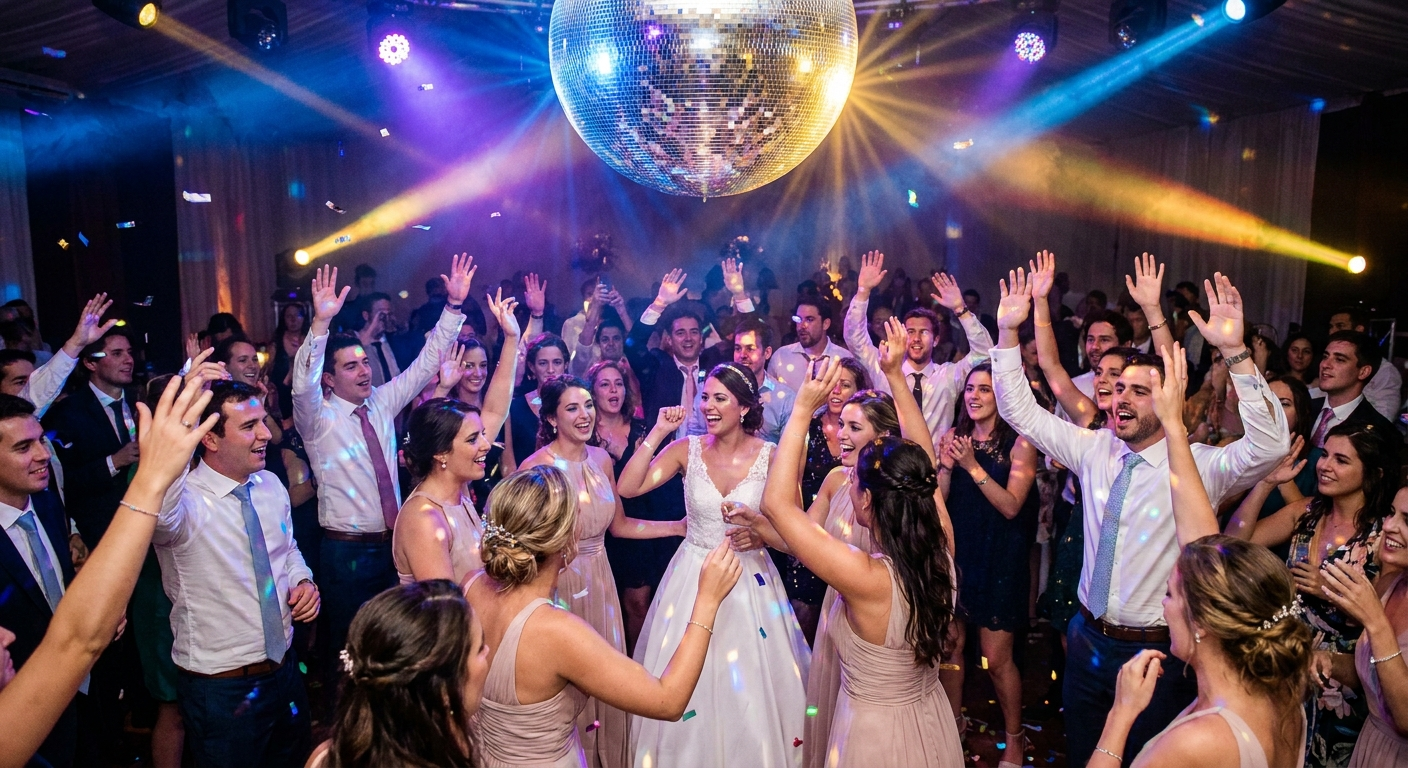
- Open Dancing (2-3 hours): This is where your budget earns its keep. High-energy songs, crowd favorites, and seamless transitions. Budget allocation: 50% of music budget.
- Send-Off & Last Song (15 minutes): One final high-energy song or a sentimental closer. Budget allocation: 5% of music budget.
Notice something? Half your budget goes to the open dancing portion. That's where memories are made. Don't skimp on this part.
Sample Playlist for Each Timeline Segment
Let's make this practical. Here are actual songs for each part of your reception, curated by a professional wedding DJ.
- Cocktail Hour Pick: "Put Your Records On" by Corinne Bailey Rae — smooth, warm, inviting
- Dinner Pick: "Can't Help Falling in Love" by Kacey Musgraves — modern cover, romantic but not overpowering
- First Dance Pick: "At Last" by Etta James — timeless classic, guaranteed tears
- Open Dancing Pick: "Uptown Funk" by Mark Ronson ft. Bruno Mars — guaranteed crowd pleaser
- Send-Off Pick: "Don't Stop Believin'" by Journey — epic singalong finale
Can't-Miss Tracks for Your Reception
- "Shut Up and Dance" by Walk the Moon — instant energy boost, everyone knows the chorus
- "September" by Earth, Wind & Fire — multi-generational hit, works for all ages
- "I Wanna Dance with Somebody" by Whitney Houston — pure joy in song form
- "Mr. Brightside" by The Killers — crowd singalong phenomenon, especially with younger guests
- "Thinking Out Loud" by Ed Sheeran — perfect slow dance moment
Step 5: Use a Hybrid Approach to Maximize Your Wedding Music Budget
Here's the secret that professional planners use: the hybrid approach. You hire a professional for the critical moments and handle the rest yourself. This can save you 40-60% while still getting a world-class experience.
How the Hybrid Approach Works
You hire a DJ or band for 2-3 hours of the reception (the open dancing and special moments). For the cocktail hour and dinner, you use a carefully curated DIY playlist. Here's the breakdown.
- Professional DJ: 3 hours for $1,000 (instead of 5 hours for $1,800)
- DIY Playlist (Cocktail Hour + Dinner): 2 hours for $0 (using your own speakers)
- Sound System Rental: $300 for a quality setup that works for both
- Total Hybrid Cost: $1,300 — compared to $1,800+ for a full DJ setup
That's a savings of $500 or more. And you still get a professional for the moments that matter most: the first dance, parent dances, and open dancing.
💡 Pro Tip: Use PartyMusicPlaylist to crowdsource song requests from your guests before the wedding. You'll build a playlist that everyone loves — and you can hand that list to your DJ so they know exactly what your crowd wants.
Where to Save Money on Your Wedding Music Budget
Not every part of your music plan needs top-tier spending. Here are three areas where you can cut costs without cutting quality.
1. Skip the Ceremony Musician
Ceremony music is important, but it doesn't require a live musician. A well-curated playlist on a quality speaker works perfectly for the processional, recessional, and signing of the register. Save the $300-$500 for your reception.
2. Negotiate Off-Peak Rates
Most DJs and bands charge more for Saturday weddings in peak season (May-October). Book a Friday or Sunday wedding, or choose a winter date, and you can often negotiate a 20-30% discount. Wedding music budget flexibility starts with your wedding date.
3. DIY Your Cocktail Hour
Cocktail hour music is background music. You don't need a jazz trio. Create a Spotify playlist of 15-20 mellow songs, set it to shuffle, and let it play. Your guests will be too busy chatting and drinking to notice the difference.
Common Wedding Music Budget Mistakes (And How to Avoid Them)
I've seen couples make the same mistakes over and over. Don't be one of them.
⚠️ Heads Up: Mistake #1 — Forgetting to Budget for Sound System Rental. If you go DIY, you need speakers. Rental costs add up fast. Always include this in your wedding music budget.
⚠️ Heads Up: Mistake #2 — Hiring the Cheapest DJ. A $500 DJ is often a DJ who doesn't have backup equipment, doesn't read contracts carefully, and doesn't know how to read a room. You get what you pay for.
⚠️ Heads Up: Mistake #3 — Not Having a Backup Plan. What if your phone dies? What if your DJ cancels? What if the power goes out? Always have a backup device, a backup playlist, and a backup plan for your music. Your wedding music budget should include a contingency fund.
Expert Tips for Your Wedding Music Budget
Advanced Budget Strategy: If you're working with a tight budget (under $1,000), go fully DIY but invest in a quality sound system. A $400 speaker system + a $50 microphone for toasts + a free PartyMusicPlaylist account will give you a better experience than a $500 DJ with terrible equipment. The difference is planning. Spend your time on the playlist, not the money on a mediocre vendor.
Here's another pro move: hire a DJ who offers a "day-of coordination" package. Some DJs will help you plan your timeline, coordinate with other vendors, and act as an MC for key moments. This adds value beyond just playing music and can actually save you money by replacing a separate day-of coordinator.
Finally, don't forget about guest song requests. When guests hear songs they personally requested, they're 3x more likely to hit the dance floor. Use a tool like PartyMusicPlaylist's template system to let guests submit requests before the wedding. It's free, it's easy, and it guarantees a packed dance floor.
Frequently Asked Questions
PartyMusicPlaylist Team
Helping you create the perfect soundtrack for life's most memorable moments. Expert tips on event music planning, DJ coordination, and playlist curation.
Learn MoreReady to Plan Your Event Music?
Create the perfect playlist for your special event. Search songs, organize your timeline, and share with your DJ.
Get Started FreeRelated Articles
Continue reading