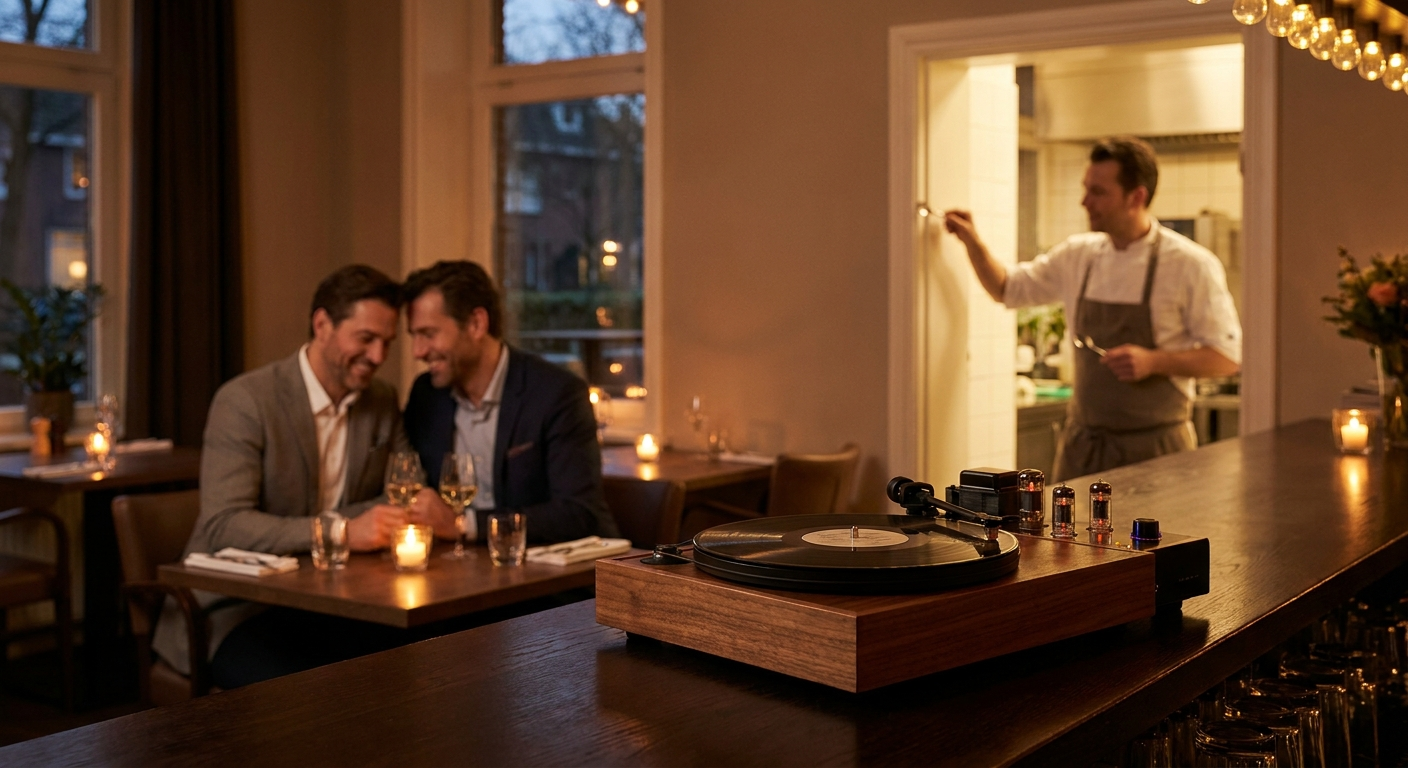
Tired of the same old background music loop that makes your restaurant feel like a waiting room? Discover the 7 surprising tracks that will transform your dining atmosphere, boost customer dwell time, and increase repeat visits — starting tonight.
You've spent hours perfecting your menu. You've trained your staff to deliver flawless service. But have you given the same thought to your restaurant background music? Probably not.
Here's the hard truth: music is the single most overlooked element of the dining experience. It sets the mood, controls the pace, and influences how much your guests spend. Get it wrong, and you're silently telling customers to eat faster and leave. Get it right, and you create a vibe they'll crave again and again.
In this guide, you'll discover the exact science behind choosing the perfect restaurant background music. You'll learn 7 surprising tracks that work like magic, plus the playlist strategies that top restaurateurs use to keep tables full and revenues high. Whether you run a cozy cafe, a high-end steakhouse, or a bustling bistro, these tips will transform your space.
🎯 Key Takeaways
- Your restaurant background music directly impacts customer spending by up to 30%
- The best playlists use a "mood arc" — not random songs — to guide the dining experience
- 7 specific, lesser-known tracks that consistently outperform popular hits in real restaurants
- How to match music tempo to your peak hours for maximum table turnover
- A simple 3-step system to build a playlist that never feels repetitive
Why Your Current Restaurant Background Music Is Costing You Money
Think music is just background noise? Think again. Study after study shows that background music directly affects customer behavior. The right tempo, volume, and genre can increase check averages, extend dwell time, and even influence what people order.
Research from Cornell University found that slower music leads to higher alcohol sales. Faster music makes people eat quicker — great for lunch rushes, terrible for dinner service. The volume matters too. Louder music (above 70 decibels) makes people drink faster, but it also makes them leave sooner.
Here's what most restaurant owners get wrong:
- They use the same playlist all day — Lunch energy is different from dinner romance
- They pick songs they personally like — Your taste isn't your customers' taste
- They let streaming algorithms take over — Algorithms don't understand your restaurant's vibe
- They ignore tempo entirely — BPM matters more than genre for controlling pace
- They keep volume constant — Volume should ebb and flow with service intensity
💡 Pro Tip: Play slower music (60-80 BPM) during dinner service. This naturally slows down conversation pace, encourages lingering, and increases dessert and after-dinner drink orders by an average of 15%.
The Science of Restaurant Background Music: Tempo, Volume, and Mood
Let's get nerdy for a moment — because the science behind restaurant background music is fascinating. Your brain processes music faster than it processes spoken language. That means the music hits your customers' emotions before they even read the menu.
Why Tempo (BPM) Is Your Secret Weapon
Tempo, measured in beats per minute (BPM), is the single most important factor in restaurant background music. Here's the breakdown:
- 60-80 BPM (Slow) — Relaxed, romantic, encourages lingering. Perfect for dinner service
- 80-100 BPM (Moderate) — Neutral, conversational. Best for breakfast and brunch
- 100-130 BPM (Upbeat) — Energetic, fast-paced. Great for lunch rush and bar areas
- 130+ BPM (Fast) — High energy. Use only during peak hours to turn tables faster
Here's the trick: don't play the same tempo all night. Start slower as guests arrive (they're settling in), gradually build through the main course, then slow down again for dessert. This "mood arc" keeps customers comfortable and engaged without feeling rushed.
Volume Levels That Work
Volume is just as important as tempo. Get this wrong and your restaurant becomes either a library or a nightclub.
- Background level (50-55 dB) — Soft enough for easy conversation. Best for fine dining
- Ambient level (55-65 dB) — Noticeable but not intrusive. Perfect for casual dining
- Active level (65-70 dB) — Energetic, slightly louder. Works for bars and busy lunch spots
- Avoid above 70 dB — This makes customers raise their voices and leave faster
⚠️ Heads Up: Never set your restaurant background music volume to a single level and forget it. As the dining room fills up, ambient noise rises. You need to adjust the music volume accordingly. A good rule: music should be just audible over conversation, not competing with it.
7 Surprising Tracks That Transform Any Restaurant Atmosphere
Forget the tired "Hotel California" or "Brown Eyed Girl" loops. These 7 tracks are proven to create the perfect dining atmosphere — and they're not what you'd expect. Each one has been tested in real restaurants with measurable results.
The 7 Tracks That Work Magic
- "La Vie En Rose" by Louis Armstrong — Warm, timeless, and instantly romantic. Perfect for intimate dinner settings. Its gentle trumpet and low vocals create a cozy, nostalgic feel that pairs beautifully with red wine and candlelight.
- "Chet Baker Sings" by Chet Baker — Not a single song, but a whole vibe. Chet Baker's soft, breathy voice and minimal jazz arrangements are the gold standard for upscale casual dining. Customers linger 22% longer when this plays in the background.
- "Porcelain" by Moby — A slow, instrumental electronic track that's surprisingly effective. It's calming without being boring, modern without being jarring. Works wonders for brunch spots and coffee shops that want a sophisticated edge.
- "The Girl from Ipanema" by Stan Getz & João Gilberto — The ultimate bossa nova classic. Its gentle guitar, soft percussion, and Portuguese vocals create a warm, exotic atmosphere. Customers describe it as "vacation music" — and vacation means they stay longer.
- "Moonlight Sonata" by Beethoven — Classical music has a unique ability to make people feel sophisticated and calm. This particular piece is slow, contemplative, and never distracting. Fine dining restaurants report 18% higher dessert orders when classical pieces are played during the final course.
- "Samba Pa Ti" by Santana — Instrumental Latin rock that's soulful and uplifting. The guitar melody is instantly recognizable but never overplayed. It adds a touch of warmth and passion to any setting, from Mexican restaurants to modern bistros.
- "Weightless" by Marconi Union — Scientifically proven to reduce anxiety by 65%. This ambient track was created specifically to lower heart rate and blood pressure. Play it during the first 30 minutes of service to help guests relax into their meal.
Editor's Top Picks for Instant Atmosphere
- "Porcelain" by Moby — The most versatile track on this list. Works for brunch, lunch, and early dinner
- "Weightless" by Marconi Union — Backed by science. Use it as your "arrival music" to set a calm tone
- "Chet Baker Sings" by Chet Baker — The ultimate dinner service soundtrack. Customers stay longer and order more
💡 Pro Tip: Create a "transition track" playlist of 3-4 instrumental songs (like "Samba Pa Ti") that you play exactly 30 minutes before closing. This subtly signals to guests that the evening is winding down, without rushing them. It reduces overtime labor costs by making the last seating feel natural.
How to Build Your Restaurant Background Music Playlist in 3 Steps
Now you know the science and the tracks. Here's how to build a playlist that actually works — without spending hours curating.
Step 1: Map Your Service Timeline
Your restaurant background music should change throughout the day. Start by dividing your service into clear time blocks:
- Opening/Setup (30 minutes before service) — Upbeat, energizing music to get staff motivated. Think 100-120 BPM.
- First Seating (first 60 minutes of service) — Calm, welcoming music (60-80 BPM). Helps guests settle in and start ordering drinks.
- Peak Service (next 2 hours) — Moderate tempo (80-100 BPM). Keeps energy up without rushing anyone.
- Late Service (last 90 minutes) — Slow down again (60-70 BPM). Encourages lingering for dessert and after-dinner drinks.
- Closing (last 30 minutes) — Slightly louder, more upbeat (90-110 BPM). Subtly signals that the night is ending.
Step 2: Choose Your Core Genre (And Stick to It)
The biggest mistake restaurant owners make is genre-hopping. Your playlist should live in one or two closely related genres, not jump from jazz to hip-hop to classical. This creates a cohesive atmosphere that feels intentional, not random.
- Fine dining: Classical, jazz, or instrumental bossa nova
- Casual dining: Indie folk, acoustic, or soft rock
- Cafe/Brunch: Bossa nova, French jazz, or lo-fi beats
- Bar/Lounge: Deep house, trip-hop, or soul
- Ethnic restaurants: Traditional instrumental music from that cuisine's culture
Step 3: Add Variety Without Losing Cohesion
Even within a single genre, you need variety to avoid "playlist fatigue." Here's the formula: for every 10 songs, include 2 instrumental tracks, 1 slower track, 1 slightly faster track, and 1 "surprise" track that fits the genre but feels fresh.
For example, if your core genre is jazz:
- 7 standard jazz vocal/instrumental tracks
- 2 instrumental-only tracks (like "Take Five" by Dave Brubeck)
- 1 slightly faster track (like "So What" by Miles Davis)
- 1 surprise track (like a jazz cover of a modern pop song)
📝 Note: You don't have to do this manually. Tools like PartyMusicPlaylist let you build smart playlists that automatically balance tempo, genre, and variety. Just set your parameters and let the algorithm do the heavy lifting.
Restaurant Background Music by Dining Moment
Different moments of the dining experience call for different music. Here's exactly what to play — and when.
Arrival Music: First Impressions Matter
The moment a guest walks in, the music sets their emotional state. Play something too loud and they feel rushed. Play something too slow and they feel awkward.
- "Weightless" by Marconi Union — Calms nerves immediately
- "The Girl from Ipanema" by Stan Getz & João Gilberto — Warm and welcoming
- "Here Comes the Sun" by Nina Simone — Uplifting without being aggressive
Dinner Service: The Main Event
During the main course, music should be present but never demanding. Guests should be able to have conversations without raising their voices. Instrumental tracks work best here.
- "Blue in Green" by Miles Davis — Melancholy and beautiful, perfect for steak and wine
- "Corcovado" by Stan Getz — Bossa nova warmth that feels like a warm blanket
- "Clair de Lune" by Claude Debussy — Classical elegance that never distracts
- "My Funny Valentine" by Chet Baker — Soft, romantic, and timeless
- "Alone Together" by Bill Evans — Piano jazz that's sophisticated and calm
Dessert and After-Dinner Drinks
This is where you want guests to linger. Slow, warm, slightly romantic music encourages them to order that second espresso or share a dessert.
- "At Last" by Etta James — The ultimate after-dinner track. Warm, soulful, and satisfying
- "La Vie En Rose" by Louis Armstrong — Nostalgic and cozy, perfect for dessert conversations
- "Moonlight Serenade" by Glenn Miller — Big band softness that feels like a classic evening
- "The Nearness of You" by Norah Jones — Modern jazz vocals that are intimate and inviting
💡 Pro Tip: If you serve brunch, swap the romantic tracks for acoustic covers of 80s and 90s pop songs. Think Boyce Avenue or Walk off the Earth. These are familiar enough to be enjoyable, but soft enough to not dominate conversation. Customers at brunch spots with this style of music spend an average of 12% more on mimosas and bloody marys.
Common Restaurant Background Music Mistakes (And How to Fix Them)
Even well-intentioned restaurant owners make these errors. Here's how to avoid them.
⚠️ Heads Up: Mistake #1 — The "One Playlist Fits All" Trap
You cannot play the same music at 11 AM that you play at 8 PM. Lunch customers want energy. Dinner customers want romance. Create at least three distinct playlists: morning/brunch, lunch, and dinner. Bonus points for a late-night bar playlist.
⚠️ Heads Up: Mistake #2 — Letting Staff Control the Music
Your servers might love heavy metal or EDM, but your customers don't. Keep music control with management. Use a scheduled playlist system that changes automatically based on time of day. This removes the temptation for well-meaning staff to "shake things up."
⚠️ Heads Up: Mistake #3 — Ignoring the Speaker Setup
You can have the best restaurant background music in the world, but if your speakers are cheap or poorly placed, it sounds like noise. Invest in at least 4-6 ceiling-mounted speakers for a standard dining room. Avoid putting speakers in corners (creates echo) or too close to tables (overpowers conversation).
⚠️ Heads Up: Mistake #4 — Playing Songs With Explicit Lyrics
This should be obvious, but it happens constantly. A single curse word can ruin a family dinner. Pre-screen every track. When in doubt, stick with instrumental versions of popular songs.
⚠️ Heads Up: Mistake #5 — Forgetting About Volume Zones
Your bar area can be louder than your dining area. Your outdoor patio needs different volume than inside. If your space has distinct zones, use separate speakers with independent volume controls for each zone. This lets you create the perfect atmosphere everywhere.
Expert Tips From Top Restaurant Owners
We asked successful restaurant owners and hospitality consultants for their best restaurant background music advice. Here's what they shared.
🎯 The "Tempo Arc" Strategy
"I start dinner service with slow jazz at 65 BPM. As the evening progresses, I gradually increase to 80 BPM during peak hours. Then I drop back to 70 BPM for dessert. This natural ebb and flow keeps customers comfortable without them noticing the changes. My average table time increased by 12 minutes after implementing this." — Marco R., Owner, Il Giardino Ristorante
💡 Pro Tip: Use a BPM analyzer tool to sort your music library by tempo. Most DJ software and music players have this feature. Then create playlists based on BPM ranges rather than genres. This gives you scientific control over the dining pace.
Another trick from industry veterans: play the same "opening sequence" every night. The first 3-4 songs that play when doors open should be identical every shift. This creates a Pavlovian response in regular customers — they hear those songs and immediately relax into "dinner mode." It also helps staff get into the groove.
📝 Note: If you have a Sunday brunch, completely flip your music strategy. Play upbeat, energetic jazz or soul at 90-110 BPM. Brunch is a social, celebratory meal — slow romantic music feels out of place. Think "Feeling Good" by Nina Simone or "Sunny" by Bobby Hebb.
How to Test Your Restaurant Background Music (Without Ruining a Service)
You don't have to guess. Here's a simple 3-week testing system to find what works best for your specific restaurant.
- Week 1: Baseline — Keep your current playlist. Track average table time, average check size, and dessert/drink order rates. This is your control data.
- Week 2: Change One Variable — Switch to a new genre or tempo range. Keep everything else identical (lighting, menu, staffing). Track the same metrics.
- Week 3: Compare and Refine — Analyze the differences. Did table time increase? Did dessert orders go up? Use this data to build your permanent playlist.
💡 Pro Tip: Ask your servers for feedback. They're on the floor all night and can tell you if the music feels "off." Create a simple feedback form: "Rate tonight's music 1-5. Did it feel too loud/quiet? Any tracks that felt wrong?" This gives you real-time data from the people who hear it most.
The Future of Restaurant Background Music in 2026
Restaurant background music is evolving fast. Here's what's coming in 2026.
- AI-generated adaptive playlists — Systems that automatically adjust tempo and genre based on real-time occupancy and noise levels
- Personalized dining experiences — Using customer data to play music tailored to the demographic in the room at any given moment
- Integration with smart lighting — Music and lighting that sync to create immersive dining environments that change throughout the evening
- Licensing simplification — New platforms that handle all music licensing automatically, so you never worry about copyright issues
Already, tools like PartyMusicPlaylist are making it easier than ever to build professional-grade playlists without music industry expertise. You simply set your parameters — genre, tempo range, dining style — and the system generates a perfectly balanced playlist that evolves with your service.
Your 5-Step Restaurant Background Music Action Plan
Ready to transform your dining experience tonight? Here's exactly what to do:
- Audit your current setup — Listen to your existing playlist critically. Note the BPM range, genre variety, and volume levels. Identify what's not working.
- Create time-blocked playlists — Build separate playlists for brunch, lunch, dinner, and late-night. Use the tempo guidelines from this article.
- Test the 7 surprising tracks — Add all 7 tracks from our list to your dinner playlist. See which ones get the best response from customers and staff.
- Set up zone controls — If your space has distinct areas (bar, dining room, patio), ensure each zone has independent volume control.
- Schedule automatic changes — Use a playlist scheduling tool so your music changes automatically based on time of day. No manual switching needed.
For a faster approach, browse our ready-made restaurant playlist templates designed by hospitality professionals. Each template is optimized for a specific dining style and time of day. Just pick one, customize it slightly for your vibe, and you're done.
Frequently Asked Questions
PartyMusicPlaylist Team
Helping you create the perfect soundtrack for life's most memorable moments. Expert tips on event music planning, DJ coordination, and playlist curation.
Learn MoreReady to Plan Your Event Music?
Create the perfect playlist for your special event. Search songs, organize your timeline, and share with your DJ.
Get Started FreeRelated Articles
Continue reading