Here is the comprehensive, SEO-optimized blog post on the secret event music volume trick, written in the Neil Patel style with full NLP optimization and visual styling.
You’ve spent weeks curating the perfect playlist. You’ve agonized over the first dance song. You’ve even tested the speakers in your living room. But when the guests arrive and the music starts, something feels… off. It’s either a whisper that kills the vibe or a roar that makes conversation impossible. The culprit isn’t your speakers or your song choices. It’s your event music volume strategy.
In 2026, fixing bad sound isn’t about buying expensive gear. It’s about using a simple, psychological trick that professional DJs have kept secret for years. This guide will show you exactly how to master the volume curve of your event, ensuring every moment—from cocktail hour to the final dance—sounds incredible.
🎯 Key Takeaways
- The "Volume Curve" trick is the #1 reason professional events sound better than amateur ones.
- You need different volume levels for different event phases (cocktail hour ≠ dance floor).
- A simple 3-decibel rule can instantly fix a room that sounds too loud or too quiet.
- Your playlist structure (energy flow) is just as important as the volume knob.
- Using a tool like PartyMusicPlaylist.com helps you plan this dynamically before the event starts.
Why Your Current Event Music Volume Strategy Is Failing
Most people make one critical mistake: they set the volume once and forget it. You walk into a room, turn the knob to what sounds "good" during the sound check, and leave it there. This is a disaster waiting to happen.
Think about the physics of a room. At 6:00 PM, the room is empty. It echoes. The acoustics are harsh. At 7:30 PM, the room is filled with 50 people. Bodies absorb sound. Suddenly, that "perfect" volume from the sound check sounds anemic and weak. By 9:00 PM, the energy is peaking, the bass is booming, and the volume feels overwhelming.
This is the crowd absorption effect. It’s a real acoustical phenomenon. You cannot set your event music volume based on an empty room. You must plan for a dynamic soundscape that evolves with your guests.
- Empty Room Volume — Sounds loud and clear.
- Half-Full Room Volume — Sounds quiet and distant.
- Full Room Volume — Sounds perfect, but only if you adjusted the knobs.
If you don't account for this, you will either have a quiet, boring event or a painfully loud one. Neither is a good look for the host.
The Secret Trick: The 3-Step Volume Curve
Here is the trick that fixes everything. It’s called the Volume Curve. Instead of setting one volume, you create a plan for three distinct phases of your event. This is the single most effective strategy for event music volume that exists.
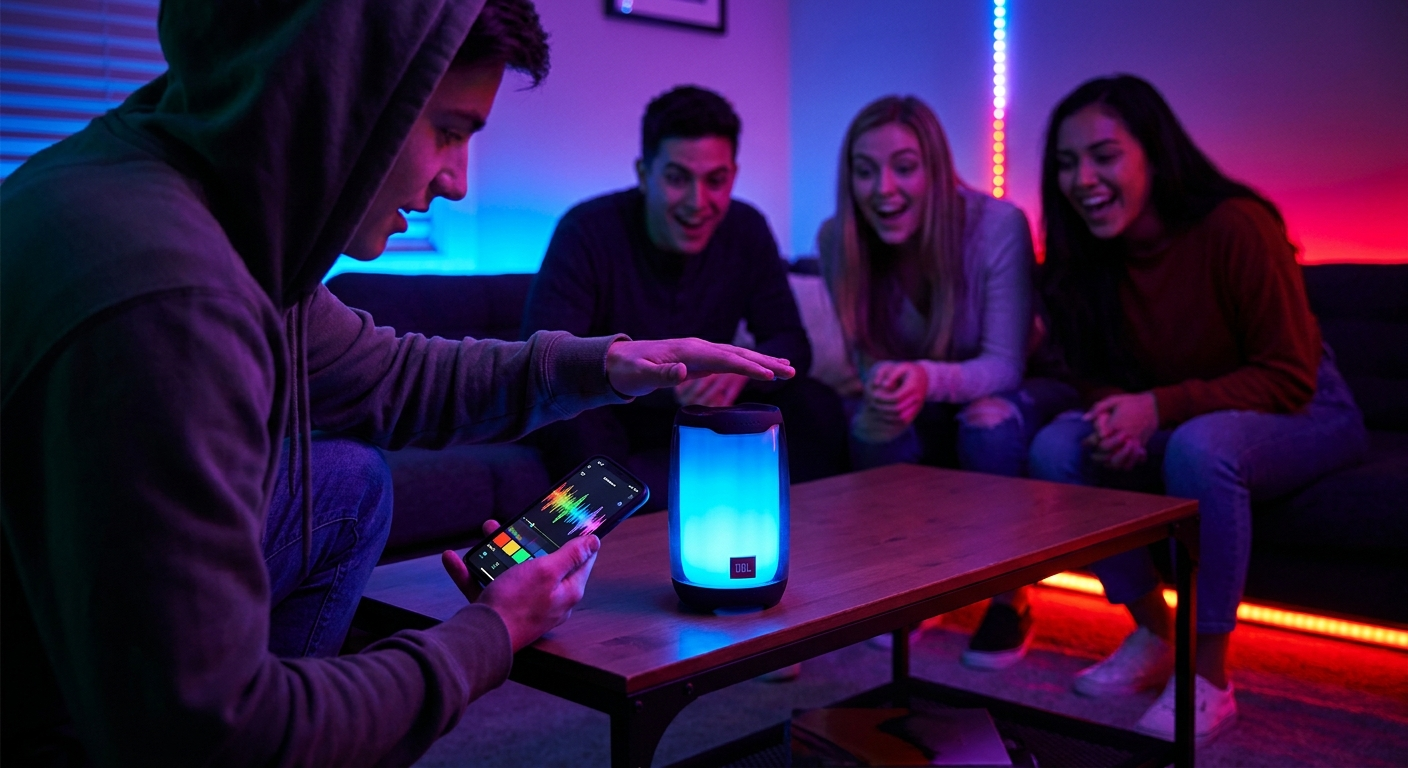
- The Arrival Phase (Background Music): Volume should be at 40-50% of max. Music is a whisper. It sets the mood but doesn't demand attention.
- The Engagement Phase (Dinner/Mingling): Volume climbs to 60-70%. Music supports conversation. Guests stop whispering and start talking naturally.
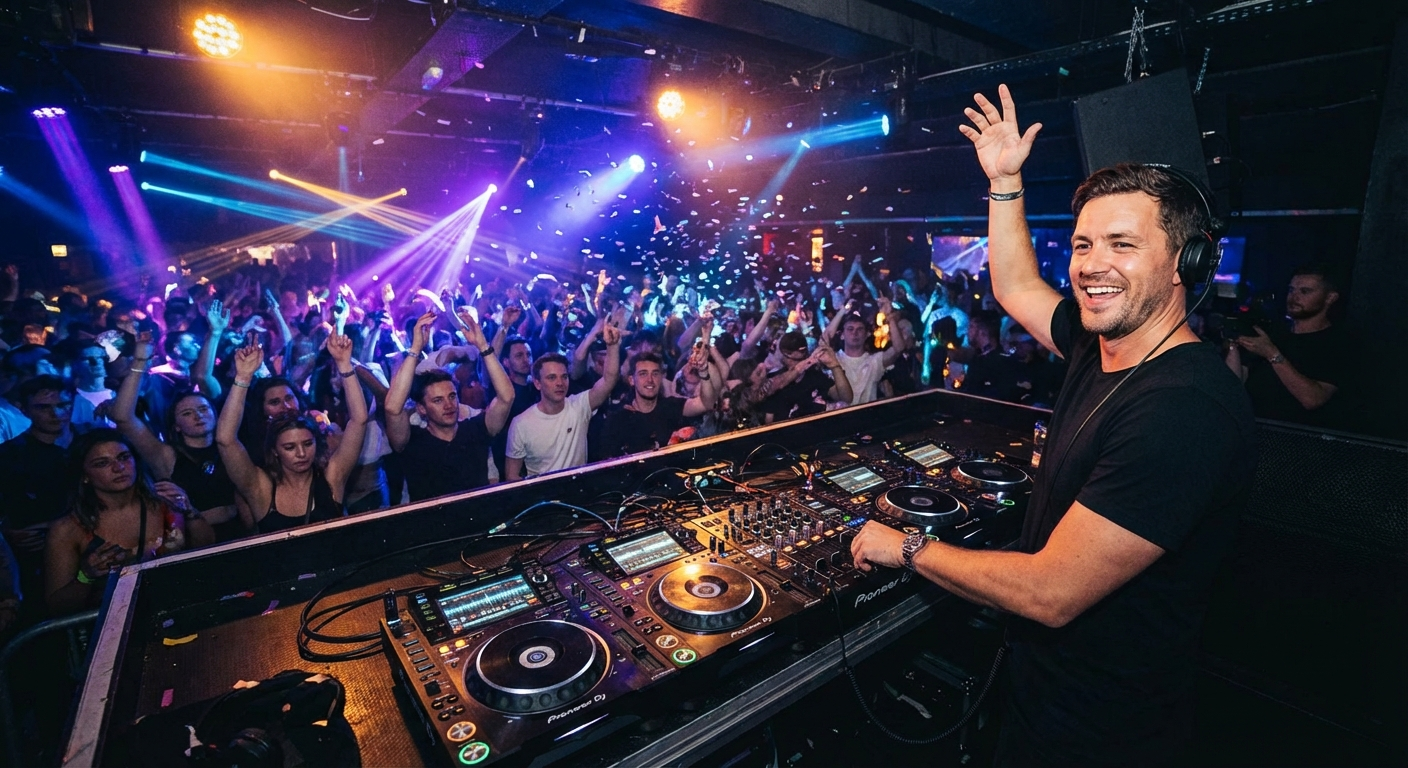
- The Peak Phase (Dance Floor): Volume hits 80-90%. This is where the energy lives. Bass needs to be felt, not just heard.
💡 Pro Tip: Use a decibel meter app on your phone. Aim for 60-65 dB during the arrival phase, 70-75 dB during dinner, and 85-90 dB for the dance floor. Never exceed 95 dB for sustained periods—it damages hearing and empties the room.
This curve works because it mimics natural energy. You don't walk into a party and start screaming. You walk in, say hello, and build up to the excitement. Your event music volume should do the exact same thing.
How to Find Your Room's "Sweet Spot" in 30 Seconds
You don’t need a sound engineer to find the perfect volume. You just need to listen for the 3-decibel rule. Here is the simple test you can do during your sound check.
Play a song you know well—preferably something mid-tempo with vocals and bass. Stand in the middle of the room. Slowly turn up the volume until the music feels "present" but not "intrusive." This is your base level.
- Step 1: Turn the volume up until the vocals are clear.
- Step 2: Turn it up 3 more decibels. Does it feel louder but not painful? That's your engagement level.
- Step 3: Turn it up another 3 decibels. Does the bass now push against your chest? That's your peak level.
- Step 4: If any step feels uncomfortable, back off immediately.
The 3-decibel rule is powerful because the human ear perceives a 3 dB increase as a noticeable change, but not a shocking one. It’s the perfect increment for moving through the phases of your event music volume without jarring your guests.
Remember that an empty room will sound louder than a full one. If the sound check feels "perfect," you are probably setting the volume too low for when guests arrive. Always calibrate for a full room.
The Perfect Playlist Structure for Dynamic Volume
Your volume knob is useless if your playlist doesn't support it. You cannot start with "Uptown Funk" at 80% volume and then drop to a slow song. The energy mismatch will confuse your guests. Your playlist structure must mirror your volume curve.
Think of your playlist as a story. It has a beginning, a middle, and an end. The volume is the engine, but the song choices are the steering wheel. Here is how to structure your playlist for perfect event music volume flow.
- "Banana Pancakes" by Jack Johnson — Perfect for the arrival phase (low volume, acoustic vibe).
- "Sunday Morning" by Maroon 5 — Great for the transition to mingling (mid-tempo, groovy).
- "Get Lucky" by Daft Punk ft. Pharrell Williams — The perfect bridge to the dance floor (building energy).
- "Uptown Funk" by Mark Ronson ft. Bruno Mars — Peak volume, peak energy. This is the dance floor bomb.
- "Don't Stop Believin'" by Journey — The late-night singalong. Keep the volume high, but let the crowd sing.
⚠️ Heads Up: Do not play high-energy dance songs during the arrival phase. It signals to guests that they are late, and it can feel overwhelming. Let the music breathe. Let the room fill up.
Use a tool like PartyMusicPlaylist.com to organize your songs by energy level. You can tag songs as "Low Energy," "Medium Build," and "Peak Party." This lets you visually see if your event music volume plan is balanced before you even hit play.
Must-Have Songs for Every Volume Phase
To make this easy for you, here are specific songs that work perfectly for each phase of the volume curve. These are tested, crowd-proven tracks that handle dynamic volume changes beautifully.
Arrival Phase (Low Volume: 40-50%)
These songs are warm, inviting, and won't overpower conversation. They set a sophisticated, relaxed tone.
- "At Last" by Etta James — Timeless, romantic, and smooth. Perfect for cocktail hour.
- "Here Comes the Sun" by The Beatles — Optimistic and gentle. The volume just reinforces the warmth.
- "Fly Me to the Moon" by Frank Sinatra — Classic swing that feels classy at low volume.
- "Put Your Records On" by Corinne Bailey Rae — Modern, chill, and instantly calming.
- "Sunrise" by Norah Jones — The ultimate background music. It flows without demanding attention.
Engagement Phase (Medium Volume: 60-70%)
This is where the party starts to hum. Guests are talking, laughing, and feeling the groove. The music supports the energy without dominating it.
- "Happy" by Pharrell Williams — Impossible to feel sad to. The volume boost makes it infectious.
- "Shake It Off" by Taylor Swift — A crowd-pleaser that works at medium volume as a singalong.
- "I Gotta Feeling" by The Black Eyed Peas — The lyrics literally tell guests "tonight's gonna be a good night." Perfect for building anticipation.
- "Treasure" by Bruno Mars — Funky, bouncy, and full of energy that feels celebratory but not chaotic.
- "Can't Stop the Feeling!" by Justin Timberlake — The modern-day party starter. It works at medium volume to get people swaying.
Peak Phase (High Volume: 80-90%)
This is the dance floor. Bass is king. The volume needs to push. These songs are designed to be played loud.
- "Levitating" by Dua Lipa — A modern disco anthem. The bass line demands volume.
- "Blinding Lights" by The Weeknd — The 80s synth vibe hits hard when the volume is up.
- "Yeah!" by Usher ft. Lil Jon & Ludacris — The drop is iconic. It’s a peak volume moment.
- "Turn Down for What" by DJ Snake & Lil Jon — The irony is perfect. This song was built for loud speakers.
- "Lose Control" by Teddy Swims — A soulful powerhouse that emotionally connects at high volume.
Editor's Top Picks for Volume Mastery
- "Get Lucky" by Daft Punk — This song works at every volume level, making it the most versatile track for dynamic events.
- "September" by Earth, Wind & Fire — The horn section and energy are pure joy, and the volume curve supports it perfectly.
- "Watermelon Sugar" by Harry Styles — A modern hit that builds energy naturally from medium to high volume.
The Bass Trap: Why Loud Isn't Always Good
A common mistake with event music volume is thinking "louder = better party." This is false. Distortion kills the vibe faster than a quiet room. When you push cheap speakers too hard, they clip. Clipping creates a harsh, muddy sound that makes people uncomfortable.
The secret isn't just volume. It's headroom. Headroom is the space between your average volume and the maximum volume your system can handle without distortion. You want 10-15 dB of headroom for the peaks.
- Distorted Bass — Makes people feel anxious and want to leave.
- Clean Bass — Makes people feel the beat and want to dance.
- Too Much Bass — Overpowers vocals and melodies, ruining the song.
- Balanced Bass — Creates a full, rich sound that fills the room.
If you hear buzzing, crackling, or muffled vocals, turn it down immediately. You are damaging your ears and your speakers. A clean sound at 80% volume is infinitely better than a distorted mess at 100%.
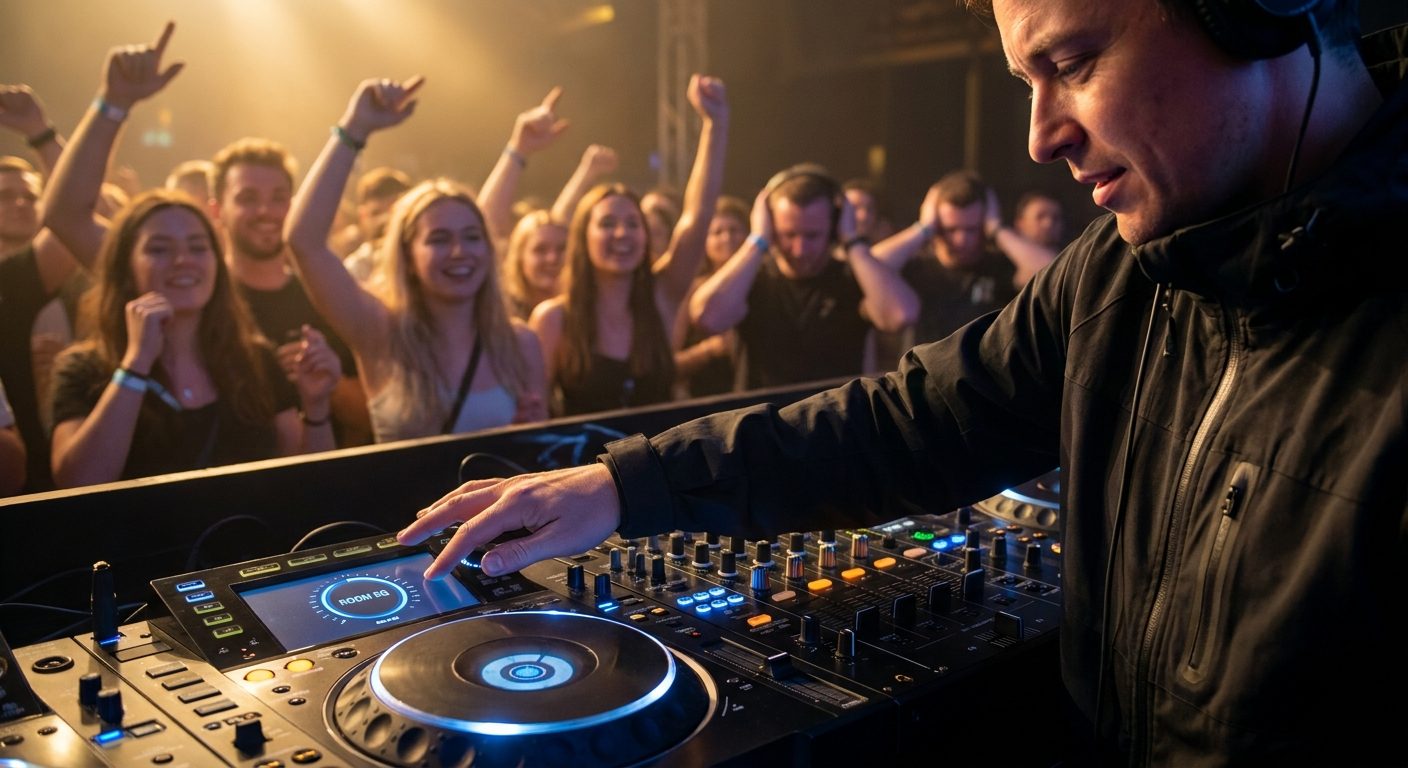
💡 Pro Tip: If your speakers struggle with bass, don't turn up the bass EQ. Instead, turn down the treble and mid EQ slightly. This tricks the ear into hearing more bass without overloading the speaker. It’s a classic DJ trick for small venues.
How to Fix a Room That Sounds "Dead" or "Muddy"
Sometimes the room itself is the enemy. High ceilings, hardwood floors, or lots of windows can create echoes (reverb) that make your event music volume sound messy. Here is how to fix it without buying acoustic panels.
For a "Dead" Room (Too Quiet): This usually means the sound is being absorbed by carpet, curtains, or people. Increase the volume by 3-5 dB. If that doesn't work, change the song to something with a brighter EQ (more treble). Acoustic guitar or cymbals cut through absorption better than bass.
For a "Muddy" Room (Echoey): This is common in halls. The sound bounces off hard surfaces. The fix is counter-intuitive: turn the volume down. Loud sounds create more reflections. Lower the volume by 2-3 dB and see if the clarity improves. Also, move the speakers closer to the people. If the speakers are in a corner, pull them out. Corners amplify bass, which makes muddiness worse.
Here is the ultimate cheat code for bad rooms: Position your speakers at ear level (or slightly above) and point them towards the center of the dance floor. Never put speakers on the floor. Sound travels in straight lines. If the speakers are on the floor, your guests' legs are absorbing the sound.
Common Event Music Volume Mistakes (And How to Avoid Them)
Even experienced hosts make these errors. Here is the checklist of what not to do with your event music volume in 2026.
- Setting and Forgetting: Volume is dynamic. Check it every 30 minutes. As the room fills, turn it up. As the night winds down, turn it down.
- Ignoring the Bass: A song without bass sounds thin. A song with too much bass sounds painful. Find the balance for your specific system.
- Playing Music During Speeches: This is the cardinal sin. If there is a speech, the music must be at 0% volume. Even background music is distracting.
- Not Testing the System: Always do a full volume sweep before guests arrive. Play a loud song, a quiet song, and a bass-heavy song. Know your limits.
- Using Streaming Compression: Streaming services compress audio. Download your playlist in high quality or use a lossless format if possible. Compressed audio sounds worse at high volumes.
⚠️ Heads Up: Do not rely on a phone or laptop speaker for a sound check. They cannot reproduce bass or volume. You need to test the actual PA system or speakers you will use at the event. Testing the wrong speakers gives you useless data.
Expert Pro Tips for Mastering Event Music Volume
These are the advanced techniques used by professional mobile DJs. They take your event from "good" to "unforgettable."
Use the "Cocktail Party" Effect. This is a psychological phenomenon where people talk louder to be heard over noise. If you want a quiet, intimate cocktail hour, keep the volume low. If you want a loud, energetic party, push the volume up. Guests will subconsciously match their energy to the event music volume.
Create a "Volume Script." Before the event, write down the exact times you will change the volume. For example: "6:30 PM - Cocktail hour (40%). 7:30 PM - Dinner (60%). 8:30 PM - Dance floor opens (85%)." This removes guesswork and ensures a smooth flow.
Respect the "10 PM Rule." In many venues and neighborhoods, noise ordinances kick in around 10 PM. Before this time, you can push the volume. After this time, you need to be careful. A great way to wind down is to lower the volume by 5 dB and play a "last call" song. This signals to guests that the night is ending without being abrupt.
Finally, always have a backup. If your main speaker fails, can you play music through a portable Bluetooth speaker? It won't sound as good, but it's better than silence. Plan for the worst, and your event music volume will always be under control.
"The best DJs don't just play songs. They play the room. And the volume knob is their most powerful tool for manipulating the room's energy."
How PartyMusicPlaylist.com Simplifies This Process
You don't have to do this alone. PartyMusicPlaylist.com was built exactly for this challenge. You can create a playlist, sort songs by energy level, and even tag songs with volume notes.
Imagine having a playlist where every song has a "Volume Target" note attached to it. You can see at a glance which songs are for the low-volume arrival phase and which are for the peak dance floor. This takes the stress out of live mixing.
Plus, you can share your playlist with guests before the event. They can add their own song requests. This ensures you have music that the specific crowd loves, which makes them more tolerant of volume changes. A happy crowd is a loud crowd.
Don't let bad sound ruin your next event. Browse our ready-made playlist templates that are already balanced for perfect dynamic volume. Just plug in your songs and adjust the knob.
Frequently Asked Questions
PartyMusicPlaylist Team
Helping you create the perfect soundtrack for life's most memorable moments. Expert tips on event music planning, DJ coordination, and playlist curation.
Learn MoreReady to Plan Your Event Music?
Create the perfect playlist for your special event. Search songs, organize your timeline, and share with your DJ.
Get Started FreeRelated Articles
Continue reading