You Don’t Need Professional Gear to Rock the Party
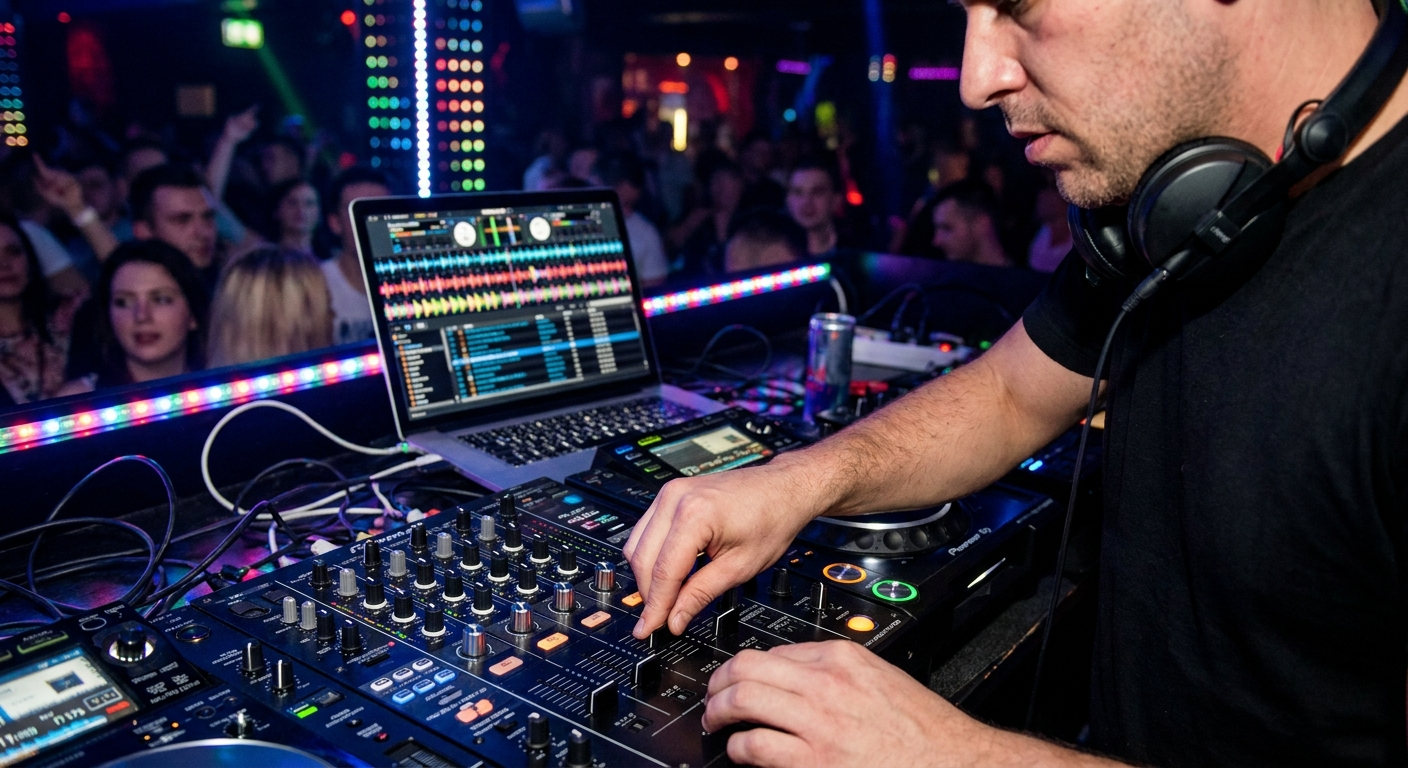
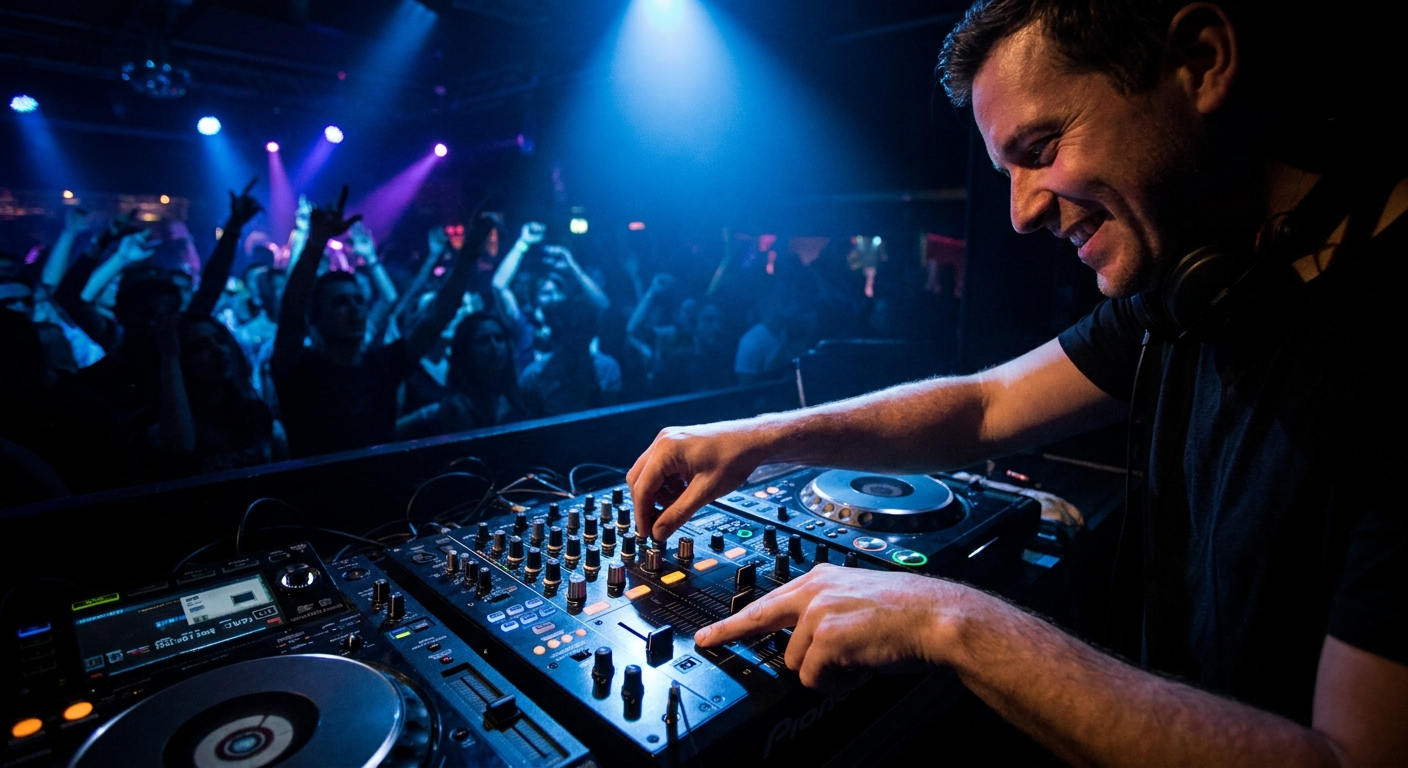
Let’s be honest. When you hear “how to DJ a party,” your mind probably goes to expensive turntables, complicated software, and a booth full of flashing lights. But here’s the truth: you can throw an incredible party with just a laptop, a decent speaker, and the right playlist. The real secret isn’t the gear — it’s the strategy behind your music selection.
Every beginner DJ makes the same mistakes. They play songs that are too niche. They lose the crowd between genres. They forget to read the room. And worst of all, they stress out instead of enjoying the celebration.
But you’re different. You’re reading this guide because you want to learn the pro secrets that separate unforgettable parties from forgettable ones. I’ve spent years helping people build playlists that keep dance floors packed. Now I’m sharing everything I know.
Here’s what you’ll discover in this guide: how to prepare before the event, which songs work for every moment, how to transition between genres smoothly, and the exact mistakes to avoid. By the end, you’ll have a complete blueprint for hosting a party that people will talk about for months.
🎯 Key Takeaways
- You don’t need expensive equipment — a laptop and speaker are enough to start
- Reading the crowd is more important than having a perfect playlist
- Energy transitions between songs make or break the dance floor
- Preparation is everything: test your gear, know your songs, and have backups
- Using a tool like PartyMusicPlaylist simplifies guest song requests and DJ export
Secret #1: The 3-Phase Energy Flow (Every Pro Uses This)
Most beginners play songs randomly. They hit shuffle and hope for the best. That’s a guaranteed way to lose your crowd before the night even starts.
Professional DJs structure their sets into three distinct energy phases. This creates a natural journey for your guests — from arrival to peak dancing to wind-down. Without this structure, your party feels chaotic and exhausting.
Phase 1: The Warm-Up (First 45-60 Minutes)
This is when guests are arriving, grabbing drinks, and catching up. The music should be background energy — noticeable but not demanding attention. Think of it as setting the mood without forcing anyone to dance.
- "Blinding Lights" by The Weeknd — Upbeat but not aggressive, perfect for arrival vibes
- "Levitating" by Dua Lipa — Danceable without being overwhelming
- "Watermelon Sugar" by Harry Styles — Feel-good energy that fills the room
- "Sunflower" by Post Malone & Swae Lee — Chill but recognizable
- "Adore You" by Harry Styles — Smooth, warm, and inviting
💡 Pro Tip: During the warm-up, play songs at about 70-80% of your intended peak volume. You want people to feel the music, not shout over it. Save the full power for later.
Phase 2: The Build-Up (60-90 Minutes)
Now the room is full. People have settled in. It’s time to gradually increase tempo and energy. This phase should feel like climbing a hill — each song takes you a little higher. The goal is to get people nodding their heads, then tapping their feet, then moving toward the dance floor.
- "Uptown Funk" by Mark Ronson ft. Bruno Mars — Instant energy injection
- "Don’t Start Now" by Dua Lipa — Perfect for transitioning from warm-up to dance
- "Happy" by Pharrell Williams — Infectious, crowd-pleasing, and impossible to ignore
- "Shut Up and Dance" by Walk the Moon — Classic build-up anthem
- "Can’t Stop the Feeling!" by Justin Timberlake — Pure feel-good energy
📝 Note: Watch for the moment when three or four people start dancing at the same time. That’s your signal to push into Phase 3. Don’t rush it — let the crowd tell you when they’re ready.
Phase 3: The Peak (60-90 Minutes)
This is the main event. The dance floor is packed. Energy is at maximum. Your job now is to keep it there. Play the biggest, most energetic songs in your arsenal. This is where you drop the anthems that everyone knows by heart.
Peak Energy Must-Haves
- "Yeah!" by Usher ft. Lil Jon & Ludacris — The ultimate party starter. This song has been filling dance floors for two decades for a reason.
- "Toxic" by Britney Spears — Timeless, high-energy, and instantly recognizable. Works for any crowd.
- "I Gotta Feeling" by The Black Eyed Peas — The lyrics literally tell people to party. It’s a cheat code.
- "We Found Love" by Rihanna ft. Calvin Harris — Pure dance floor euphoria. The drop still hits hard.
- "Party Rock Anthem" by LMFAO — Silly? Yes. Effective? Absolutely. Don’t overthink it.
⚠️ Heads Up: Don’t try to play every peak song at once. Spread your biggest anthems across the full 60-90 minutes. If you play your best song in the first 10 minutes, you have nowhere to go but down. Save the absolute bangers for the middle and end of Phase 3.
Secret #2: You Must Read the Room (Here’s How)
This is the skill that separates amateurs from pros. Reading the room means watching your guests and adjusting your music in real time. You can have the best playlist in the world, but if the crowd isn’t vibing with it, you need to change course immediately.
How do you read the room? Look for these three signals:
- Body language. Are people tapping their feet? Nodding their heads? Or are they standing still, looking at their phones? Stillness is a warning sign.
- Dance floor density. Count the people on the dance floor. If it’s empty for more than two songs, something is wrong. Switch genres or tempo immediately.
- Facial expressions. Smiles and singing along = good. Blank stares or confused looks = bad. Pay attention to the front row of the dance floor — they’re your most honest feedback.
💡 Pro Tip: Have a “rescue playlist” ready — 5-10 songs that you know will get any crowd moving. Think "Don’t Stop Believin’" by Journey, "Billie Jean" by Michael Jackson, or "Livin’ on a Prayer" by Bon Jovi. When you see the energy dip, pull these out immediately.
“The best DJs don’t play what they want. They play what the crowd needs. If you’re not watching the room, you’re just playing songs into the void.” — Experienced party DJ
📝 Note: If you use a tool like PartyMusicPlaylist, you can let guests submit song requests before the party. This gives you a built-in reading of what your specific crowd wants. It’s like having a cheat sheet for the room.
Secret #3: Transition Between Genres Like a Pro
This is where most beginners fail. They jump from a slow R&B song straight into a fast EDM track. The energy shift is too jarring. Guests feel confused, and the dance floor clears.
Professional DJs use transition songs to bridge different genres. These are songs that share elements with both the previous and next genre — similar tempo, similar energy level, or similar instrumentation.
How to Transition from Slow to Fast
Let’s say you’re moving from a chill R&B section to high-energy pop. Don’t jump straight to "Uptown Funk." Instead, use a bridge song that’s in between:
- "24K Magic" by Bruno Mars — Has the R&B groove but with pop energy. Perfect middle ground.
- "Leave the Door Open" by Silk Sonic (Bruno Mars & Anderson .Paak) — Slow enough for R&B fans, energetic enough to build toward pop.
- "Get Lucky" by Daft Punk ft. Pharrell Williams — Disco-funk that works for both slow and fast crowds.
How to Transition from Fast to Slow
Need to bring the energy down? Use a song that’s still upbeat but has a slower tempo:
- "Thinking Out Loud" by Ed Sheeran — Slower but still danceable for couples.
- "Just the Way You Are" by Bruno Mars — Romantic, slow, but keeps the mood positive.
- "All of Me" by John Legend — A classic wind-down song that feels natural after high energy.
“A good transition is invisible. The crowd shouldn’t notice the change — they should just feel the music flowing naturally. If you can master transitions, you can play any genre at any party.”
⚠️ Heads Up: Never play more than three songs in a row from the same genre. Your crowd will get bored. Mix it up: pop, then hip-hop, then dance, then throwback. Keep them guessing.
Secret #4: The Golden Rule of Song Order (BPM Matters)
BPM stands for Beats Per Minute. It’s the speed of a song. If you ignore BPM, your transitions will feel clunky and awkward. The goal is to gradually increase BPM through the night, then slowly decrease toward the end.
Here’s how to apply this rule to your playlist:
- Start at 100-110 BPM. Slow, groovy songs that let people settle in. Think "Stay" by Rihanna ft. Mikky Ekko (110 BPM) or "Love on the Brain" by Rihanna (105 BPM).
- Gradually increase by 5-10 BPM every 15 minutes. This is a slow enough climb that guests won’t notice, but fast enough that energy builds naturally.
- Peak at 120-130+ BPM. This is where your highest-energy songs live. "Don’t Stop the Music" by Rihanna (122 BPM), "Titanium" by David Guetta ft. Sia (126 BPM), and "Levels" by Avicii (126 BPM) are perfect here.
- Wind down slowly at the end. If your party has a hard stop (like a venue curfew), gradually drop BPM over the last 30 minutes to signal the end. Use songs like "Time After Time" by Cyndi Lauper (80 BPM) or "Lean on Me" by Bill Withers (75 BPM).
📝 Note: You can find BPM for any song using free online databases or music software. Most streaming apps also show BPM in the metadata.
Secret #5: Build a “Crowd-Sourced” Playlist Before the Party
This is the ultimate hack for beginners. Instead of guessing what your guests want, ask them directly. You can do this manually by texting friends, but it’s much easier with a dedicated tool.
Here’s my recommended process:
- Send a link to your playlist creation tool one week before the party. Ask guests to submit 3-5 songs each. This gives you a curated list of guaranteed hits for your specific crowd.
- Review the submissions and organize them by BPM and energy level. Remove duplicates and any songs that don’t fit the vibe (e.g., a sad breakup song at a birthday party).
- Build your final playlist using the 3-Phase Energy Flow. Place guest submissions throughout the night, but save the most popular ones for Phase 3.
- Export your playlist to a DJ-friendly format. Tools like PartyMusicPlaylist allow you to export directly to popular DJ software.
🎧 Pro-Level Hack: Use PartyMusicPlaylist to create a collaborative playlist where guests can add songs in real time during the party. This keeps the dance floor engaged because people feel invested in the music. Plus, you get live feedback on what’s working and what’s not.
“I used to spend hours building the perfect playlist. Then I realized my guests had better ideas than me. Now I let them contribute before every party. It’s the easiest way to guarantee a packed dance floor.”
Secret #6: The “One for Them, One for You” Rule
Every beginner DJ makes this mistake: they play only their own favorite songs. The party isn’t about you — it’s about your guests. But that doesn’t mean you have to suffer through music you hate.
The solution is the “One for Them, One for You” rule. Alternate between a guaranteed crowd-pleaser and a song you personally love. This keeps everyone happy, including you.
- Song 1 (For Them): "Shape of You" by Ed Sheeran — Universal appeal, everyone knows it.
- Song 2 (For You): "Electric Feel" by MGMT — More niche but still danceable and cool.
- Song 3 (For Them): "Despacito" by Luis Fonsi ft. Daddy Yankee — Guaranteed sing-along.
- Song 4 (For You): "Feel It Still" by Portugal. The Man — Indie hit that still gets people moving.
- Song 5 (For Them): "Old Town Road" by Lil Nas X — Viral hit that crosses generations.
💡 Pro Tip: Your “for you” songs should still be danceable. Don’t play a 7-minute prog-rock epic in the middle of a pop set. Keep the energy consistent.
Secret #7: Preparation Is Everything (Checklist Inside)
You can’t wing a great party. Preparation is what separates a stressful night from a smooth, fun experience. Here’s my pre-party checklist:
- Test your equipment 24 hours before. Plug in your speakers, laptop, cables, and backup phone. Make sure everything works.
- Create a backup playlist on a different device. If your laptop crashes, you need a phone or tablet ready to go.
- Organize your songs into folders by BPM range and energy level. This makes live transitions much easier.
- Charge everything overnight. Speaker batteries, laptop, phone, and any portable chargers.
- Have a physical playlist on paper. If technology fails, you can still keep the music going by shouting out requests.
- Arrive 30 minutes early to set up. Test the acoustics of the room and adjust speaker placement.
⚠️ Heads Up: Always bring extension cords and power strips. Venue outlets are never where you expect them to be. Running out of power mid-party is a rookie mistake that’s easily avoided.
Secret #8: Know When to Stop (The Art of the Finale)
Every party has a natural end. The problem is, most beginner DJs don’t know how to close it properly. A bad ending leaves guests feeling disappointed. A good ending leaves them wanting more.
Here’s how to end a party like a pro:
- Announce the last song 10 minutes before it plays. This gives guests time to say goodbye, take photos, and prepare for the end.
- Play a song that feels like a celebration. Think "We Are the Champions" by Queen or "Closing Time" by Semisonic (ironic but effective).
- Slowly fade the volume over the final 60 seconds. This signals that the night is truly over.
- Thank the crowd and encourage them to come back. A personal touch goes a long way.
- "Don’t Stop Believin’" by Journey — The ultimate closing anthem. Everyone sings along.
- "Piano Man" by Billy Joel — A slower, more intimate ending for smaller gatherings.
- "Time of Your Life" by Green Day — Bittersweet but perfect for celebrating the night.
“The last song is the one people remember most. Make it count. Choose something that makes them smile, not something that makes them rush for the door.”
Secret #9: Use Technology to Make Your Life Easier
You don’t need to be a technical genius to DJ a great party. Modern tools simplify everything from playlist creation to live mixing. Here are the tools I recommend for beginners:
- PartyMusicPlaylist — Free, easy-to-use playlist creator with guest request features and DJ export. Perfect for beginners.
- Virtual DJ or Serato DJ Lite — Free software that helps with BPM matching and transitions.
- Spotify or Apple Music — For quick access to millions of songs during the party.
- A reliable Bluetooth speaker or PA system — Invest in good sound. It makes a bigger difference than expensive DJ gear.
📝 Note: If you’re using a streaming service, download your playlist offline before the party. Wi-Fi can be unreliable, and buffering kills the vibe.
Common Mistakes Beginners Make (And How to Avoid Them)
Let’s save you from the most painful errors. Here are the top five mistakes I see beginner DJs make:
- Playing too many slow songs in a row. Three slow songs = empty dance floor. Mix tempos every 2-3 songs.
- Ignoring song requests. Even if you don’t play every request, acknowledge them. People appreciate being heard.
- Not testing the volume. Too quiet = boring. Too loud = uncomfortable. Test the room while it’s empty.
- Playing the same genre all night. Variety keeps energy high. Mix pop, hip-hop, dance, rock, and throwbacks.
- Forgetting to take breaks. DJing for 4+ hours is exhausting. Plan short breaks (3-5 minutes) every hour to reset your ears and energy.
⚠️ Heads Up: The biggest mistake of all is overthinking. Relax. Enjoy the party. Your confidence will translate to the crowd. If you’re having fun, they will too.
Frequently Asked Questions
PartyMusicPlaylist Team
Helping you create the perfect soundtrack for life's most memorable moments. Expert tips on event music planning, DJ coordination, and playlist curation.
Learn MoreReady to Plan Your Event Music?
Create the perfect playlist for your special event. Search songs, organize your timeline, and share with your DJ.
Get Started FreeRelated Articles
Continue reading