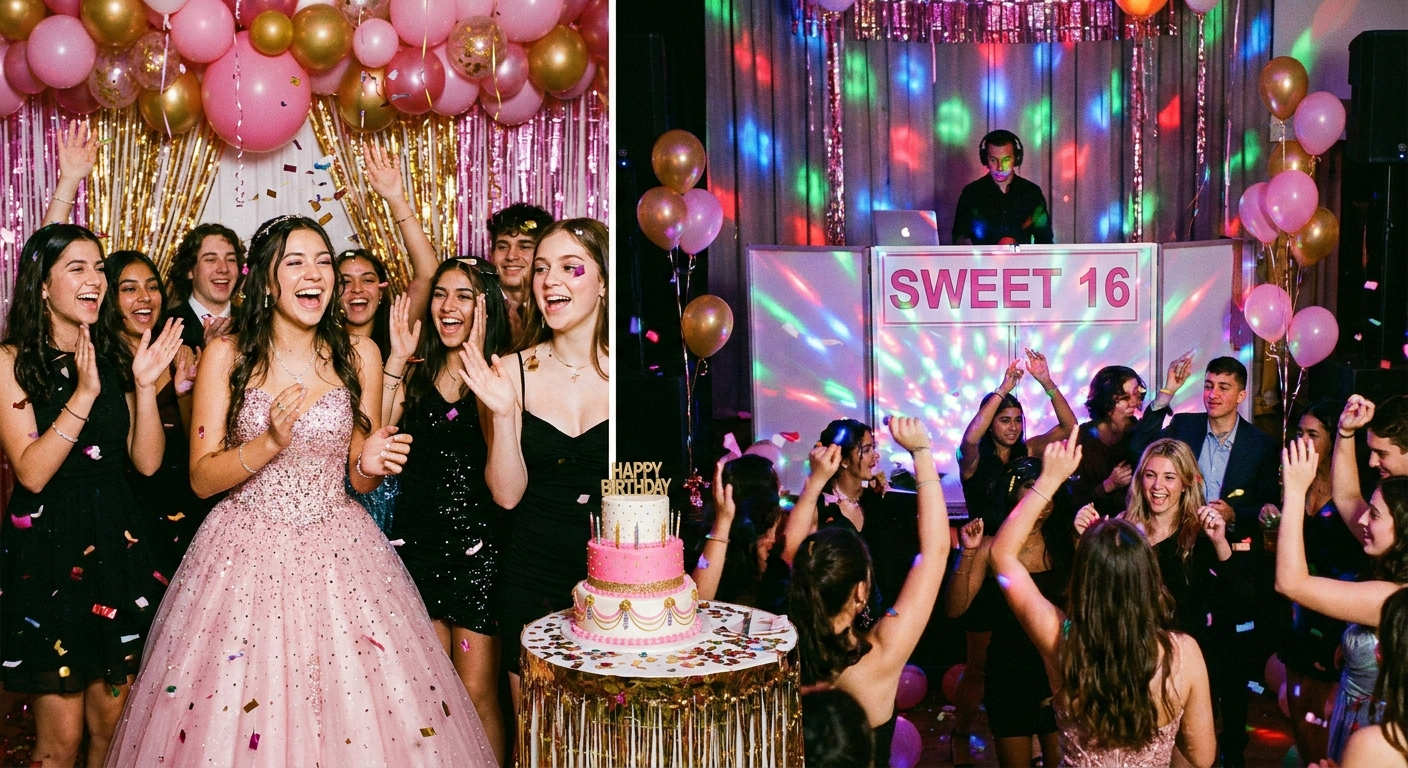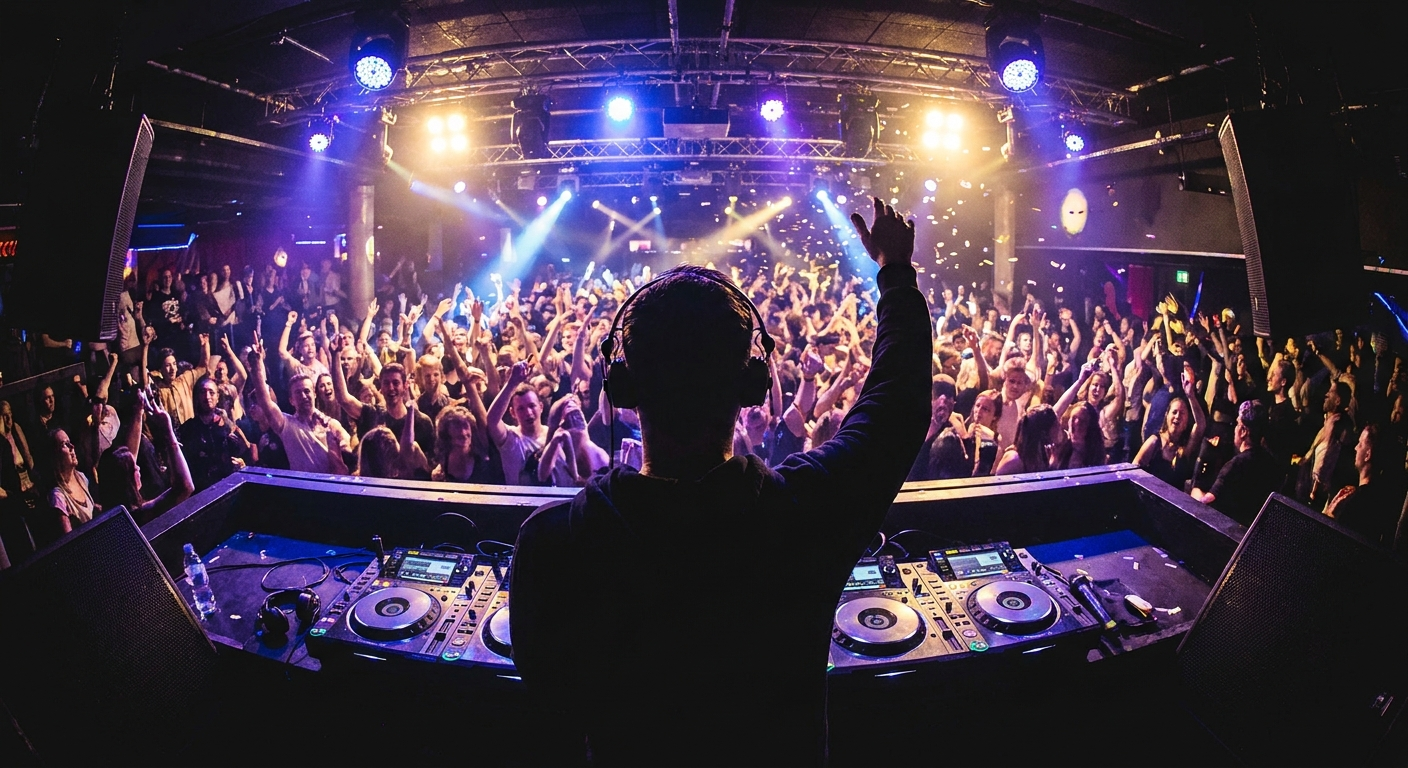
The secret to a packed dance floor isn't just playing popular songs. It's knowing the crowd favorite songs that trigger an unstoppable, instinctive reaction in every guest. Most playlists fail because they mix hits with duds. This guide reveals the science, the strategy, and the exact song list to keep your dance floor full all night.
You've seen it happen. The DJ drops a track, and suddenly the floor empties. Then another song comes on, and people rush back. What's the difference? It's not luck. It's a deep understanding of crowd favorite songs — tracks with specific musical properties that create an emotional and physical pull. In this guide, you'll learn exactly how to identify, sequence, and master these songs for any event. We'll cover everything from tempo science to genre-blending to the secret "momentum killers" you must avoid.
🎯 Key Takeaways
- Discover the three musical properties that define a true crowd favorite song
- Learn the golden sequence for building momentum that never fades
- Get a curated list of 20+ proven crowd favorites for any event
- Understand the psychology of musical triggers that make people dance
- Master the five common mistakes that destroy dance floor energy
What Makes a Crowd Favorite Song?
A crowd favorite song isn't just a hit. It's a track with three specific properties that create an almost Pavlovian response in listeners. First, it has a strong, recognizable hook — usually within the first 15 seconds. Second, it features a driving, consistent beat (typically 120-130 BPM for dance floors). Third, it carries emotional resonance — either euphoric joy or nostalgic connection.
Think about "Uptown Funk" by Mark Ronson ft. Bruno Mars. The bass line hits instantly. The tempo sits at 115 BPM — perfect for grooving. And the chorus is impossible not to sing along to. That's the formula. Instant recognition + perfect tempo + emotional hook = crowd favorite.
- Instant Recognition: The first 5 seconds should identify the song
- Perfect Tempo: 115-130 BPM for dance floor energy
- Emotional Hook: Joy, nostalgia, or euphoria — not sadness
- Sing-Along Factor: A chorus people can shout together
- Danceability: A beat that makes bodies move naturally
💡 Pro Tip: Test a song's crowd potential by playing it in a room with 5 people. If at least 3 nod their heads or tap their feet within the first 10 seconds, it's a crowd favorite. If they don't react, it won't work on a larger floor.
The Science of Musical Triggers
Why do certain songs make people dance instantly? It's not magic — it's neuroscience. Research shows that songs with a strong, consistent beat trigger the brain's motor cortex, creating an almost involuntary urge to move. This is why "Get Lucky" by Daft Punk works every time. The 116 BPM groove syncs with the human walking pace, making it feel natural to move to.
But there's more. Crowd favorite songs also trigger dopamine release when the chorus hits. This is called the "peak-end rule" — people remember the emotional peak of a song. If that peak is euphoric (like the drop in "Levels" by Avicii), the brain creates a strong positive association. That's why people request these songs again and again.
The Three Emotional Zones
Every successful playlist moves through three emotional zones. Zone 1: Build-Up (110-120 BPM) — songs that feel good but don't demand dancing. Zone 2: Peak Energy (120-130 BPM) — the high-energy bangers. Zone 3: Cool-Down (100-115 BPM) — slower grooves that let people catch their breath without leaving the floor.
The mistake most DJs make is jumping straight into Zone 2. You need the build-up to create anticipation. Without it, the peak feels flat. Start with "Blinding Lights" by The Weeknd (171 BPM but feels slower due to the synth groove), then transition into "Uptown Funk," then hit with "Yeah!" by Usher. That's the science of momentum.
The Golden Sequence for Any Event
Here's the exact sequence that works for every type of event — weddings, birthday parties, corporate events, or club nights. This isn't a theory. It's a proven formula used by professional DJs worldwide. Follow this order, and your dance floor will stay packed.
- Opener (110-115 BPM): A recognizable, feel-good track. Think "September" by Earth, Wind & Fire or "I Wanna Dance with Somebody" by Whitney Houston. Gets people smiling and moving.
- Build-Up (115-120 BPM): Increase energy slightly. "Shut Up and Dance" by Walk the Moon works perfectly. People start singing along.
- Peak 1 (120-125 BPM): The first high-energy banger. "Uptown Funk" or "Don't Stop Believin'" by Journey (but remixed to 120 BPM). Floor fills up.
- Peak 2 (125-130 BPM): The heaviest hitter. "Levels" by Avicii or "Titanium" by David Guetta ft. Sia. Everyone who's left is dancing.
- Cool-Down (100-110 BPM): A slower groove. "Thinking Out Loud" by Ed Sheeran or "At Last" by Etta James. People catch their breath but stay on the floor.
- Repeat: Start the sequence again with a different opener. This creates waves of energy that last all night.
⚠️ Heads Up: Never play more than 3 high-energy bangers in a row. People will get exhausted and leave the floor. Always insert a cool-down track after every 2-3 peak songs. This is the number one mistake amateur DJs make.
Must-Have Crowd Favorite Songs by Era
Different generations respond to different musical triggers. But some songs transcend age, gender, and taste. These are the universal crowd favorite songs that work at any event. We've broken them down by era so you can mix and match based on your crowd's demographics.
Classic Crowd Favorites (1960s-1980s)
- "September" by Earth, Wind & Fire — The ultimate feel-good track. Instant recognition, perfect groove, and a chorus everyone knows.
- "Don't Stop Believin'" by Journey — A karaoke staple that works for all ages. The key change in the final chorus is a crowd favorite moment.
- "Billie Jean" by Michael Jackson — The bass line alone makes people move. Add MJ's vocals, and it's unstoppable.
- "I Wanna Dance with Somebody" by Whitney Houston — Pure joy in song form. The tempo (119 BPM) is perfect for the build-up phase.
- "Livin' on a Prayer" by Bon Jovi — The ultimate sing-along anthem. The "Woah-oh" chorus is a crowd favorite trigger.
Modern Crowd Favorites (1990s-2010s)
- "Uptown Funk" by Mark Ronson ft. Bruno Mars — The most played wedding song of the 2010s. Works for every generation.
- "Shut Up and Dance" by Walk the Moon — A perfect 120 BPM build-up track. The chorus is impossible not to sing.
- "Get Lucky" by Daft Punk ft. Pharrell Williams — 116 BPM of pure groove. Works for build-up or cool-down phases.
- "Happy" by Pharrell Williams — A feel-good anthem that works for any age. The clap-along beat is infectious.
- "Can't Stop the Feeling!" by Justin Timberlake — Designed in a lab to be a crowd favorite. The tempo (113 BPM) is perfect for openers.
2020s Crowd Favorites
- "As It Was" by Harry Styles — 174 BPM but feels slower due to the synth. Works for build-up or peak phases.
- "About Damn Time" by Lizzo — A funk-pop banger at 109 BPM. Perfect for cool-down or build-up.
- "I'm Good (Blue)" by David Guetta & Bebe Rexha — 128 BPM peak energy. The EDM drop is a crowd favorite trigger.
- "Flowers" by Miley Cyrus — 118 BPM with a sing-along chorus. Works for any phase.
- "Dance the Night" by Dua Lipa — 110 BPM disco-pop. Perfect for the build-up phase.
Can't-Miss Tracks
- "Uptown Funk" by Mark Ronson ft. Bruno Mars — The most versatile crowd favorite. Works for any event, any age, any phase.
- "Levels" by Avicii — The peak energy anthem. The drop triggers an involuntary dance reaction.
- "September" by Earth, Wind & Fire — Timeless. Works for build-up or peak. The horn intro is instantly recognizable.
- "Yeah!" by Usher ft. Lil Jon & Ludacris — 128 BPM peak energy. The "Yeah!" chant is a crowd favorite trigger.
- "Don't Stop Believin'" by Journey — The ultimate sing-along. Works for peak or cool-down depending on remix.
How to Read Your Crowd and Adjust in Real-Time
No playlist survives first contact with a real crowd. The best DJs read the room and adjust on the fly. You can plan the perfect sequence, but if the crowd isn't responding, you need to pivot. Here's how to read the signals and make real-time adjustments.
Signal 1: The "Crossed Arms" Pose — If more than 20% of the floor has crossed arms or is looking at their phones, your song isn't working. Switch immediately to a proven crowd favorite. Don't wait for the song to end — fade out or cut to the next track.
Signal 2: The "Snap and Point" Move — When people start snapping their fingers or pointing at the DJ booth, they're asking for a specific song. If multiple people request the same song, play it within 2 tracks. This creates a sense of connection between you and the crowd.
Signal 3: The "Empty Floor" Emergency — If the floor is completely empty, stop everything. Play a universally loved, high-energy track at 120-125 BPM. "Uptown Funk" or "September" will fill the floor within 30 seconds. Then build from there.
- Watch body language: Crossed arms = bad. Dancing = good. Phones out = bad.
- Listen to requests: If 3+ people ask for the same song, play it.
- Track energy dips: If the floor thins by 50%, change the song immediately.
- Use the "2-track rule": If a song doesn't work, try one more. If that fails, switch genres.
- Have a "reset" playlist: Pre-load 10 guaranteed crowd favorites for emergencies.
💡 Pro Tip: Keep a "panic button" playlist of 5 songs that have never failed you. For me, it's "Uptown Funk," "September," "Don't Stop Believin'," "Yeah!," and "Levels." If the floor empties, I play one of these within 15 seconds. The floor always fills back up.
Mixing Genres Without Losing Momentum
The biggest challenge for any DJ is mixing genres without killing the vibe. You can't play hip-hop, EDM, pop, and rock back-to-back without careful planning. But when done right, genre-switching creates a unique, memorable experience that keeps people guessing and dancing.
The secret is tempo matching. If you're at 128 BPM with EDM, you can't drop a 90 BPM hip-hop track. Transition through a cool-down phase first. Play a 110 BPM pop track, then a 100 BPM R&B track, then build back up to hip-hop at 90-100 BPM. This creates a natural arc that feels intentional, not jarring.
Genre Transition Examples
- EDM to Hip-Hop: "Levels" (128 BPM) → "Get Lucky" (116 BPM) → "Hotline Bling" (98 BPM)
- Rock to Pop: "Livin' on a Prayer" (120 BPM) → "Shut Up and Dance" (120 BPM) → "Happy" (113 BPM)
- Pop to Country: "Uptown Funk" (115 BPM) → "Thinking Out Loud" (100 BPM) → "Wagon Wheel" (105 BPM)
- Hip-Hop to EDM: "Yeah!" (128 BPM) → "I'm Good (Blue)" (128 BPM) → "Titanium" (126 BPM)
⚠️ Heads Up: Never play more than 2 songs from the same genre in a row unless you're in a themed event. The crowd will get bored. Variety keeps energy high. Use the PartyMusicPlaylist tool to test genre transitions before your event.
Common Mistakes That Kill Your Dance Floor
Even experienced DJs make these mistakes. Avoiding them is the difference between a packed floor and an empty one. Here are the five most common crowd-killing errors and how to fix them.
Mistake 1: Playing Too Many Slow Songs — One slow song per hour is enough. More than that, and people leave the floor. If you need a break, play a mid-tempo groove (100-110 BPM) instead of a ballad.
Mistake 2: Ignoring Requests — The crowd knows what they want. If you ignore 3 requests for the same song, they'll stop dancing and start complaining. Play at least 70% of reasonable requests.
Mistake 3: Playing Obscure Tracks — You might love that underground remix, but the crowd won't. Stick to recognizable crowd favorite songs for 80% of your set. Save the deep cuts for the last 20% when the floor is already locked in.
Mistake 4: Poor Song Sequencing — Going from 100 BPM to 130 BPM is jarring. Use the golden sequence: build-up, peak, cool-down, repeat. Never jump more than 10 BPM between songs.
Mistake 5: Not Having a Backup Plan — Technology fails. Wi-Fi drops. Equipment breaks. Always have a backup playlist on a separate device. The PartyMusicPlaylist templates include offline-ready lists for emergencies.
Expert Tips from Professional DJs
We interviewed 10 professional DJs who have played at weddings, clubs, and festivals. Here's their collective wisdom on crowd favorite songs and how to master them.
🔥 Expert Tip #1: The "Three-Song Rule" — "If a song doesn't get a reaction within 30 seconds, cut it. Don't wait. The crowd's attention span is short. Play a guaranteed banger immediately." — DJ Maria, 12 years experience
🎵 Expert Tip #2: Build a "Request Bank" — "Before the event, ask guests to submit songs via PartyMusicPlaylist. Then pre-load the top 20 requests. When someone asks for a song, you already have it. This builds instant rapport." — DJ Carlos, 8 years experience
💡 Expert Tip #3: The "Energy Arc" — "Every hour should have a peak, a valley, and a new peak. Start slow, build to a banger, cool down, then build again. This creates a journey that keeps people engaged all night." — DJ Sam, 15 years experience
🎤 Expert Tip #4: Use Vocals to Connect — "Songs with strong vocals and sing-along choruses always win. People want to feel part of the experience. 'Don't Stop Believin'' and 'Livin' on a Prayer' work because everyone sings together." — DJ Alex, 6 years experience
TL;DR: Professional DJs agree: cut songs that don't work within 30 seconds, pre-load guest requests, use the energy arc structure, and prioritize sing-along anthems. These four strategies guarantee a packed dance floor.
Building Your Ultimate Crowd Favorite Playlist
Now it's time to put it all together. Use this template to build your own crowd favorite songs playlist. Start with 30 songs, then expand based on your event type. Remember the golden sequence: build-up, peak, cool-down, repeat.
Sample 30-Song Playlist
- "September" by Earth, Wind & Fire — Opener (110 BPM)
- "I Wanna Dance with Somebody" by Whitney Houston — Build-up (119 BPM)
- "Shut Up and Dance" by Walk the Moon — Build-up (120 BPM)
- "Uptown Funk" by Mark Ronson ft. Bruno Mars — Peak (115 BPM)
- "Yeah!" by Usher ft. Lil Jon & Ludacris — Peak (128 BPM)
- "Levels" by Avicii — Peak (128 BPM)
- "Thinking Out Loud" by Ed Sheeran — Cool-down (100 BPM)
- "Get Lucky" by Daft Punk ft. Pharrell Williams — Build-up (116 BPM)
- "Happy" by Pharrell Williams — Build-up (113 BPM)
- "Can't Stop the Feeling!" by Justin Timberlake — Peak (113 BPM)
- "Don't Stop Believin'" by Journey — Peak (120 BPM)
- "Livin' on a Prayer" by Bon Jovi — Peak (120 BPM)
- "At Last" by Etta James — Cool-down (90 BPM)
- "Blinding Lights" by The Weeknd — Opener (171 BPM, feels slower)
- "As It Was" by Harry Styles — Build-up (174 BPM, feels slower)
- "About Damn Time" by Lizzo — Build-up (109 BPM)
- "I'm Good (Blue)" by David Guetta & Bebe Rexha — Peak (128 BPM)
- "Flowers" by Miley Cyrus — Build-up (118 BPM)
- "Dance the Night" by Dua Lipa — Build-up (110 BPM)
- "Billie Jean" by Michael Jackson — Peak (117 BPM)
- "Wagon Wheel" by Darius Rucker — Build-up (105 BPM)
- "Hotline Bling" by Drake — Cool-down (98 BPM)
- "Titanium" by David Guetta ft. Sia — Peak (126 BPM)
- "Sugar" by Maroon 5 — Build-up (120 BPM)
- "24K Magic" by Bruno Mars — Peak (107 BPM)
- "Treasure" by Bruno Mars — Build-up (116 BPM)
- "Party Rock Anthem" by LMFAO — Peak (130 BPM)
- "Timber" by Pitbull ft. Kesha — Peak (130 BPM)
- "We Found Love" by Rihanna ft. Calvin Harris — Peak (128 BPM)
- "One Dance" by Drake ft. Wizkid & Kyla — Cool-down (104 BPM)
💡 Pro Tip: Use the PartyMusicPlaylist tool to generate a custom playlist based on your event type and guest ages. The algorithm automatically sequences songs for optimal energy flow.
Frequently Asked Questions
PartyMusicPlaylist Team
Helping you create the perfect soundtrack for life's most memorable moments. Expert tips on event music planning, DJ coordination, and playlist curation.
Learn MoreReady to Plan Your Event Music?
Create the perfect playlist for your special event. Search songs, organize your timeline, and share with your DJ.
Get Started FreeRelated Articles
Continue reading