🎯 Key Takeaways
- Event music volume is the most underrated variable for guest enjoyment — 90% of DJs miss the sweet spot
- The optimal volume range for most events is 85-95 decibels, depending on the venue and activity
- Volume changes throughout the night — start low, build gradually, and never peak too early
- Your playlist's dynamics (loud vs. quiet songs) matter more than raw loudness
- Guest song requests and a free tool like PartyMusicPlaylist can help you balance volume with crowd engagement
You've spent hours curating the perfect playlist. You've got the right mix of bangers, slow jams, and crowd-pleasers. But when the music starts playing, something feels off. Guests are either shouting over the noise or standing around looking bored because they can't feel the beat. Sound familiar?
Here's the truth: event music volume is the single most overlooked variable in event planning. And according to veteran sound engineers and DJs, roughly 90% of DJs never dial in the perfect volume for their specific event. They just hit "play" and hope for the best.
In this guide, you'll learn exactly how to set the right volume for any event — from intimate cocktail hours to high-energy dance parties. You'll get real song examples, step-by-step adjustments, and pro tips you can apply tonight. Let's fix that volume knob once and for all.
The Science of Event Music Volume: Why 85-95 dB Works
Music volume isn't just about personal preference. It's rooted in physics and human psychology. When sound hits 85 decibels (dB), it triggers a natural response in your brain to want to move. Below that level, music feels like background noise. Above 95 dB, your ears start to fatigue, and conversation becomes impossible.
The sweet spot for most events is 85-95 dB — measured from the dance floor or main listening area. Here's why:
- 85-90 dB — Ideal for cocktail hours, dinner music, or background ambiance. Conversation flows naturally, and music adds energy without dominating.
- 90-93 dB — Perfect for general party vibes. Guests feel the beat but can still talk at close range. Great for birthday parties, corporate events, and wedding receptions.
- 93-95 dB — High-energy dance floor zone. This is where the bass hits your chest and people lose themselves. Best for the peak of the night.
💡 Pro Tip: Use a free smartphone decibel meter app (like Decibel X or Sound Meter) to check your volume from the dance floor. Don't rely on the DJ booth reading — that's often 5-10 dB lower than where your guests are standing.
The danger zone? Anything above 95 dB sustained for more than 30 minutes. Not only does it risk hearing damage, but it also exhausts your guests. They'll leave early, and nobody wants that.
The 90% Problem: Why Most DJs Get Volume Wrong
Why do 90% of DJs skip this critical setting? Three main reasons:
- They don't measure. Most DJs set volume by ear alone. Without a decibel meter, you're guessing. And human ears are terrible at judging absolute loudness — we adapt quickly.
- They peak too early. The biggest rookie mistake. A DJ starts the night with the volume at 90 dB because the first few songs sound amazing. But by hour three, there's nowhere to go. The energy plateaus, and guests lose interest.
- They ignore the room. Every venue has unique acoustics. A carpeted ballroom absorbs sound differently than a concrete warehouse. Most DJs use the same volume curve for every event.
- Cocktail Hour / Dinner — 75-85 dB. Background level. Music should enhance conversation, not compete with it. Think jazz, acoustic covers, or light pop.
- Corporate Event / Networking — 80-88 dB. Enough energy to feel lively, but every word must be audible. Consider a separate area for dancing at 90+ dB.
- Wedding Reception (Dinner) — 80-85 dB. Keep it low during toasts and speeches. Then ramp up after dinner.
- Birthday Party / House Party — 88-93 dB. Flexible. Gauge your crowd — if everyone's dancing, push toward 93 dB. If they're chatting, stay at 88.
- Dance Party / Club Night — 92-95 dB. This is your peak zone. Keep it here for 45-60 minute bursts, then drop to 88 dB for a reset.
- Outdoor Event — 85-92 dB. Sound dissipates outdoors, so you need more speaker power. But never exceed 92 dB at the listening area — neighbors and noise ordinances are real.
- Arrive early and map the room. Walk the entire venue. Note where guests will sit, stand, and dance. Mark the "listening zone" — the area where you want music to be perfect.
- Set your baseline. Play a mid-tempo song (like "Blinding Lights" by The Weeknd or "Levitating" by Dua Lipa) at 70 dB. This is your "off" position. No guests should hear it yet.
- Gradually increase to 85 dB. As guests arrive, bring the volume up slowly. Aim to hit 85 dB by the time the first event activity starts (e.g., cocktail hour).
- Monitor and adjust every 30 minutes. Use your decibel meter app. Check from 3 different spots in the room. If conversations are strained, drop 2-3 dB. If the energy is flat, bump 2 dB.
- Peak during the final hour. For the last 60-90 minutes of the event, push to 93-95 dB. This is your climax. Then fade out gracefully — never stop abruptly.
- "Can't Help Falling in Love" by Elvis Presley — Timeless, gentle, and universally loved
- "Put Your Records On" by Corinne Bailey Rae — Warm vocals that sit perfectly in the background
- "Banana Pancakes" by Jack Johnson — Chill acoustic vibes for relaxed conversation
- "Lovely Day" by Bill Withers — Upbeat but never overwhelming
- "Sunday Morning" by Maroon 5 — Smooth pop with a steady groove
- "Uptown Funk" by Mark Ronson ft. Bruno Mars — Infectious energy that gets heads nodding
- "Happy" by Pharrell Williams — A guaranteed mood booster at any volume
- "Shut Up and Dance" by Walk the Moon — Perfect for the transition from mingling to dancing
- "I Wanna Dance with Somebody" by Whitney Houston — Timeless anthem that fills any room
- "Levitating" by Dua Lipa — Modern pop with a driving bassline
- "Blinding Lights" by The Weeknd — The perfect tempo (171 BPM) for building energy without overwhelming
- "Dancing Queen" by ABBA — Nobody can resist this one, even at moderate volume
- "Get Lucky" by Daft Punk ft. Pharrell Williams — Disco vibes that work for any crowd
- "Don't Stop Believin'" by Journey — The ultimate sing-along anthem at peak volume
- "Yeah!" by Usher ft. Lil Jon & Ludacris — Bass-heavy club banger that demands movement
- "Levels" by Avicii — Electronic masterpiece that fills the room with euphoria
- "Turn Down for What" by DJ Snake ft. Lil Jon — High-energy trap drop that shakes the floor
- "Uptown Funk" (reprise) — Play it again at peak volume for maximum impact
- Start with a slow build. Open with "Can't Help Falling in Love" at 80 dB, then "Put Your Records On" at 83 dB, then "Uptown Funk" at 87 dB.
- Peak early, then reset. After "Levels" at 93 dB, drop to "Lovely Day" at 82 dB for 3 minutes. Guests will feel the relief and be ready for the next peak.
- End with a gradual fade. For the last 15 minutes, reduce volume by 2 dB every 3 minutes. Use "Somewhere Over the Rainbow" by Israel Kamakawiwo'ole as your final song at 75 dB.
- Pre-screen requests. Use a tool like PartyMusicPlaylist to collect guest requests before the event. You can preview each song's tempo and energy level, then slot it into the right volume zone.
- Match the request to the moment. If a guest requests a high-energy banger like "Toxic" by Britney Spears but you're in dinner mode, don't play it immediately. Save it for the dance floor peak 90 minutes later.
- Use volume as a buffer. If you must play a loud request during a quiet moment, reduce the overall volume by 5 dB. The song will still sound energetic, but it won't overpower the room.
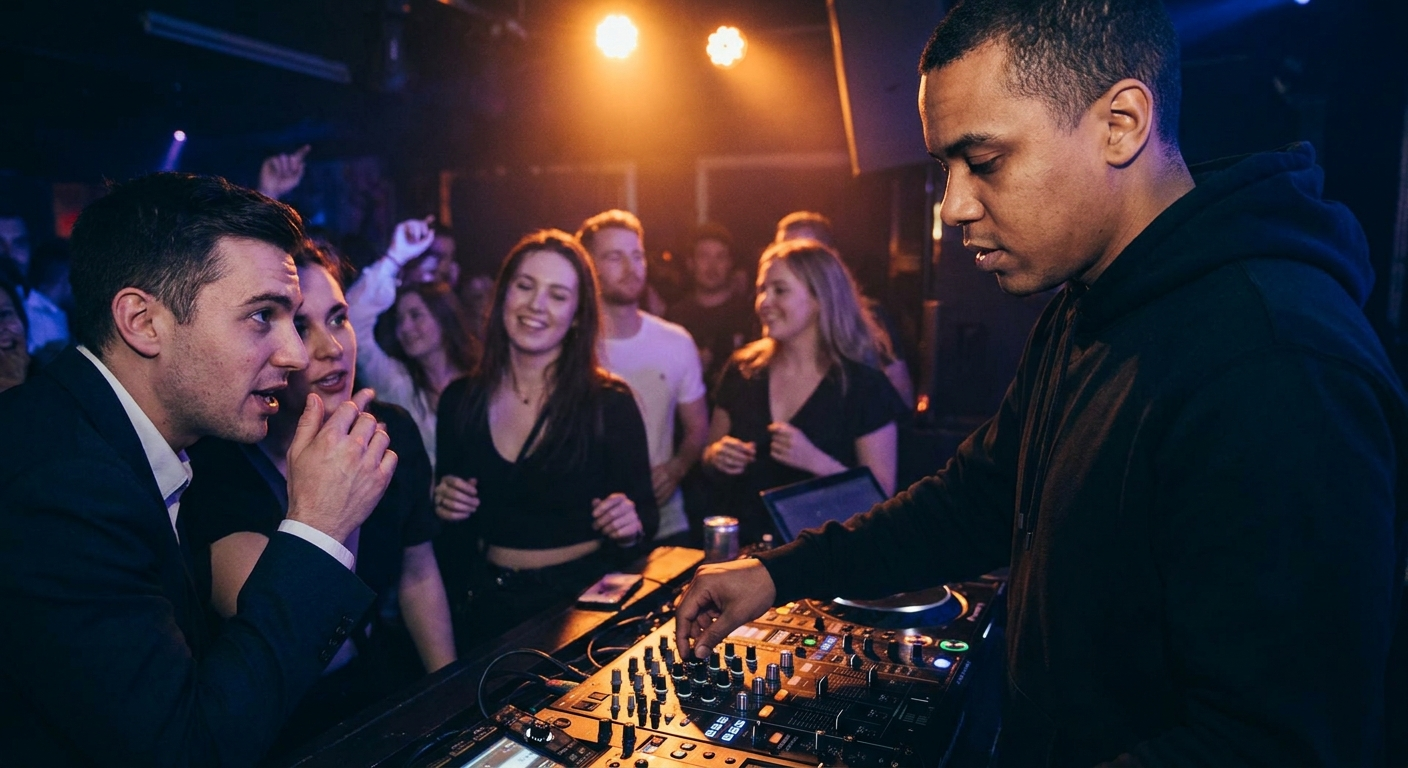
- Never stop the music to take a request. This is a cardinal sin. Keep the music flowing and use a visual hand signal (like pointing to your phone) to acknowledge the request.
- Starting too loud. The first song of the night should be at 75-80 dB, not 90 dB. Give guests time to arrive and settle in.
- Not accounting for crowd noise. A room full of 100 people talking generates 70-80 dB of ambient noise. If your music is at 85 dB, it's only 5-10 dB above the crowd. Bump to 88 dB during peak conversation periods.
- Using the same volume for every song. As we discussed, dynamics matter. Let quiet songs breathe at 80 dB and loud songs explode at 93 dB.
- Ignoring the venue's sound system. A DJ controller with 200-watt speakers sounds different from a professional PA system. Know your gear's limits before the event.
- Forgetting to check the dance floor. The best place to measure volume is 10 feet from the speakers, at ear height of a dancing guest (about 5 feet off the ground).
- Use a sound check playlist. Before guests arrive, play 5 songs that span your volume range. Walk the entire room and adjust EQ (bass, mid, treble) for clarity. A muddy bass at high volume is worse than no bass at all.
- Create "volume markers" on your playlist. In your playlist app (like PartyMusicPlaylist), add notes at specific songs: "Increase volume by 2 dB here" or "Drop to 82 dB for 3 minutes." This keeps you on track during the event.
- Watch for visual cues. If guests are leaning in to talk, your music is too loud. If they're standing still with no energy, it's too quiet. Adjust accordingly.
- Have a backup plan for noise complaints. Keep a pair of in-ear monitors handy. If you need to reduce volume suddenly, switch to IEMs so you can still hear the mix perfectly.
- Practice the volume fade. The last 10 minutes of an event are critical. Reduce volume by 2 dB every 2 minutes. Use songs with natural fade-outs (like "Somewhere Only We Know" by Keane or "Time After Time" by Cyndi Lauper).
- Collect guest song requests before the event, so you can pre-screen for volume compatibility.
- Build dynamic playlists with volume markers and energy ratings for each song.
- Export to DJ software (like Serato or Rekordbox) with your volume curve already programmed.
- Find local DJs who specialize in events — many offer free consultations on venue acoustics and sound setup.
⚠️ Heads Up: If you're playing music at a venue with a sound limiter (common in hotels and restaurants), you might hit a hard cap at 85 dB. Check with the venue manager before the event. Nothing kills a party faster than the sound system cutting out mid-song.
The fix is simple: start low, build gradually, and never exceed 95 dB. Your playlist should mirror this curve — quiet songs early, louder songs later, and a few peak moments reserved for the final hour.
Volume by Event Type: A Practical Guide
Not all events need the same volume. Here's your cheat sheet for common scenarios:
💡 Pro Tip: For outdoor events, position speakers at ear height and angle them toward the crowd. Sound travels differently outside, and a 3 dB drop at 20 feet is normal. Measure volume at the dance floor, not at the speaker stack.
How to Set Event Music Volume in 5 Steps
Follow this step-by-step process for every event. It takes 10 minutes and saves you hours of frustration.
📝 Note: Always leave yourself headroom. If your system maxes out at 95 dB, never run it at 95 dB for more than 30 minutes. Give your ears (and your guests) a break.
The Best Songs for Each Volume Zone
Your playlist should match the volume curve. Here are song recommendations for three key zones:
Low Volume (75-85 dB) — Background & Dinner
Medium Volume (85-90 dB) — General Party & Mingling
Can't-Miss Tracks for Medium Volume
High Volume (90-95 dB) — Dance Floor Peak
💡 Pro Tip: When transitioning from medium to high volume, use a song with a gradual build. "Levels" by Avicii or "Strobe" by deadmau5 are perfect. They start around 85 dB and naturally push to 93 dB without a jarring jump.
The Playlist Dynamics Problem: Why Loudness Isn't Everything
Here's where most DJs and playlist creators get stuck. They think volume is just one number. But the dynamics of your playlist — the difference between your quietest and loudest songs — matter more than the absolute volume level.
If every song in your playlist is at the same perceived loudness, your event feels flat. Even if the volume is at 92 dB, guests don't experience peaks and valleys. Their brains stop reacting to the music after 20 minutes.
The solution: create a dynamic volume curve within your playlist itself. Use quieter songs (80-85 dB) as "reset" moments between high-energy bangers. This technique is called dynamic contrast, and it's what separates amateur playlists from professional ones.
This dynamic contrast technique is used by professional DJs at major festivals. It's not random — it's science. Your brain craves variation. A playlist that stays at 90 dB for 3 hours will exhaust guests faster than one that fluctuates between 82 dB and 93 dB.
How to Handle Guest Song Requests Without Ruining Volume
Guest song requests are a double-edged sword. On one hand, they make people feel heard and engaged. On the other, a random request can destroy your carefully crafted volume curve.
Here's how to handle them without losing control:
⚠️ Heads Up: Avoid playing two high-energy songs back-to-back if a request forces a shift. Always insert a 2-minute dynamic reset (a mid-tempo song) between peaks. Your guests will thank you.
Common Event Music Volume Mistakes (And How to Fix Them)
Even experienced DJs make these errors. Here's what to watch out for:
📝 Note: If you're using a smartphone app to measure volume, calibrate it first. Most phone mics are accurate within 2-3 dB, but cheap apps can be off by 5 dB. Use a known reference (like a professional decibel meter) to verify.
Pro Tips for Perfect Event Music Volume Every Time
These advanced techniques come from veteran event DJs who've played thousands of gigs. Apply them to your next event:
The best DJs don't just play music — they engineer an experience. Volume is the most powerful tool in your arsenal. Use it intentionally, and your guests will remember the night for years.
PartyMusicPlaylist: Your Secret Weapon for Volume Control
You don't have to do this alone. PartyMusicPlaylist is a free online tool that helps you plan every aspect of your event playlist — including volume management.
Whether you're a DIY host or a professional DJ, our platform gives you the tools to master event music volume. Browse our playlist templates to see how pros structure their volume curves for different events.
Final Thoughts: The Volume That Makes the Party
Event music volume isn't complicated — it's just overlooked. By following the guidelines in this article, you'll join the 10% of DJs who get it right. Your guests will feel the energy without feeling overwhelmed. They'll dance harder, stay longer, and talk about your event for weeks.
Remember the golden rules: start low, build gradually, use dynamic contrast, and never exceed 95 dB. Measure with a decibel meter, adjust for your venue, and always leave headroom.
Now go create a playlist that rocks — at the perfect volume.
Frequently Asked Questions
PartyMusicPlaylist Team
Helping you create the perfect soundtrack for life's most memorable moments. Expert tips on event music planning, DJ coordination, and playlist curation.
Learn MoreReady to Plan Your Event Music?
Create the perfect playlist for your special event. Search songs, organize your timeline, and share with your DJ.
Get Started FreeRelated Articles
Continue reading