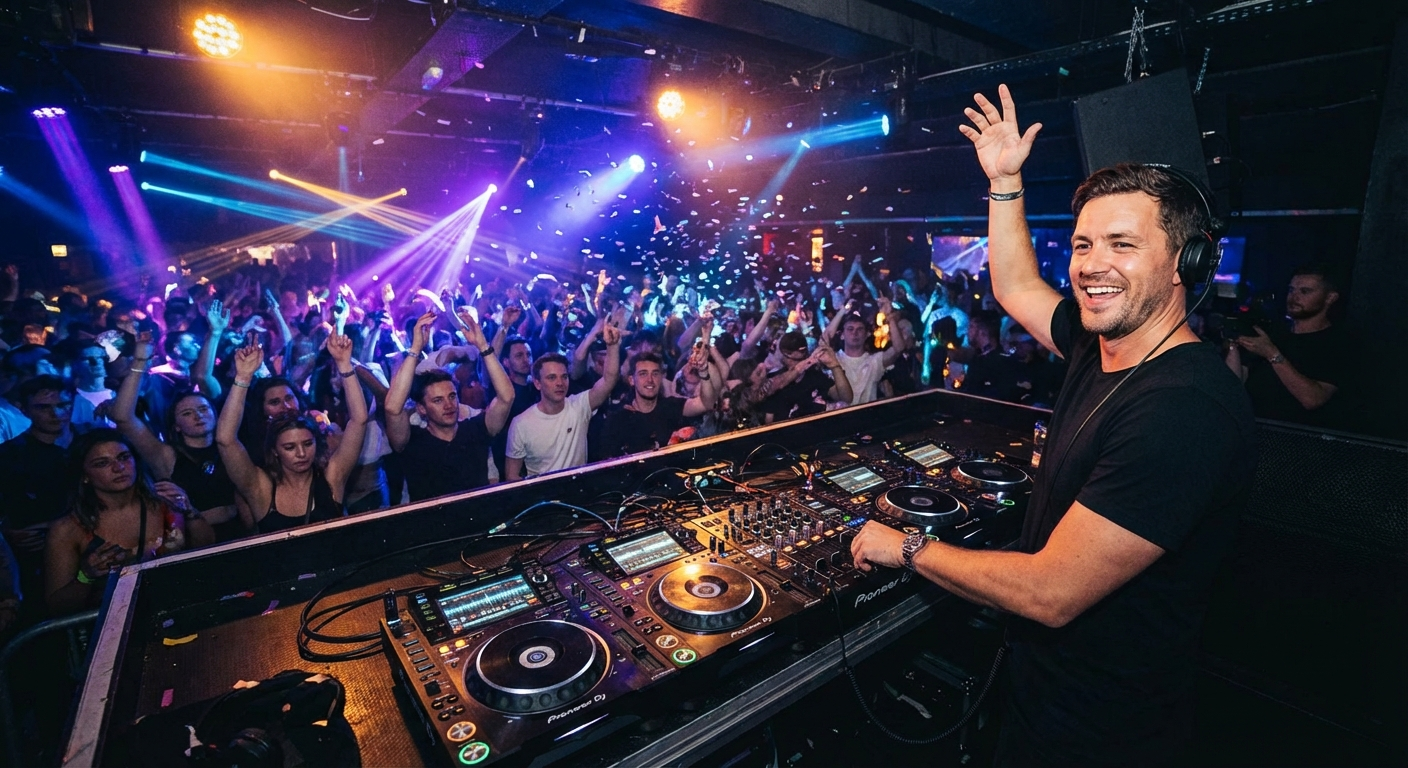
Your Event Music Timeline Is Broken — Here's How to Fix It
You've spent weeks planning every detail of your event. The venue is booked. The caterer is confirmed. The decorations look incredible. But when it comes to the music, you're winging it. That's a recipe for disaster.
The truth is, most event organizers completely underestimate the power of a structured event music timeline. They throw songs together at the last minute, hoping for the best. The result? Awkward silences, empty dance floors, and guests leaving early.
But it doesn't have to be that way. A well-planned music timeline transforms a good party into an unforgettable experience. It guides your guests through emotional peaks and valleys, builds anticipation, and keeps energy levels exactly where you want them.
In this guide, you'll learn exactly how to build a perfect event music timeline for any occasion. We'll cover every phase from pre-event background music to the final encore. You'll get real song suggestions, timing formulas, and expert strategies that professional event planners use.
🎯 Key Takeaways
- A structured music timeline eliminates awkward silences and keeps energy consistent throughout your event
- Each phase of your event needs a specific type of music — background, transition, peak, and wind-down
- The optimal ratio is 15-20 songs per hour, with strategic pauses for announcements and transitions
- Your opening and closing songs are just as important as your peak party anthems
- Using a tool like PartyMusicPlaylist.com makes building and sharing your timeline effortless
Why Most Event Music Timelines Fail
Let's be honest. You've probably been to events where the music felt completely off. Maybe the DJ played high-energy bangers during dinner. Or the playlist went from slow ballads to hip-hop without any transition. These mistakes kill the vibe instantly.
The core problem is simple: most people treat event music as an afterthought. They create a single playlist of their favorite songs and hit shuffle. That approach ignores the natural flow of any event.
Think about your last successful party. The energy built gradually. There were quiet moments for conversation. Then the dance floor ignited. Then things slowed down again. That's not an accident. That's a deliberately crafted event music timeline.
Professional event designers understand that music is a journey. Your guests arrive with certain expectations. Your job is to guide them through a series of emotional states — from relaxed anticipation to joyful celebration and finally to satisfied farewell.
"The difference between a good party and a great one is often just 15 well-placed songs. It's not about having the most tracks. It's about having the right ones at the right moments."
💡 Pro Tip: The most common mistake is playing your best songs too early. Save your biggest anthems for the last 45 minutes of your event. That's when energy peaks naturally and guests are most receptive to dancing.
The Science Behind a Perfect Music Timeline
There's actual psychology behind why certain song sequences work better than others. Researchers have found that music tempo directly affects heart rate and energy levels. Faster songs (120-140 BPM) naturally increase excitement. Slower songs (60-80 BPM) promote relaxation and conversation.
Your event music timeline should follow a gradual tempo curve. Start around 70-90 BPM for background music. Slowly increase to 100-110 BPM during dinner. Hit 120-130 BPM for peak party time. Then gradually decrease back to 80-90 BPM for the wind-down.
This isn't random. It mirrors the natural energy curve of any social gathering. Guests arrive with moderate energy. They eat and socialize, which builds anticipation. Then they release that energy on the dance floor. Finally, they need a cooldown before leaving.
Here's the formula for a standard 4-hour event:
Every 30 minutes, your tempo should increase by roughly 5-10 BPM during the build phase. During the wind-down, decrease by 10-15 BPM every 20 minutes. This gradual curve prevents jarring transitions that kill momentum.
Phase 1: The Arrival & Welcome (First 30-60 Minutes)
Your guests arrive with varying energy levels. Some are excited. Others are tired from work. A few might be nervous about socializing. Your job during this phase is to create a warm, welcoming atmosphere that eases everyone into the event.
The music here should be low-volume, instrumental, and familiar. Think jazz, acoustic covers, or light classical. Nothing with heavy vocals that demands attention. Guests need to hear each other speak and settle into the space.
This is not the time for your favorite party bangers. Save those. Instead, focus on songs that feel sophisticated and inviting. The tempo should hover around 70-90 BPM.
- "Fly Me to the Moon" by Frank Sinatra — Timeless, classy, and universally recognized
- "Here Comes the Sun" by The Beatles (acoustic version) — Upbeat but gentle, perfect for arrivals
- "The Girl from Ipanema" by Stan Getz & Astrud Gilberto — Smooth jazz that sets a relaxed tone
- "Sunrise" by Norah Jones — Warm vocals that feel like a gentle hug
- "Feeling Good" by Nina Simone — Empowering but not overpowering
⚠️ Heads Up: Avoid songs with strong emotional associations during arrival. No breakup anthems, no songs tied to exes, nothing too sad or angry. Keep it neutral-positive. You want guests to feel comfortable, not triggered.
Phase 2: Dinner & Mingling (Next 60-90 Minutes)
Now your guests are settled. Drinks are flowing. Conversations are happening. This phase needs music that enhances the atmosphere without dominating it. Volume should be slightly higher than arrival but still low enough for easy conversation.
This is where you can introduce more recognizable songs, but still in a mellow, acoustic, or stripped-down style. Think of it as the soundtrack to a great dinner party. People should be tapping their feet, not jumping out of their seats.
Tempo should gradually increase from 80 BPM to 100 BPM over the course of this phase. The last 15 minutes of dinner should feel slightly more energetic, preparing guests for the transition to party mode.
- "Can't Help Falling in Love" by Elvis Presley (acoustic cover) — Romantic and familiar
- "Put Your Records On" by Corinne Bailey Rae — Easygoing and uplifting
- "Banana Pancakes" by Jack Johnson — Chill vibes that encourage conversation
- "Lovely Day" by Bill Withers — Warm, positive energy without being loud
- "Sunday Morning" by Maroon 5 — Smooth groove that's hard not to enjoy
Editor's Top Picks for Dinner
- "At Last" by Etta James — The ultimate romantic dinner song, works for any event
- "Come Away with Me" by Norah Jones — Perfect balance of intimacy and warmth
- "Just the Two of Us" by Grover Washington Jr. — Smooth saxophone that adds class
Phase 3: The Transition to Party (15-20 Minutes)
This is the most critical moment in your entire event music timeline. Dinner is ending. People are pushing back their chairs. The energy needs to shift from relaxed to excited. If you mess this up, the dance floor stays empty.
The transition phase requires songs that gradually increase tempo and energy without being jarring. Think of it as musical stairs — each song takes you one step higher. You want to build anticipation, not shock the system.
Start with songs around 100-105 BPM. Then move to 110-115 BPM. Then hit 120 BPM for the first true dance song. This entire transition should take about 15-20 minutes and include 4-6 songs.
- Step 1: Play a familiar song with a slightly faster beat (100-105 BPM) — "I Want You Back" by Jackson 5 works perfectly
- Step 2: Increase to a mid-tempo crowd-pleaser (110 BPM) — "Shut Up and Dance" by Walk the Moon
- Step 3: Hit the first true dance anthem (115-120 BPM) — "Uptown Funk" by Mark Ronson ft. Bruno Mars
- Step 4: Follow with another high-energy song at the same tempo — "Happy" by Pharrell Williams
- Step 5: Now you're at peak party energy — transition to your main dance segment
💡 Pro Tip: Announce the transition. Say something like, "Alright everyone, dinner is done. Time to make some memories!" Then drop the first high-energy song. This gives guests permission to shift from conversation mode to party mode.
Phase 4: Peak Party Time (60-90 Minutes)
This is what everyone came for. The dance floor is full. Energy is high. Your event music timeline now shifts to sustaining peak energy for as long as possible. This requires careful song selection and strategic mixing.
The key here is variety within high energy. Don't play the same genre for an hour straight. Mix pop, hip-hop, dance, rock, and throwbacks. This keeps the crowd engaged and prevents fatigue. Alternate between vocal-heavy songs and instrumental-driven tracks.
Tempo should stay between 120-135 BPM. Every 3-4 songs, drop a slightly slower song (110-115 BPM) for 3-4 minutes to let people catch their breath. Then hit them with another banger. This creates natural peaks and valleys that keep energy sustainable.
- "Blinding Lights" by The Weeknd — Modern anthem with incredible energy
- "Don't Stop Believin'" by Journey — The ultimate singalong moment
- "Party in the USA" by Miley Cyrus — Guaranteed crowd participation
- "Yeah!" by Usher ft. Lil Jon & Ludacris — Hip-hop classic that fills the floor
- "I Gotta Feeling" by The Black Eyed Peas — Perfect peak party energy
🔥 The Secret to a Full Dance Floor: The most common mistake during peak party time is playing too many unknown songs. Stick to the top 40 hits, classic party anthems, and songs that 80% of your guests know. Save the deep cuts for your personal listening. Your event is about crowd enjoyment, not showing off your music taste.
Phase 5: The Slow Dance & Emotional Moment (15-20 Minutes)
Every great event needs an emotional peak. This is usually a slow dance, a special dedication, or a moment of reflection. It breaks up the high-energy party and creates a memorable, intimate experience for your guests.
This phase should feel like a deliberate shift. The lights dim slightly. The volume drops. You play 2-3 slower songs (70-85 BPM) that encourage couples to hold each other and everyone to feel connected. After this, you can either return to high energy or begin winding down.
- "All of Me" by John Legend — Modern wedding classic, deeply emotional
- "Thinking Out Loud" by Ed Sheeran — Romantic and universally loved
- "Unchained Melody" by The Righteous Brothers — Timeless slow dance perfection
- "Perfect" by Ed Sheeran — Ideal for a first dance or special moment
- "Let's Stay Together" by Al Green — Soulful and romantic without being cheesy
⚠️ Heads Up: Don't play more than 3 slow songs in a row. After that, the energy drops too low and it's hard to recover. If you want to return to party mode, transition with a medium-tempo song like "Treasure" by Bruno Mars before hitting high energy again.
Phase 6: Wind-Down & Farewell (Last 30-45 Minutes)
The event is ending. Guests are starting to leave. Your music should gradually bring energy down while maintaining a positive, grateful atmosphere. This is not the time for sad songs or abrupt silence.
Start with songs around 100-110 BPM and slowly decrease to 70-80 BPM. The last 10 minutes should feature instrumental or acoustic songs that feel like a gentle goodbye. Volume should drop by about 20% compared to peak party time.
This phase is also perfect for acknowledging your guests. If it's a wedding, play the last dance song. For a birthday, play a thank-you message. The music should feel like a warm hug as people head out the door.
- "Time of My Life" by Bill Medley & Jennifer Warnes — Perfect closing anthem
- "We Are Family" by Sister Sledge — Uplifting and inclusive farewell
- "What a Wonderful World" by Louis Armstrong — Grateful, peaceful ending
- "Closing Time" by Semisonic — Literally about ending the night
- "Good Riddance (Time of Your Life)" by Green Day — Bittersweet but positive
TL;DR: Your event music timeline should follow a gradual energy curve: arrival (70-90 BPM), dinner (80-100 BPM), transition (100-120 BPM), peak party (120-135 BPM), slow dance (70-85 BPM), and wind-down (80-100 BPM). Each phase has specific song types and tempos that guide guest energy naturally.
How to Build Your Event Music Timeline in 5 Steps
Now you understand the theory. Let's make it practical. Here's a step-by-step process to build your perfect event music timeline using PartyMusicPlaylist.com.
- Map your event schedule. Write down every phase of your event with exact start and end times. Include arrival, dinner, speeches, cake cutting, first dance, party time, and farewell. Your music timeline must align with these moments.
- Choose your tempo curve. Decide the BPM range for each phase. Use the guidelines above as your starting point. Adjust based on your crowd — younger crowds can handle higher tempos longer.
- Select songs by phase. Build separate playlists for arrival, dinner, transition, peak party, slow dance, and wind-down. Don't mix them. Each phase needs its own curated collection.
- Sequence within each phase. Arrange songs within each playlist in order of increasing energy (for build phases) or decreasing energy (for wind-down). The last song of one phase should flow naturally into the first song of the next.
- Test your timeline. Listen through your entire event music timeline from start to finish. Note any jarring transitions, awkward pauses, or energy drops. Adjust as needed. Use PartyMusicPlaylist.com to build, test, and share your timeline with your team.
💡 Pro Tip: Always have 10-15 backup songs ready for each phase. If a song doesn't land with the crowd, you need options. Never lock yourself into a rigid timeline without flexibility. The best event music timelines adapt in real-time.
Common Event Music Timeline Mistakes (And How to Avoid Them)
Even experienced planners make these mistakes. Here's what to watch out for:
❌ Playing your best songs too early. This is the #1 mistake. You play "Don't Stop Believin'" during dinner because you love it. Then when peak party time comes, you have nothing left. Save your biggest anthems for the last 60-90 minutes.
❌ Ignoring tempo transitions. Going from 80 BPM to 130 BPM in one song is jarring. Guests feel confused and uncomfortable. Always step up or down gradually over 2-3 songs.
❌ Forgetting the wind-down. Many events end abruptly. The music stops, lights come on, and guests are rushed out. A proper wind-down creates a memorable, satisfying ending that leaves guests feeling grateful.
❌ Playing too many unknown songs. Your deep cuts and indie favorites might be amazing, but your guests want songs they recognize. Stick to 80% familiar hits and 20% hidden gems.
❌ Not accounting for announcements. Toasts, speeches, and cake cutting interrupt your timeline. Plan for these breaks. Have a clear "announcement" playlist that's neutral and low-volume, then transition back to your main timeline.
Expert Tips for Your Event Music Timeline
🎤 From Professional Event DJs: "The best event music timelines I've seen are built backwards. Start with the final song you want to play. Then work backward through the wind-down, peak party, transition, and dinner. This ensures your ending is intentional and powerful."
Here are additional pro tips to elevate your timeline:
- Use the 3-song rule. For any transition, use 3 songs to move from one energy level to another. The first song starts the shift, the second continues it, the third completes it. Never jump in one song.
- Plan for bathroom breaks. After every 45 minutes of peak party time, play a slightly slower song (110-115 BPM) for 3-4 minutes. This gives guests a natural moment to use the bathroom or grab a drink without missing the best songs.
- Match music to lighting. Your event music timeline should coordinate with lighting changes. Bright lights for arrival, dimmed for dinner, colorful for party, and soft for wind-down. The combination is powerful.
- Test with a small group. Before the actual event, play your timeline for 3-5 friends. Ask them to note any moments where energy feels off. Fresh ears catch problems you've missed.
Why PartyMusicPlaylist.com Makes This Easy
Building a detailed event music timeline manually is tedious. You have to track BPM, sequence songs, manage transitions, and coordinate with your event schedule. That's a lot of work.
PartyMusicPlaylist.com simplifies everything. You can create separate playlists for each phase of your event, arrange them in order, and preview the entire timeline from start to finish. The platform automatically calculates total duration and helps you hit your target time.
Plus, you can share your timeline with your DJ, band, or event team. No more emailing spreadsheets or sending confusing text messages. Everyone sees the same plan. And if your event allows guest song requests, the platform collects them automatically and integrates them into your timeline.
Browse our pre-built event music timeline templates to get started faster. Each template comes with curated song suggestions for every phase of your event.
Frequently Asked Questions
PartyMusicPlaylist Team
Helping you create the perfect soundtrack for life's most memorable moments. Expert tips on event music planning, DJ coordination, and playlist curation.
Learn MoreReady to Plan Your Event Music?
Create the perfect playlist for your special event. Search songs, organize your timeline, and share with your DJ.
Get Started FreeRelated Articles
Continue reading