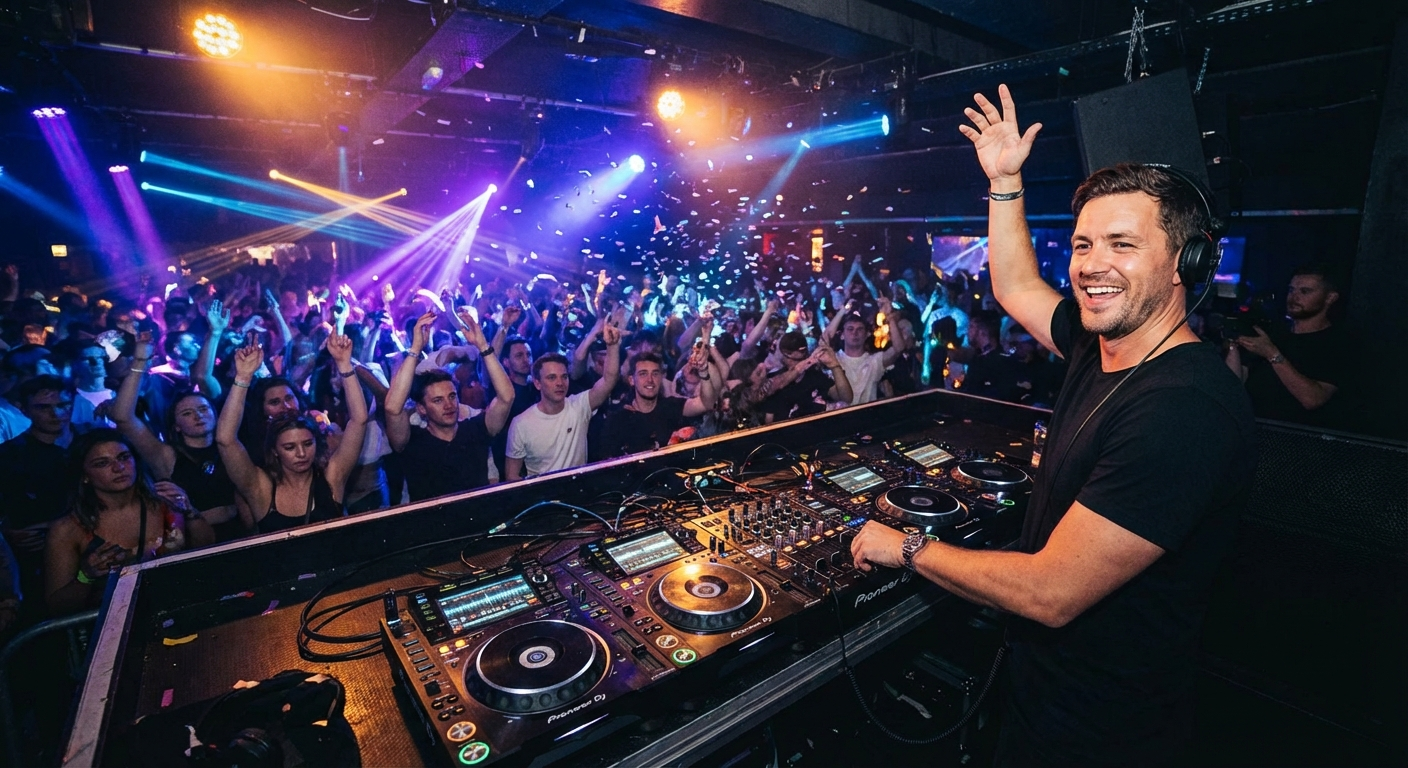
The Silent Threat to Your DJ Career in 2026
You’ve built a killer set. Your transitions are smooth. The crowd is vibing. But there’s one thing that can shut down your entire career faster than a blown speaker: music licensing events.
In 2026, the rules around playing music publicly are getting stricter. More venues are getting audited. More DJs are getting hit with fines. And most DJs have no idea it’s happening until it’s too late.
Think of this as your personal roadmap to navigating the hidden world of music licensing events. We’re not talking about boring legal mumbo-jumbo. We’re talking about the five secret events every working DJ needs to know about to protect their income, their gear, and their reputation.
Here’s the brutal truth: ignorance isn’t a defense. If you play music in public without the proper licenses, you are breaking the law. And in 2026, the people enforcing these laws are getting smarter and more aggressive.
By the time you finish reading this, you’ll know exactly which licensing events matter, how to prepare for them, and how to keep your DJ business legal and profitable.
🎯 Key Takeaways
- Understand the five critical music licensing events that directly impact DJs in 2026
- Learn how to legally play music at private parties, clubs, and corporate events
- Discover the one licensing event most DJs ignore (and why it’s costing them money)
- Get a step-by-step checklist to ensure you’re compliant before your next gig
- Find out how PartyMusicPlaylist helps you build legal, crowd-pleasing sets
What Are Music Licensing Events?
Music licensing events are specific situations where you need permission to play someone else’s copyrighted music. Think of it like this: when you buy a song on iTunes or stream it on Spotify, you’re buying the right to listen to it privately. That’s it.
The moment you play that same song in a bar, at a wedding, or on a livestream, you’re doing something different. You’re publicly performing the work of the songwriter, the publisher, and the recording artist. And under copyright law, that requires a separate license.
Here’s the part that trips up most DJs: different events require different licenses. A private birthday party at your house is different from a paid gig at a nightclub. A corporate event for a Fortune 500 company is different from a charity fundraiser. Each scenario triggers a different “music licensing event.”
In 2026, the music industry is cracking down harder than ever. Performance rights organizations (PROs) like ASCAP, BMI, and SESAC are using advanced tracking technology. They know when and where your music is playing. They’re not guessing anymore.
💡 Pro Tip: Always ask your client or the venue manager who holds the public performance license for the space. If they can’t give you a clear answer, that’s a red flag. Walk away or get it in writing.
The Five Secret Music Licensing Events Every DJ Must Know
Most DJs only think about two things: the gig and the playlist. But there are five distinct music licensing events that can affect your work. Let’s break them down one by one.
1. The Private Party Trap
You’ve been hired to play a sweet sixteen party at a rented event space. The parents are paying you cash. It feels private, right? Wrong.
The moment you plug in your gear and start playing music in a space that’s open to guests (even if it’s a private event), you’ve triggered a public performance licensing event. The venue should have a blanket license from a PRO, but many small venues don’t.
Here’s the scary part: if the venue doesn’t have a license, the liability can fall on you, the DJ. In 2026, PROs are actively monitoring social media posts, event listings, and even geotagged photos to find unlicensed performances.
⚠️ Heads Up: Never assume the venue has a license. Always confirm in writing before the gig. A simple email asking “Do you have current ASCAP, BMI, and SESAC licenses?” can save you thousands.
2. The Corporate Event Minefield
Corporate events are the biggest money-makers for DJs. But they’re also the highest risk. Why? Because corporations have deep pockets. And PROs know it.
When you play at a company holiday party, a product launch, or a team-building retreat, you’re in a commercial music licensing event. The company must have a license that covers the event. If they don’t, the fine can be massive — sometimes $10,000 or more per song.
In 2026, many corporations are starting to require DJs to sign contracts that include indemnity clauses. That means if you play unlicensed music, you’re personally responsible for the fines.
Songs That Trigger Corporate Event Scrutiny
- "Happy" by Pharrell Williams — Extremely popular, heavily monitored by PROs
- "Uptown Funk" by Mark Ronson ft. Bruno Mars — Almost always played, high licensing cost
- "Shake It Off" by Taylor Swift — Swift’s catalog is aggressively protected
- "Blinding Lights" by The Weeknd — Global hit, constantly tracked
- "Levitating" by Dua Lipa — Modern classic, high monitoring priority
💡 Pro Tip: For corporate events, build your playlist using songs from artists who offer free or low-cost licenses for commercial use. Or better yet, use PartyMusicPlaylist’s corporate event templates that are pre-vetted for legal safety.
3. The Wedding Walkthrough
Weddings are tricky. Why? Because there are multiple “music licensing events” happening within one party. You have the ceremony music, the cocktail hour, the dinner music, the first dance, and the dance floor.
Each segment can require a different license. The ceremony music (walking down the aisle) is a public performance event. The reception dance party is a dance performance event. And if you’re playing background music during dinner, that’s a background music event.
Most wedding DJs don’t realize that playing a song during the ceremony — even something simple like Pachelbel’s Canon — can be a licensed performance if the venue doesn’t have a blanket license.
- "At Last" by Etta James — Most popular first dance song, always monitored
- "All of Me" by John Legend — Wedding staple, high licensing scrutiny
- "Can't Help Falling in Love" by Elvis Presley — Classic, still protected
- "Perfect" by Ed Sheeran — Modern wedding favorite, heavily tracked
- "A Thousand Years" by Christina Perri — Ceremony essential, monitored
4. The Livestream and Virtual Event Trap
This is the secret event that catches most DJs off guard. If you livestream your set on Twitch, Instagram, or even a private Zoom party, you’ve entered a digital performance licensing event.
In 2026, platforms are getting sued left and right for unlicensed music. Twitch, TikTok, and YouTube are now actively scanning livestreams for copyrighted music. If they detect it, they can mute your stream, take down your video, or even ban your account.
But here’s the bigger problem: if you’re getting paid for that livestream (tips, donations, or a flat fee), you’re now in a commercial digital performance event. That requires a different license entirely.
⚠️ Heads Up: Never assume your streaming platform has the rights. Always use royalty-free music or licensed tracks if you’re broadcasting live. Services like Soundstripe and Artlist offer DJ-specific licensing for digital performances.
5. The Mobile DJ Nightmare
Mobile DJs — the ones who bring their own gear to different venues every weekend — face the most complex licensing situation. Every new venue is a new music licensing event.
You might play a dive bar on Friday (which probably has no license), a private residence on Saturday (which likely has no license), and a rented hall on Sunday (which might have a license). That’s three different events with three different legal statuses.
In 2026, mobile DJs are the #1 target for PRO audits. Why? Because you’re the most visible person with the music. The venue can claim they didn’t know what you were playing. But you’re the one pressing play.
🔥 The Hard Truth: According to a 2025 survey by the American Disc Jockey Association, 68% of mobile DJs have never checked a venue’s license. That means nearly 7 out of 10 DJs are playing illegally every weekend. Don’t be part of that statistic.
How to Protect Yourself: A Step-by-Step Checklist
You don’t need to become a lawyer. You just need a system. Follow this checklist before every gig to stay legal:
- Ask the venue for their PRO licenses. Request proof of ASCAP, BMI, and SESAC coverage. Get it in writing.
- Ask the client if they have event-specific insurance. Some policies cover music licensing violations.
- Read your contract. Look for indemnity clauses that hold you personally liable.
- Build your playlist from licensed sources. Use PartyMusicPlaylist to organize your tracks and note which ones are royalty-free or cleared for public performance.
- Audit your back catalog. Remove any tracks you downloaded illegally or from unverified sources.
- Get your own DJ liability insurance. It costs about $200-400 per year and covers licensing fines in many cases.
- Document everything. Save emails, contracts, and license confirmations in a folder on your phone.
💡 Pro Tip: Set a recurring calendar reminder every six months to check if the venues you play at most have renewed their licenses. Licenses expire, and venues often forget to renew.
What Happens When You Get Caught?
Let’s paint a realistic picture. You’re playing a packed club. A representative from BMI walks in, takes note of the music playing, and checks if the venue has a license. If they don’t, here’s what happens next:
- First violation: A warning letter to the venue (you might never know)
- Second violation: A demand letter for back royalties, typically $5,000-$20,000
- Third violation: A lawsuit naming both the venue AND the DJ
- Worst case: Statutory damages of up to $30,000 per song played
That last number is terrifying. If you played 20 songs in a set without a license, you could be looking at $600,000 in fines. Yes, that’s real.
In 2026, PROs are using AI-powered audio recognition software. They don’t need a person in the room anymore. They can identify unlicensed performances from a two-second clip uploaded to social media.
Common Mistakes DJs Make with Licensing
Let’s save you from the biggest errors that get DJs in trouble:
⚠️ Heads Up: Mistake #1 — Assuming the venue handles everything. You are the professional. The venue owner might not know their obligations. Always verify.
⚠️ Heads Up: Mistake #2 — Playing music from streaming services. Spotify, Apple Music, and Tidal are for personal listening. Using them for a public gig is a direct violation of their terms of service and copyright law.
⚠️ Heads Up: Mistake #3 — Thinking smaller venues don’t matter. PROs target small venues because they’re more likely to be unlicensed. A coffee shop playing your mix can get you both sued.
⚠️ Heads Up: Mistake #4 — Ignoring digital events. A private Facebook Live for a friend’s birthday is still a public performance. Treat every digital stream like a club gig.
- ✅ Correct approach: Always ask “Who holds the public performance license?” before accepting a gig.
- ✅ Correct approach: Use a dedicated DJ platform like PartyMusicPlaylist to organize your legal tracks.
- ✅ Correct approach: Carry proof of your own liability insurance at every gig.
- ✅ Correct approach: Keep a digital folder with all venue license confirmations.
- ✅ Correct approach: Build relationships with venues that take licensing seriously.
How PartyMusicPlaylist Helps You Stay Legal
At PartyMusicPlaylist, we built our platform with DJs in mind. We know that managing music licensing is a headache. That’s why we’ve integrated features that help you stay compliant:
- Track tagging system — Mark songs as “cleared for public performance” or “needs license”
- Venue notes — Store license expiration dates and contact info for every venue you play
- Playlist sharing — Share your setlists with clients and venues so they know what’s coming
- Export to DJ software — Seamlessly move your playlists to Serato, Rekordbox, or Traktor
- Guest song requests — Let guests submit requests through our platform, so you can vet songs before playing them
We’re not a legal service. But we’re a tool that makes it easier to stay organized and informed. Every DJ deserves to focus on the music, not the paperwork.
Expert Tips from Veteran DJs
We asked three working DJs with over 20 years of combined experience for their best advice on music licensing events. Here’s what they said:
“I lost a $5,000 corporate gig because the venue didn’t have a license. The client blamed me. Now I send a pre-gig checklist to every client before I even quote them. It’s saved me ten times over.” — Marcus J., Chicago, IL
“I used to think licensing was the venue’s problem. Then a PRO sent a cease-and-desist to a bar I played at weekly. The bar closed down six months later. I still feel guilty about it.” — Sarah K., Austin, TX
“The best investment I ever made was a $300 annual subscription to a royalty-free music library. I now have a separate set of ‘legal-only’ tracks for events where I’m not sure about the venue’s license. It’s my safety net.” — David R., Nashville, TN
These aren’t hypotheticals. These are real stories from real DJs. The lesson is clear: proactive beats reactive every time.
The Future of Music Licensing Events
What’s coming in 2027 and beyond? Here are three trends every DJ should watch:
- AI-powered monitoring will become standard. PROs will use software that identifies your music in real-time from streaming audio.
- Blockchain-based licensing will emerge. Some artists are experimenting with smart contracts that automatically pay royalties when a song is played publicly.
- More DJ-specific licenses will appear. Organizations like the ADJA are lobbying for simplified licensing packages designed specifically for mobile DJs.
The industry is changing fast. The DJs who adapt will thrive. The ones who ignore licensing will become cautionary tales.
Your Next Move
You now know the five secret music licensing events that can make or break your DJ career in 2026. You have a checklist. You have expert advice. You have the tools.
Here’s what to do right now:
- Bookmark this article. Come back to it before every big gig.
- Check your next venue’s license. Send an email today. Don’t wait.
- Audit your music library. Remove anything you’re not 100% sure is legal to play publicly.
- Build your first legal playlist. Use PartyMusicPlaylist to organize tracks you can play without worry.
- Share this with another DJ. The more informed our community is, the safer we all are.
Your music is your art. Your career is your business. Protect both by understanding the licensing events that impact your work.
Now go build that set. Legally.
Frequently Asked Questions
PartyMusicPlaylist Team
Helping you create the perfect soundtrack for life's most memorable moments. Expert tips on event music planning, DJ coordination, and playlist curation.
Learn MoreReady to Plan Your Event Music?
Create the perfect playlist for your special event. Search songs, organize your timeline, and share with your DJ.
Get Started FreeRelated Articles
Continue reading