You've spent hours curating the perfect Spotify playlist. The vibe is immaculate. You hit play at your party. Then... the energy dips. Someone requests a song you don't have. The algorithm plays a weird deep cut. Your "perfect" playlist feels flat.This is the reality of relying on a static playlist in 2026. While streaming services are incredible for personal listening, they fall apart in live social settings. Meanwhile, professional DJs — and the smart tools that help you act like one — are thriving.
In this guide, we'll uncover 5 surprising reasons why a DJ (or a professionally-structured playlist) beats a standard Spotify playlist every time. You'll learn exactly why your party music needs human curation, how to bridge the gap with tools like PartyMusicPlaylist, and get actionable song lists to transform your next event. Let's dive in.
🎯 Key Takeaways
- Static Spotify playlists lack the real-time adaptability needed for live events — a DJ or smart playlist tool reads the room.
- Human-curated playlists use energy mapping (build-ups, peaks, cool-downs) that algorithms simply can't replicate.
- Professional DJs master transitions and beat-matching, creating a seamless flow that keeps people dancing.
- Tools like PartyMusicPlaylist let you harness DJ-style structure without needing turntables — and let guests request songs.
- The best 2026 parties blend curated playlists with live flexibility, not one or the other.
Why Your Spotify Playlist Is Letting You Down
Let's be honest. You've probably spent hours building the perfect party playlist. You sorted by genre, deleted the slow songs, and added that new viral track. But something still felt off when you actually played it at your gathering.
There's a scientific reason for this. Static playlists ignore one critical factor: the room's energy in real-time. A song that works at 9 PM might kill the vibe at 11 PM. An algorithm can't see people's faces, feel the conversation lull, or sense when it's time to drop a banger.
In 2026, the debate of DJ vs Spotify playlist has shifted. It's no longer about equipment or cost. It's about intentional energy management. Let's explore the five surprising reasons why DJs (and DJ-style planning) win.
Surprise #1: DJs Read the Room — Algorithms Can't
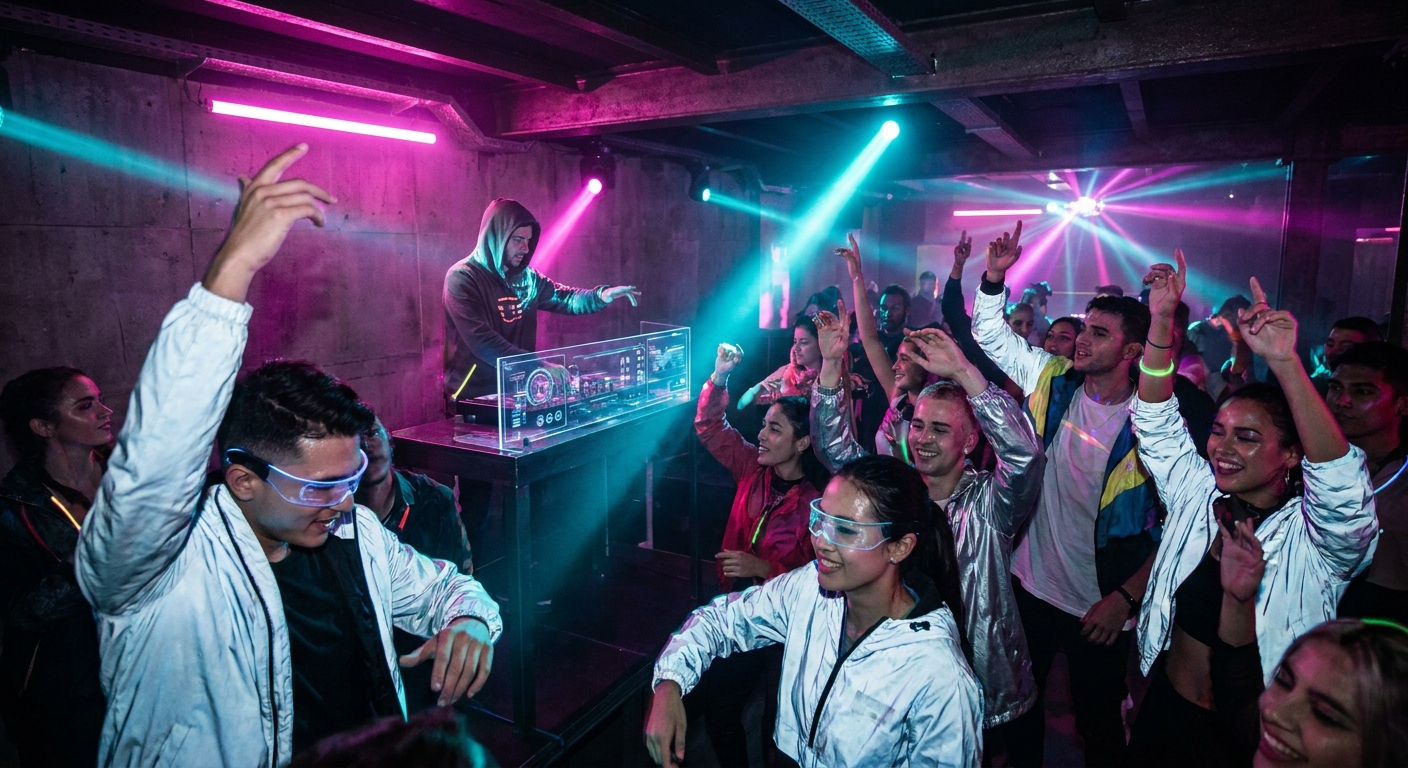
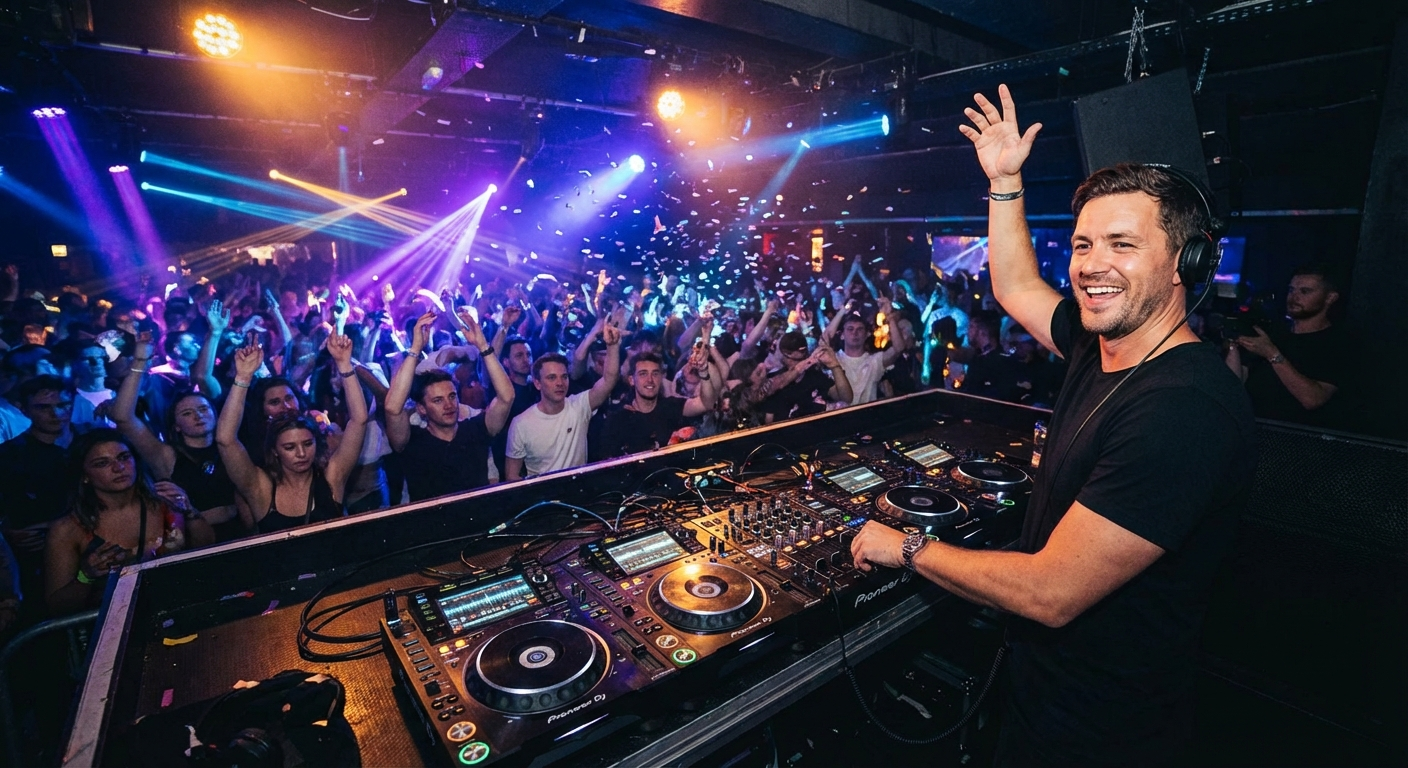
A Spotify playlist plays your pre-selected list, period. A DJ watches the dance floor. They see a group of friends huddled in conversation? They might play a familiar singalong track to draw them in. They see people starting to drift away? They drop a high-energy banger to pull them back.
This real-time adaptability is the single biggest advantage of a DJ vs Spotify playlist. It's not about being a music snob — it's about being a people reader.
💡 Pro Tip: Even if you're not hiring a DJ, you can mimic this. Use PartyMusicPlaylist's guest request feature to let attendees vote on songs during the event. It gives you crowd intelligence without needing a professional.
How to "Read the Room" Without a DJ
You don't need turntables to apply this principle. Here's a simple framework:
- Start with a "warm-up" zone — 30 minutes of familiar, mid-tempo tracks (think "Levitating" by Dua Lipa or "Blinding Lights" by The Weeknd).
- Watch for peak moments — when people are loud, laughing, or moving. That's your signal to escalate energy.
- Prepare "rescue" songs — have 3-5 guaranteed crowd-pleasers ready to save a dying vibe (e.g., "Mr. Brightside" by The Killers, "I Gotta Feeling" by The Black Eyed Peas).
- End with a cool-down — don't let the party crash. Slowly bring energy down with classics like "Don't Stop Believin'" or "Piano Man."
- Key Insight: The best DJs don't just play songs — they craft a narrative arc for the night.
Surprise #2: Energy Mapping Beats Algorithmic Sequencing
Spotify's algorithm sequences songs based on audio features like tempo, key, and genre. Sounds smart, right? The problem is it doesn't understand emotional context. A high-tempo song can feel flat if it follows a massive peak. A slow song can feel perfect after an intense build-up.
DJs use a technique called "energy mapping" — plotting the emotional highs and lows of a night. They know that after "Lose Yourself to Dance" by Daft Punk, you need a slight dip before the next peak. They build tension, then release it.
🎧 The Energy Curve Rule: A great set follows a wave pattern — low, build, peak, drop, recover, repeat. Your Spotify playlist is a flat line. That's why it feels monotonous after 90 minutes.
Build Your Own Energy Map
Here's how to structure a 4-hour party playlist like a DJ:
- Hour 1 (Arrival/Warm-up): 70-90 BPM, familiar hits. Think "Watermelon Sugar" by Harry Styles, "Sunflower" by Post Malone.
- Hour 2 (Building Energy): 100-120 BPM, danceable but not frantic. Think "Don't Start Now" by Dua Lipa, "Uptown Funk" by Mark Ronson.
- Hour 3 (Peak Party): 120-130 BPM, anthems and bangers. Think "Levels" by Avicii, "Get Lucky" by Daft Punk.
- Hour 4 (Wind Down): 80-100 BPM, singalongs and classics. Think "Hey Ya!" by OutKast, "Sweet Caroline" by Neil Diamond.
⚠️ Heads Up: Avoid putting two peak-energy songs back-to-back. Your guests will burn out. Always follow a high with a medium.
Surprise #3: Transitions Matter More Than Song Selection
Here's a truth that surprises most people: the gap between songs matters more than the songs themselves. A jarring transition — silence between tracks, a key clash, a sudden genre shift — kills momentum instantly.
Spotify's crossfade feature helps, but it's a blunt instrument. It just fades one song out while the next fades in. It doesn't understand harmonic mixing or energy flow.
Professional DJs master transitions — beat-matching, phrase-mixing, and using effects to create a seamless journey. When done right, guests don't notice individual songs. They just feel the energy flow.
How to Transition Like a DJ (Without Being a Pro)
You can't beat-match without DJ software, but you can apply these principles:
- Use crossfade wisely — set it to 3-5 seconds for most parties. Too long (10+ seconds) sounds messy.
- Group songs by key — Spotify doesn't show musical keys, but tools like Mixed In Key or PartyMusicPlaylist's song analysis do.
- End songs on a "high" — don't let the outro fade completely. Cut to the next song at the peak of energy.
- Avoid genre whiplash — transitioning from EDM to country is jarring. Use bridge songs (like "Old Town Road" remix) to cross genres smoothly.
- "I Took a Pill in Ibiza" (Seeb Remix) by Mike Posner — warm, building intro perfect for energy ramp-ups.
- "Lean On" by Major Lazer & DJ Snake — universal appeal, easy to mix into house or pop.
- "One Kiss" by Calvin Harris & Dua Lipa — classic house beat that flows into most dance tracks.
- "Shape of You" by Ed Sheeran — tropical house vibe that bridges pop and EDM seamlessly.
- "Sun Is Shining" by Bob Marley vs. Funkstar De Luxe — timeless, works in any setting.
- Use a request platform — PartyMusicPlaylet lets guests submit song requests via QR code. You approve or skip them on your phone.
- Create a "request queue" — set aside 2-3 slots per hour where you play guest picks. It keeps everyone engaged.
- Have a "no" strategy — if a request doesn't fit, play it during a low-energy moment. Or offer an alternative: "How about this instead?"
- Know your audience — age range? Music taste? (Indie, pop, hip-hop, EDM?)
- Know your occasion — birthday, anniversary, house party, corporate mixer?
- Know your space — small apartment? Large hall? Outdoor? This affects bass levels and song choice.
- Know your time — early evening = mellow. Late night = bangers. End = singalongs.
- For a 30th birthday (indie/alternative crowd): "Feel It Still" by Portugal. The Man, "Electric Feel" by MGMT, "Tongue Tied" by Grouplove.
- For a college house party (hip-hop/pop): "Sicko Mode" by Travis Scott, "God's Plan" by Drake, "Humble" by Kendrick Lamar.
- For a family reunion (multi-generational): "Dancing Queen" by ABBA, "Uptown Funk" by Mark Ronson, "Happy" by Pharrell Williams.
- Pre-build your energy-mapped playlist — organize songs by vibe (warm-up, peak, cool-down).
- Enable guest requests — let attendees submit songs via their phones. You approve or skip in real-time.
- Export for DJ software — if you want to take it further, export your playlist to Serato or Rekordbox.
- Find local DJs — not confident in your curation? Use the platform to discover and book DJs in your area.
- Playing the same playlist all night — energy needs to evolve. Don't start with bangers and end with bangers. Burnout is real.
- Ignoring requests entirely — guests feel ignored. Even if you don't play their song, acknowledge it.
- Using only one genre — variety keeps people engaged. Sprinkle in classics, modern hits, and unexpected gems.
- Forgetting the "bathroom break" song — every great set has a track that lets people grab a drink without missing the peak.
- Not testing your speakers — a playlist is useless if the sound is muddy or too quiet. Test before guests arrive.
- Start with a "confidence builder" — play a song everyone knows and loves within the first 5 minutes. It sets the tone and builds trust.
- Use "ear candy" moments — drop a rare remix or an unexpected mashup (like "Old Town Road" vs. "Panini") to surprise and delight.
- Create "singalong zones" — block 3-4 songs in a row that are perfect for group singing (e.g., "Bohemian Rhapsody," "Don't Stop Believin'," "We Will Rock You").
- End with a "finale" — don't just stop. Play a song that feels like a closing statement (e.g., "Closing Time" by Semisonic, "All Night" by Beyoncé).
- For romantic moments: "At Last" by Etta James, "Can't Help Falling in Love" by Elvis Presley, "Perfect" by Ed Sheeran.
- For high-energy finish: "Don't Stop the Party" by Pitbull, "Party Rock Anthem" by LMFAO, "Turn Down for What" by DJ Snake.
Songs That Transition Beautifully
Surprise #4: DJs Handle Requests Better Than Playlists
This is the elephant in the room at every party. Someone shouts "play Despacito!" or requests an obscure 80s B-side. Your Spotify playlist ignores them. They get frustrated. The vibe shifts.
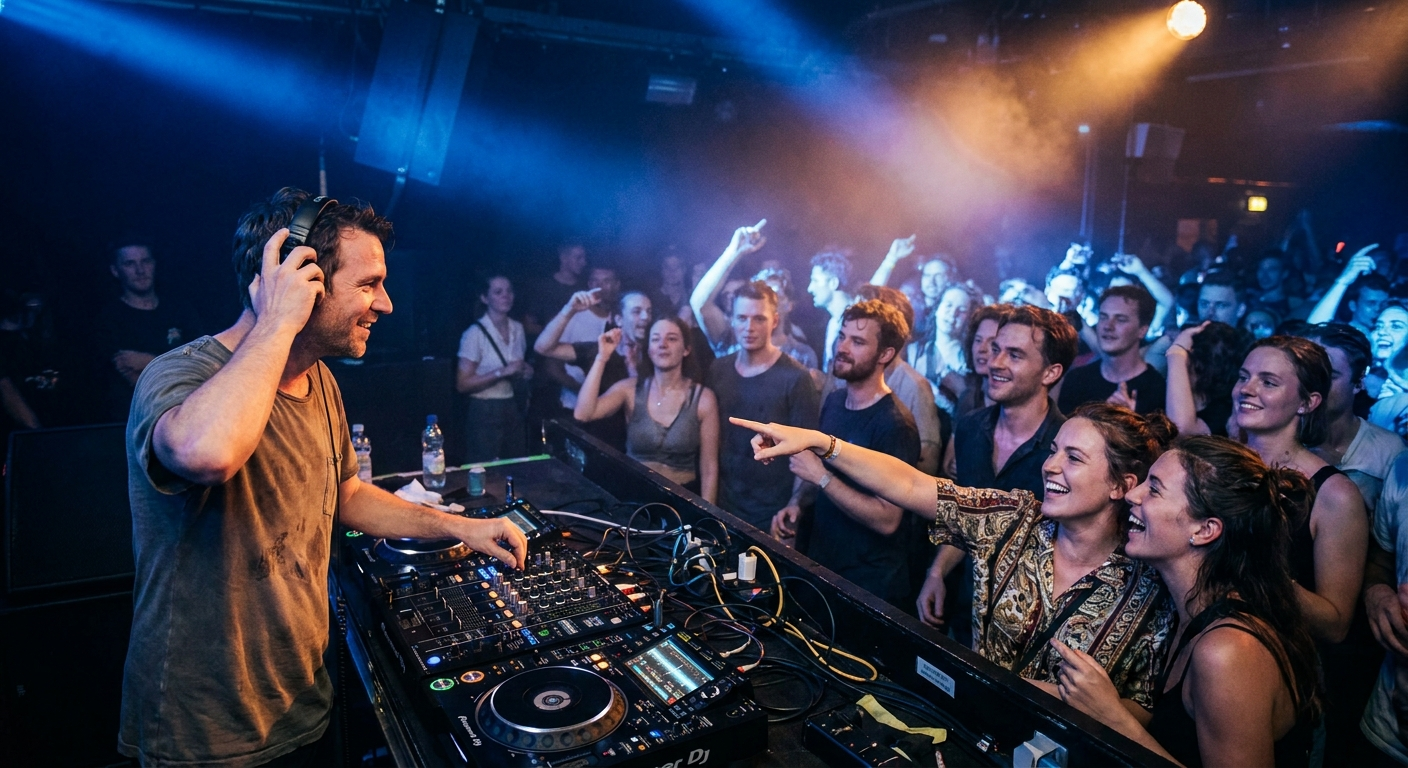
A DJ handles this with finesse. They acknowledge the request, decide if it fits the current energy, and either play it immediately or promise to work it in later. They maintain control while making everyone feel heard.
In the DJ vs Spotify playlist debate, this is where human interaction wins every time. Music is social — ignoring your audience's desires kills the communal experience.
How to Handle Requests Without a DJ
You can't be everywhere at once. But you can use technology:
💡 Pro Tip: The most common party-killing request is a sad breakup song. Have a "vibe filter" — if the request is slow or emotional, save it for the end of the night.
Surprise #5: DJs Curate for the Room, Not the Algorithm
Spotify's algorithm optimizes for listening time. It wants you to keep the app open. That means it favors familiar songs, avoids risks, and pushes popular tracks — even if they don't fit your specific crowd.
A DJ curates for your specific room. They consider the age range, the occasion (birthday vs. corporate event), the time of night, and even the acoustics. They might play a rare remix that only 20 people know, because those 20 people will lose their minds.
This hyper-specific curation is impossible for a general algorithm. It's why a wedding DJ plays "Shout" by The Isley Brothers even though it's 60 years old — because it works.
Curate Like a DJ: The "Room Profile" Method
Before your next party, build a room profile:
Then build your playlist around that profile, not around what's trending on TikTok.
The Hybrid Solution: Using PartyMusicPlaylist to Bridge the Gap
Here's the honest truth: you don't have to choose between a DJ and a playlist. The best solution in 2026 is a hybrid. Use a DJ-style structure for your playlist, but add layers of flexibility.
PartyMusicPlaylist is built for exactly this. It's a free online event playlist creator that gives you DJ-level control without the equipment:
TL;DR: The DJ vs Spotify playlist debate misses the point. Use a structured playlist with real-time flexibility. PartyMusicPlaylist gives you both — pre-planned energy mapping + live guest requests. It's the best of both worlds.
Common Mistakes to Avoid When Using Playlists
⚠️ Heads Up: Even with a great playlist, these mistakes will kill your party:
Expert Tips for Your Next Party Playlist
🎧 The "Three-Song Rule": If three songs in a row don't get a reaction (head nodding, singing, dancing), change the energy immediately. Drop a guaranteed hit or shift tempo. Your audience is telling you something — listen.
Here are more pro-level tips from experienced DJs:
Frequently Asked Questions
PartyMusicPlaylist Team
Helping you create the perfect soundtrack for life's most memorable moments. Expert tips on event music planning, DJ coordination, and playlist curation.
Learn MoreReady to Plan Your Event Music?
Create the perfect playlist for your special event. Search songs, organize your timeline, and share with your DJ.
Get Started FreeRelated Articles
Continue reading