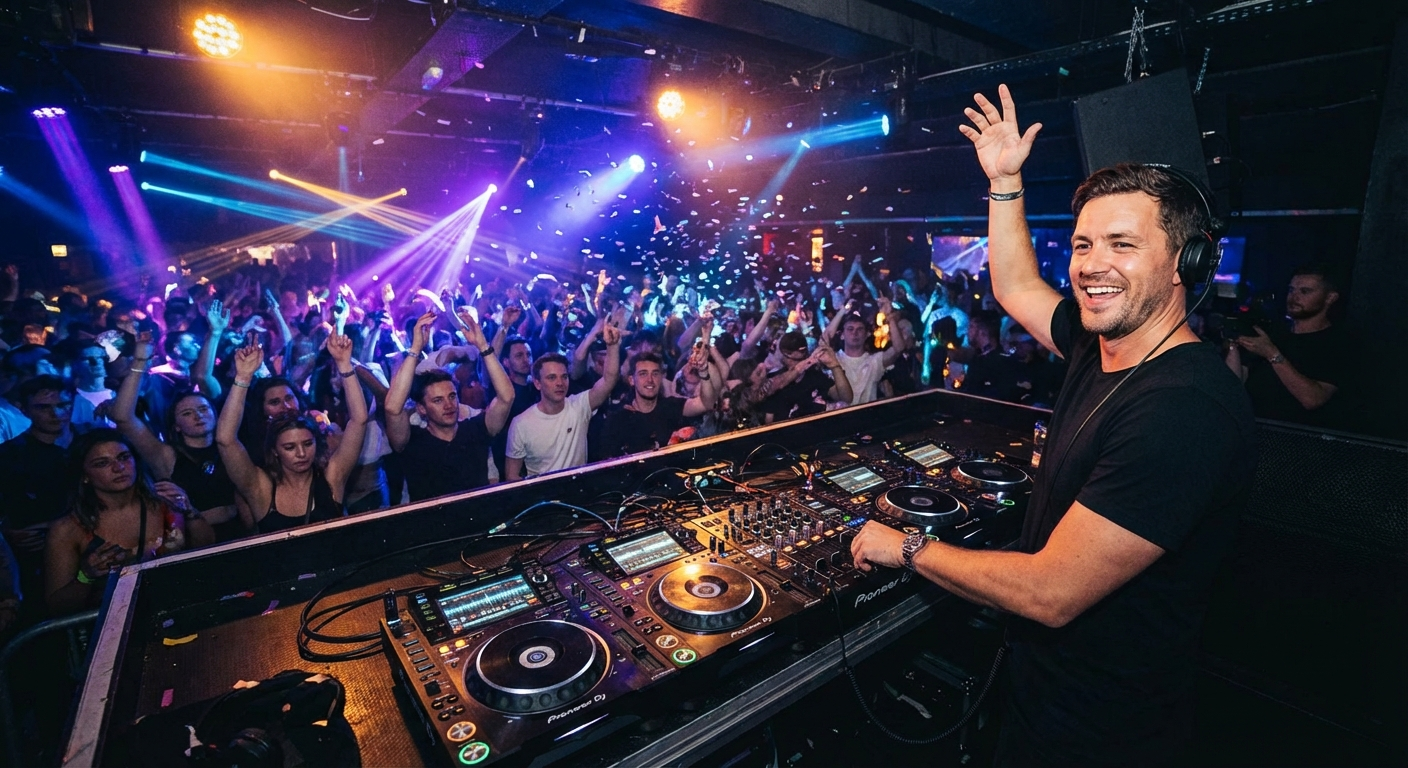
What’s the Secret to a Party That No One Wants to Leave?
You’ve got the snacks. The drinks are chilled. Your living room is spotless. But there’s one thing that can make or break your entire event: the music. A bad playlist kills the vibe faster than a spilled drink on a white carpet.
The truth is, knowing how to create a party playlist isn’t just about picking songs you like. It’s a science. It’s an art. And it’s the single most important factor in keeping people on the dance floor.
Whether you’re hosting a birthday bash, a holiday gathering, or a backyard BBQ, your music selection determines the energy. Get it right, and your guests will rave about it for months. Get it wrong, and they’ll be checking their watches by 9 PM.
In this guide, you’ll learn a proven 7-step formula for crafting an insane party playlist. We’ll cover everything from song ordering to genre blending. You’ll get real song examples, expert tips, and a clear roadmap. By the end, you’ll know exactly how to build a music lineup that keeps the energy high from start to finish.
🎯 Key Takeaways
- Master the energy curve — start slow, peak high, end strong
- Learn the 3-song rule for seamless transitions between genres
- Discover the perfect song-to-bpm ratio for non-stop dancing
- Get a curated list of 30+ crowd-pleasing songs for any party moment
- Learn how to use guest song requests to keep everyone engaged
Why Most Party Playlists Fail (And How Yours Won’t)
Let’s be real for a second. Most party playlists are a mess. They’re either a random shuffle of one person’s favorites or a chaotic mix of every genre thrown together without thought. The result? Awkward silences, people checking their phones, and a dance floor that looks like a ghost town.
Here’s the hard truth: a great party playlist isn’t a collection of songs — it’s a journey. It takes your guests from casual mingling to full-on dancing and back down to a relaxed cool-down. It has structure, flow, and intentionality.
The biggest mistake? Starting too hot. If you drop a banger at minute one, where do you go from there? You’ve peaked too early, and everything after feels like a letdown. Smart playlist creators know that building energy gradually is the key.
Another common failure: ignoring your audience. A playlist that works for a college frat party will flop at a 40th birthday dinner. You need to read the room — literally and figuratively. That means knowing who’s coming and what they love.
💡 Pro Tip: Before you start building your playlist, ask yourself three questions: Who’s coming? What’s the occasion? How long will the party last? Your answers will guide every song choice.
Finally, most people forget to test their transitions. You can’t just hit shuffle and hope for the best. The gap between a slow jam and an uptempo banger needs to feel natural. If the energy drops suddenly, you lose the crowd.
Step 1: Define Your Party’s Energy Arc
Every great party has a natural rhythm. Think of it like a story: an opening, rising action, a climax, and a resolution. Your playlist should mirror this arc. This is called the energy curve.
Here’s how it breaks down for a typical 4-hour party:
- Hour 1: The Warm-Up (BPM 80-100) — Guests arrive, drinks are poured, conversations start. Play familiar, mellow tracks that set a welcoming tone. Think “Sunday Morning” by Maroon 5 or “Put Your Records On” by Corinne Bailey Rae.
- Hour 2: Building Momentum (BPM 100-120) — People are loosening up. Time to introduce more upbeat tracks with a solid groove. Songs like “Blinding Lights” by The Weeknd or “Levitating” by Dua Lipa work perfectly here.
- Hour 3: Peak Energy (BPM 120-140) — The dance floor is full. This is where you drop your biggest bangers. “Uptown Funk” by Mark Ronson ft. Bruno Mars and “Don’t Stop Believin’” by Journey are guaranteed crowd-movers.
- Hour 4: Cool Down (BPM 80-100) — The party is winding down. Guests are winding down too. Play slower, feel-good tracks that let everyone catch their breath. Think “Brown Eyed Girl” by Van Morrison or “Stand By Me” by Ben E. King.
This structure works because it builds anticipation. Guests feel the energy rising naturally, and they’re more likely to stay engaged throughout the night. It also prevents burnout — nobody wants to hear four hours of non-stop bangers.
⚠️ Heads Up: Don’t rigidly stick to this timeline if the crowd isn’t responding. If people are still on the fence after an hour, bump up the BPM earlier. Always read the room and adjust on the fly.
Step 2: Master the Art of Song Transitions
You’ve probably experienced this: a killer song ends, and then silence. Or worse, a completely different genre starts that kills the mood. Great transitions are the glue that holds your playlist together.
The secret weapon? Beat matching. You don’t need to be a DJ to do this. Just look at the BPM (beats per minute) of your songs. When one song ends, the next should have a similar BPM — or at least a natural shift of no more than 5-10 BPM.
Here’s a simple rule: never jump more than 15 BPM in either direction between consecutive songs. A sudden drop from 130 BPM to 90 BPM will feel jarring. A gradual climb from 110 to 120 to 130 feels smooth.
- Check BPMs before building your playlist — most music apps show this
- Group songs by BPM range (80-100, 100-120, 120-140)
- Use crossfade settings (3-5 seconds) to blend endings and beginnings
- Keep 2-3 “bridge” songs in each BPM range to ease transitions
- Test your playlist in a quiet room before the party
Another pro trick: use instrumental intros and outros to your advantage. Many pop songs have a few seconds of instrumental at the start or end. Use those moments to transition to a new key or tempo. For example, the ending of “Get Lucky” by Daft Punk has a long instrumental fade that can blend perfectly into “Treasure” by Bruno Mars.
And here’s a game-changer: use PartyMusicPlaylist.com to plan your transitions. Our tool lets you arrange songs in any order, check BPMs, and even get suggestions for similar tracks. It’s like having a DJ coach in your pocket.
Step 3: Curate Your Must-Have Party Anthems
Every party needs a core set of songs that everyone knows and loves. These are the non-negotiable anthems that get people singing along, dancing, and smiling. You need at least 10-15 of these in your playlist.
But here’s the trick: don’t play them all at once. Space them out strategically. Drop one every 30-45 minutes to keep the energy surging. If you play all your best songs in the first hour, you’ll have nothing left for the peak.
🔥 Can't-Miss Party Anthems
- "Uptown Funk" by Mark Ronson ft. Bruno Mars — The ultimate crowd-unifier. Works at every party, every time.
- "Happy" by Pharrell Williams — Infectious energy that gets even the shyest guests moving.
- "Don't Stop Believin'" by Journey — The karaoke king. Guaranteed sing-along moment.
- "Shape of You" by Ed Sheeran — Modern pop perfection with a danceable beat.
- "I Wanna Dance with Somebody" by Whitney Houston — Timeless, joyful, and impossible to resist.
These five songs are your foundation. But don’t stop there. Build a library of 20-30 anthems across different decades and genres. You want variety so you can adapt to your crowd. A 90s throwback party needs different anthems than a modern pop gathering.
Here are more must-haves organized by era:
- 80s: "Billie Jean" by Michael Jackson, "Sweet Dreams" by Eurythmics
- 90s: "Wannabe" by Spice Girls, "No Diggity" by Blackstreet
- 2000s: "Yeah!" by Usher ft. Lil Jon, "Hey Ya!" by OutKast
- 2010s: "Shake It Off" by Taylor Swift, "Get Lucky" by Daft Punk
- 2020s: "As It Was" by Harry Styles, "About Damn Time" by Lizzo
💡 Pro Tip: Create a “secret weapon” list of 5-10 deep cuts that most people haven’t heard but will love. Songs like “Move On Up” by Curtis Mayfield or “Dancing In the Moonlight” by King Harvest can surprise and delight your crowd.
Step 4: Balance Genres for Maximum Appeal
Here’s the thing: not everyone loves the same music. Your cousin might be into hip-hop, while your aunt loves 80s rock. A great playlist caters to everyone without alienating anyone.
The solution is genre rotation. Instead of playing three hours of one genre, mix it up every 3-4 songs. This keeps things fresh and gives different groups their moment to shine.
Here’s a sample rotation pattern for a 4-hour party:
- Pop (3 songs) — Universal appeal, sets the tone
- R&B/Hip-Hop (3 songs) — Groove-focused, gets people moving
- Dance/Electronic (3 songs) — High energy, fills the dance floor
- Rock classics (3 songs) — Sing-along moments, crowd engagement
- Repeat the cycle — But swap out songs each time for variety
This approach ensures that everyone hears something they love within 15 minutes. Even if someone doesn’t like the current song, they know something different is coming soon. It keeps them engaged and patient.
But here’s a critical rule: always end each genre block with a strong transition song. For example, if you’re moving from pop to hip-hop, use a song that blends both worlds. “Savage Love” by Jawsh 685 and Jason Derulo has pop melodies with a hip-hop beat — perfect bridge material.
Another powerful technique: use remixes and mashups. A mashup of “Old Town Road” and “Uptown Funk” can bridge country and pop fans. A remix of “Happier” by Marshmello can bridge pop and EDM lovers. These hybrid tracks are gold for genre transitions.
Step 5: Incorporate Guest Song Requests
Want to make your party unforgettable? Let your guests choose songs. When people feel heard, they’re more invested in the party. They’ll stay longer, dance harder, and tell their friends about the amazing playlist.
The problem is managing requests in real-time. If you’re the host, you can’t be glued to your phone while also pouring drinks and mingling. That’s where PartyMusicPlaylist.com comes in.
Our platform lets you create a shared playlist link that guests can access from their phones. They can browse your existing songs, add their own suggestions, and even upvote favorites. You see everything in one place and can approve or skip requests instantly.
- Send the link to guests via text or email before the party
- Set ground rules — no repeat songs, no explicit lyrics (if needed)
- Prioritize upvoted songs — let the crowd decide what’s next
- Dedicate 5-10 minutes per hour to guest requests
- Keep your core playlist intact — requests are supplements, not replacements
This approach does two things. First, it builds community — everyone feels like they’re part of the music experience. Second, it takes pressure off you as the host. You don’t have to be the music guru; your guests help curate the vibe.
⚠️ Heads Up: Set a limit on requests per guest (3-5 songs). Otherwise, one person might dominate the playlist. Also, keep a veto button handy for songs that kill the energy.
Step 6: Build Your Playlist by Party Moment
Not every party moment calls for the same energy. A great playlist recognizes these moments and adapts. Here’s how to structure your songs for each phase of the party.
The Arrival Phase (First 30 Minutes)
Guests are walking in, saying hellos, and settling in. Your music should be background-friendly but still engaging. Think warm, familiar, and slightly upbeat.
- "Put Your Records On" by Corinne Bailey Rae — Chill and welcoming
- "Sunday Morning" by Maroon 5 — Smooth and recognizable
- "Banana Pancakes" by Jack Johnson — Acoustic and feel-good
- "Lovely Day" by Bill Withers — Classic and uplifting
- "Here Comes the Sun" by The Beatles — Timeless and warm
The Mingling Phase (30-60 Minutes)
People are talking, laughing, and getting to know each other. The music should fade into the background but maintain a positive energy.
- "Levitating" by Dua Lipa — Modern pop with a danceable beat
- "Blinding Lights" by The Weeknd — Groovy and atmospheric
- "Treasure" by Bruno Mars — Fun and bouncy
- "Shut Up and Dance" by Walk the Moon — Infectious and energetic
- "Can't Stop the Feeling!" by Justin Timberlake — Pure joy in audio form
The Dance Floor Phase (1-3 Hours)
The main event. Your music should be high-energy, beat-driven, and crowd-pleasing. This is where your anthems shine.
- "Uptown Funk" by Mark Ronson ft. Bruno Mars — The ultimate dance starter
- "Don't Stop Believin'" by Journey — Sing-along moment
- "I Wanna Dance with Somebody" by Whitney Houston — Inescapable groove
- "Get Lucky" by Daft Punk ft. Pharrell Williams — Funk perfection
- "Party Rock Anthem" by LMFAO — Nostalgic and hype
The Wind-Down Phase (Last 30 Minutes)
Guests are getting tired. Your music should gradually slow down to signal the party is ending. Keep it positive and reflective.
- "Brown Eyed Girl" by Van Morrison — Nostalgic sing-along
- "Stand By Me" by Ben E. King — Emotional and comforting
- "What a Wonderful World" by Louis Armstrong — Peaceful and beautiful
- "Time After Time" by Cyndi Lauper — Sweet and memorable
- "Lean on Me" by Bill Withers — Community-building finale
Step 7: Test, Refine, and Execute
You’ve built your playlist. Now it’s time to make sure it works. Testing is the step most people skip, and it’s why their playlists fail. A 30-minute test run can save you from a disaster.
Here’s your testing checklist:
- Play the full playlist from start to finish in a quiet room
- Note any awkward transitions — too fast, too slow, or jarring shifts
- Check the total length — aim for 15-20 songs per hour
- Remove any songs that feel out of place — trust your gut
- Add 5-10 backup songs in case the crowd wants more of a certain genre
During the party, stay flexible. Your planned playlist is a blueprint, not a prison. If people are loving the 90s hip-hop block, extend it. If the dance floor is empty, switch to a different genre. A great host reads the room and adapts.
One more pro tip: have a “panic button” playlist ready. This is a list of 5-10 songs that you know will save any situation. Think “Bohemian Rhapsody” by Queen (everyone sings along), “Sweet Caroline” by Neil Diamond (instant crowd participation), or “Mr. Brightside” by The Killers (indie anthem that works universally).
🎵 Final Checklist for Your Party Playlist
✅ Define your energy arc (warm-up → peak → cool down)
✅ Master transitions with BPM matching
✅ Include 15-20 must-have anthems
✅ Balance genres with rotation cycles
✅ Use guest song requests via PartyMusicPlaylist.com
✅ Match music to party moments
✅ Test your playlist before the big night
Common Mistakes to Avoid
Even experienced hosts make these errors. Avoid them, and your playlist will stand out.
⚠️ Heads Up: Playing the same song twice in one night is a cardinal sin. Even if you love a track, resist the urge. It makes you look unprepared.
⚠️ Heads Up: Ignoring explicit lyrics can backfire. If you have kids or conservative guests at your party, screen your songs. Most music apps let you filter explicit content automatically.
⚠️ Heads Up: Overloading on one genre is a surefire way to lose half your crowd. Even if you love hip-hop, your aunt might not. Stick to the rotation strategy we covered earlier.
Other pitfalls include: starting with a song that’s too intense, not having enough slow songs for breaks, and forgetting to adjust volume levels between songs. A good rule of thumb is to keep the volume consistent — use a normalization feature if your music app has one.
Expert Tips for Next-Level Playlists
Want to go from good to legendary? Here are insider secrets from professional DJs and event planners.
Use key detection to make transitions even smoother. Songs in the same musical key (like C major or G minor) blend naturally. Apps like Mixed In Key can analyze your library automatically.
Incorporate live elements like karaoke or request songs. A spontaneous “Don’t Stop Believin’” sing-along can become the night’s highlight. Keep a karaoke track or two in your back pocket.
Create themed mini-sets within your playlist. A 10-minute “80s throwback” block or a “90s R&B” segment can surprise and delight guests. Announce these mini-sets to build anticipation.
Finally, use PartyMusicPlaylist.com to export your playlist to DJ software or streaming services. Our platform integrates with Spotify, Apple Music, and more. You can even find local DJs who can take your curated list and mix it live.
Frequently Asked Questions
PartyMusicPlaylist Team
Helping you create the perfect soundtrack for life's most memorable moments. Expert tips on event music planning, DJ coordination, and playlist curation.
Learn MoreReady to Plan Your Event Music?
Create the perfect playlist for your special event. Search songs, organize your timeline, and share with your DJ.
Get Started FreeRelated Articles
Continue reading