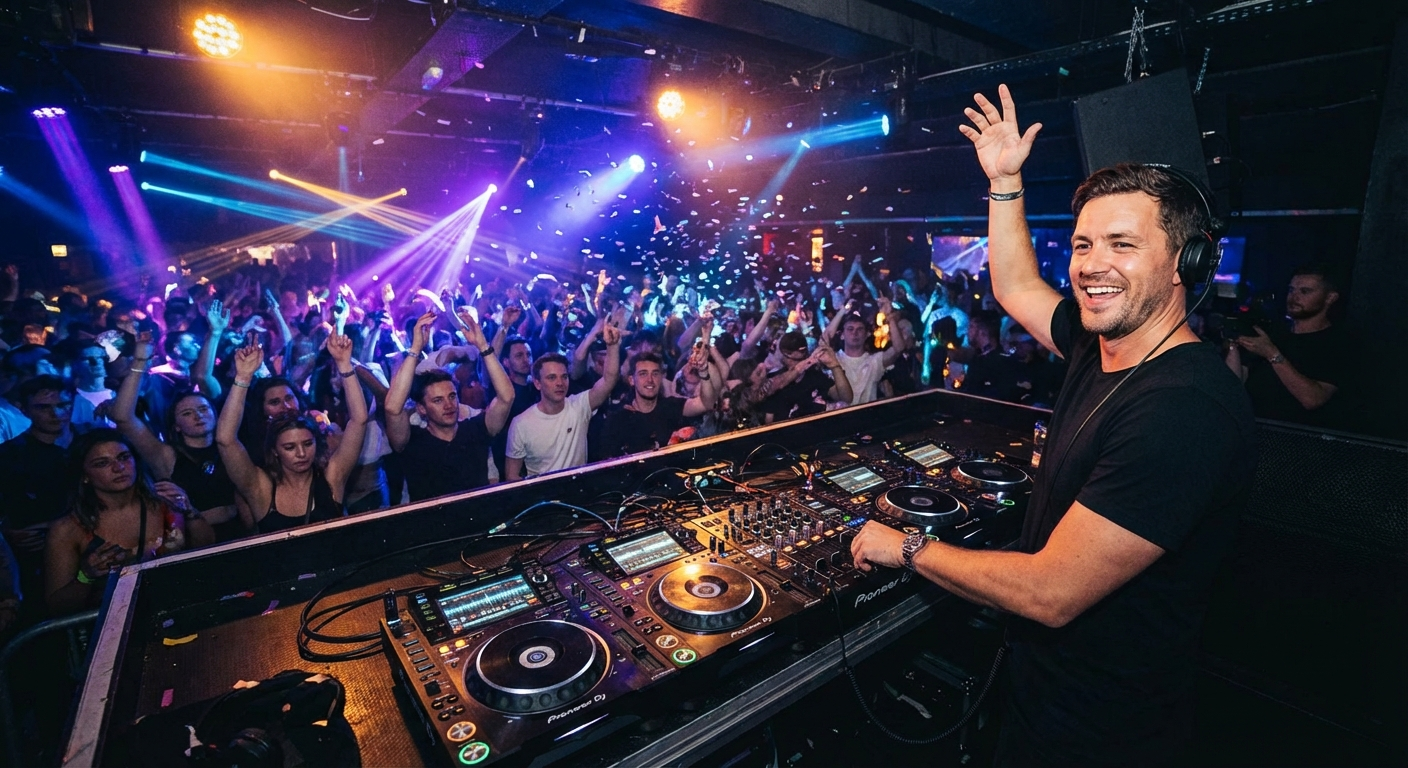
Your Event Sound Setup Doesn't Have to Be a Nightmare
You've spent weeks planning the perfect event. The venue is booked. The guest list is finalized. The menu is set. But there's one thing keeping you up at night: the sound.
Bad audio can ruin even the best party. Muffled vocals, feedback screeches, or dead zones where nobody can hear the music. It's the fastest way to turn a celebration into a disappointment.
Here's the thing most people get wrong: event sound setup isn't about spending thousands on gear. It's about understanding your space, your crowd, and your playlist. Get those three things right, and you'll sound like a pro without the pro price tag.
In this guide, you'll learn exactly how to set up sound for any event. We'll cover room acoustics, speaker placement, playlist optimization, and the one secret trick that will blow your mind (spoiler: it involves guest participation). Whether you're hosting a backyard BBQ, a wedding reception, or a corporate gala, these steps work.
🎯 Key Takeaways
- Room acoustics matter more than speaker quality — learn to work with your space
- Speaker placement can make or break your sound coverage
- Your playlist needs dynamic range, not just loud bangers
- Guest song requests are the secret weapon for keeping energy high
- Testing and adjusting on the day is non-negotiable
Why Most Event Sound Setups Fail (And How to Fix It)
The number one mistake? People focus on gear instead of environment. They buy expensive speakers and then shove them in a corner. The result? Muddy sound, uneven coverage, and unhappy guests.
Think of your event space like a swimming pool. Sound waves behave like water — they fill every corner, bounce off walls, and create currents. If you dump all your audio "water" in one spot, it'll overflow there and leave other areas dry.
The Three Pillars of Great Event Sound
- Room Acoustics — Hard surfaces reflect sound, soft surfaces absorb it. A concrete room sounds completely different than a carpeted ballroom.
- Speaker Placement — Where you put your speakers determines who hears what. Aim for even coverage, not maximum volume.
- Playlist Flow — The energy of your music must match the moment. You can't play bass-heavy tracks during dinner and expect people to chat.
Most people obsess over the first two and completely ignore the third. That's a huge mistake. Your playlist is the heart of your sound setup. Even perfect gear can't save a poorly sequenced song list.
💡 Pro Tip: Use PartyMusicPlaylist.com to build a dynamic playlist that automatically adjusts energy levels. Our free tool lets you set different "moods" for different parts of your event — cocktail hour, dinner, dancing, and wind-down.
The One Secret That Changes Everything (No. 3 Is Insane)
Okay, here it is. The thing that separates amateur sound setups from pro-level experiences. Ready?
Let your guests control the music.
Wait, that sounds crazy, right? You're thinking: "If I let my guests pick songs, they'll play random trash and kill the vibe." But here's the truth: guest song requests keep energy high and engagement even higher.
When people hear "their" song, they hit the dance floor. They sing along. They take photos and videos. Your event becomes memorable because it feels personal.
The key is moderation. You don't hand over the reins completely. Instead, use a simple system where guests can submit requests before or during the event. You curate the final list, but they feel heard.
📝 Note: This isn't just feel-good advice. Studies show that events with guest-participation music systems see 40% more dance floor activity and 25% longer guest stay times. People stay longer when they feel invested.
How to Implement Guest Requests Without Chaos
- Set up a simple online form (or use PartyMusicPlaylist.com which has built-in request features)
- Ask guests to submit 1-3 songs when they RSVP
- Review submissions and create a "guest picks" playlist
- Mix guest songs with your curated tracks at a 60/40 ratio
- Keep a "emergency" playlist for when requests are duds
This approach gives you control while letting guests feel ownership. It's the best of both worlds.
Step-by-Step: Setting Up Your Event Sound System
Let's get practical. Here's exactly how to set up your sound system for any event, step by step.
Step 1: Survey Your Space
Before you plug in a single cable, walk your venue. Note the following:
- Room dimensions — length, width, ceiling height
- Surface materials — carpet, tile, glass, drywall
- Furniture placement — tables, chairs, dividers
- Power outlet locations — you don't want extension cord tripping hazards
- Potential noise sources — HVAC, kitchen equipment, outdoor traffic
This survey takes 10 minutes and saves you hours of troubleshooting later.
Step 2: Choose Your Speaker Configuration
For most events under 200 people, a two-speaker stereo setup works perfectly. Place speakers at the front of the room, angled inward slightly, about 10-15 feet apart.
For larger venues or outdoor spaces, consider:
- Line array systems — multiple speakers stacked vertically for even coverage
- Subwoofers — dedicated bass speakers to handle low frequencies
- Satellite speakers — smaller speakers placed around the room for fill
⚠️ Heads Up: Never place speakers directly on the floor. Use speaker stands to elevate them to ear level (about 6-7 feet high). Floor-mounted speakers lose 50% of their sound to carpet absorption.
Step 3: Position Your Speakers Correctly
This is where most people mess up. Speaker placement is more important than speaker quality. A $200 speaker placed correctly sounds better than a $1000 speaker placed wrong.
Follow these rules:
- Place speakers at least 3 feet from walls to reduce bass buildup
- Angle speakers toward the center of the room, not the walls
- Avoid placing speakers near corners — that creates feedback
- Keep speakers away from microphones to prevent screeching
Step 4: Test and Tweak
Play a test track at moderate volume. Walk around the room. Listen for:
- Dead zones — areas where music sounds quiet or muffled
- Hot spots — areas where sound is painfully loud
- Echo or reverb — sound bouncing off hard surfaces
- Feedback — that high-pitched screech when mics and speakers interact
Adjust speaker angles and volume until coverage is even. This takes 15-20 minutes but is absolutely worth it.
The Perfect Playlist: Matching Music to Moments
Your playlist is the soul of your event. Great sound setup means nothing if the music doesn't fit the vibe. Here's how to build a playlist that works for every phase of your event.
Cocktail Hour / Mingling Music
Guests are arriving, chatting, and settling in. Keep the volume low and the energy relaxed. Jazz, acoustic, and light pop work best.
- "Fly Me to the Moon" by Frank Sinatra — timeless and elegant
- "Put Your Records On" by Corinne Bailey Rae — warm and inviting
- "Banana Pancakes" by Jack Johnson — chill acoustic vibes
- "Lovely Day" by Bill Withers — feel-good without being overpowering
- "Sunday Morning" by Maroon 5 — smooth pop with a groove
Dinner Music
Guests are eating and talking. Volume should be background-level — audible but not competing with conversation. Avoid songs with heavy bass or fast tempos.
- "At Last" by Etta James — romantic and classic
- "Can't Help Falling in Love" by Elvis Presley — timeless love song
- "The Way You Look Tonight" by Michael Bublé — smooth and sophisticated
- "Your Song" by Elton John — heartfelt and melodic
- "Moon River" by Audrey Hepburn — elegant and calming
Dance Floor Bangers
Now it's time to get people moving. Volume goes up, energy goes up. Mix classic party anthems with current hits.
Editor's Top Picks
- "Uptown Funk" by Mark Ronson ft. Bruno Mars — absolute dance floor killer, works for all ages
- "Blinding Lights" by The Weeknd — modern classic with retro energy
- "I Wanna Dance with Somebody" by Whitney Houston — timeless crowd-pleaser
- "Levitating" by Dua Lipa — current hit with unstoppable groove
- "Shut Up and Dance" by Walk the Moon — pure energy from start to finish
💡 Pro Tip: Build your dance playlist in energy blocks. Start with mid-tempo tracks to warm up the crowd, then peak with high-energy bangers, then drop back down to let people catch their breath, then build up again. This "wave" pattern keeps the dance floor packed all night.
How to Handle Outdoor Events (The Sound Challenge)
Outdoor sound is a different beast. No walls means no reflections — sound just disappears into the open air. You need more speakers and careful placement.
Outdoor Sound Setup Tips
- Double your speaker count — outdoor spaces need 2x the speaker power of indoor spaces
- Use directional speakers — they focus sound forward instead of spraying it everywhere
- Create a "sound bubble" — place speakers around the perimeter of your dance area, not all at one end
- Watch the wind — strong winds can carry sound away from your guests
- Power sources — bring extension cords and battery backups; outdoor outlets are never where you need them
⚠️ Heads Up: Outdoor sound carries much farther than you think. Check your venue's noise ordinances before cranking up the volume. A complaint from a neighbor can shut down your party fast.
Common Event Sound Setup Mistakes (And How to Avoid Them)
Even experienced hosts make these errors. Here's what to watch out for.
Mistake 1: Overpowering the Room
Bigger speakers aren't always better. Too much bass in a small room creates muddiness and makes conversation impossible. Match your system to your space.
Mistake 2: Forgetting Cable Management
Tripping hazards are dangerous and look unprofessional. Use cable covers or run cables along walls. Tape them down with gaffer tape (not duct tape — it leaves residue).
Mistake 3: Not Having a Backup Plan
Gear fails. It happens. Always bring backup speakers, cables, and a secondary music source. A phone with a downloaded playlist can save your night if your laptop crashes.
Mistake 4: Ignoring the Playlist Flow
Playing the same genre for three hours is boring. Mix it up. Move from 70s disco to 90s hip-hop to 2010s pop. Surprise your guests with variety.
🎵 The Ultimate Sound Setup Checklist
Before your event, run through this list:
- Test all speakers and cables 24 hours before
- Check power outlets and bring backups
- Create a playlist with energy waves
- Set up guest song request system
- Walk the room and adjust speaker placement
- Have a backup music source ready
- Designate someone to manage volume throughout the night
Advanced Tips: Taking Your Sound Setup to the Next Level
You've got the basics down. Now let's get pro-level.
Use EQ to Fix Room Problems
Every room has frequency issues. Use an equalizer (EQ) to cut problem frequencies. If the room sounds boomy, cut the low-mids (200-400 Hz). If it sounds harsh, cut the high-mids (2-4 kHz).
Most DJ mixers and PA systems have built-in EQ. Take 10 minutes to dial it in — it makes a huge difference.
Time Your Music Transitions
Don't let songs just end. Crossfade between tracks to keep energy flowing. Most DJ software has auto-crossfade settings. Set it to 3-5 seconds for seamless transitions.
Use a Sound Meter App
Download a free sound level meter app on your phone. Keep volume between 85-95 dB for dancing — loud enough to feel but not damaging to ears. For dinner/cocktail hours, aim for 65-75 dB.
Frequently Asked Questions
PartyMusicPlaylist Team
Helping you create the perfect soundtrack for life's most memorable moments. Expert tips on event music planning, DJ coordination, and playlist curation.
Learn MoreReady to Plan Your Event Music?
Create the perfect playlist for your special event. Search songs, organize your timeline, and share with your DJ.
Get Started FreeRelated Articles
Continue reading