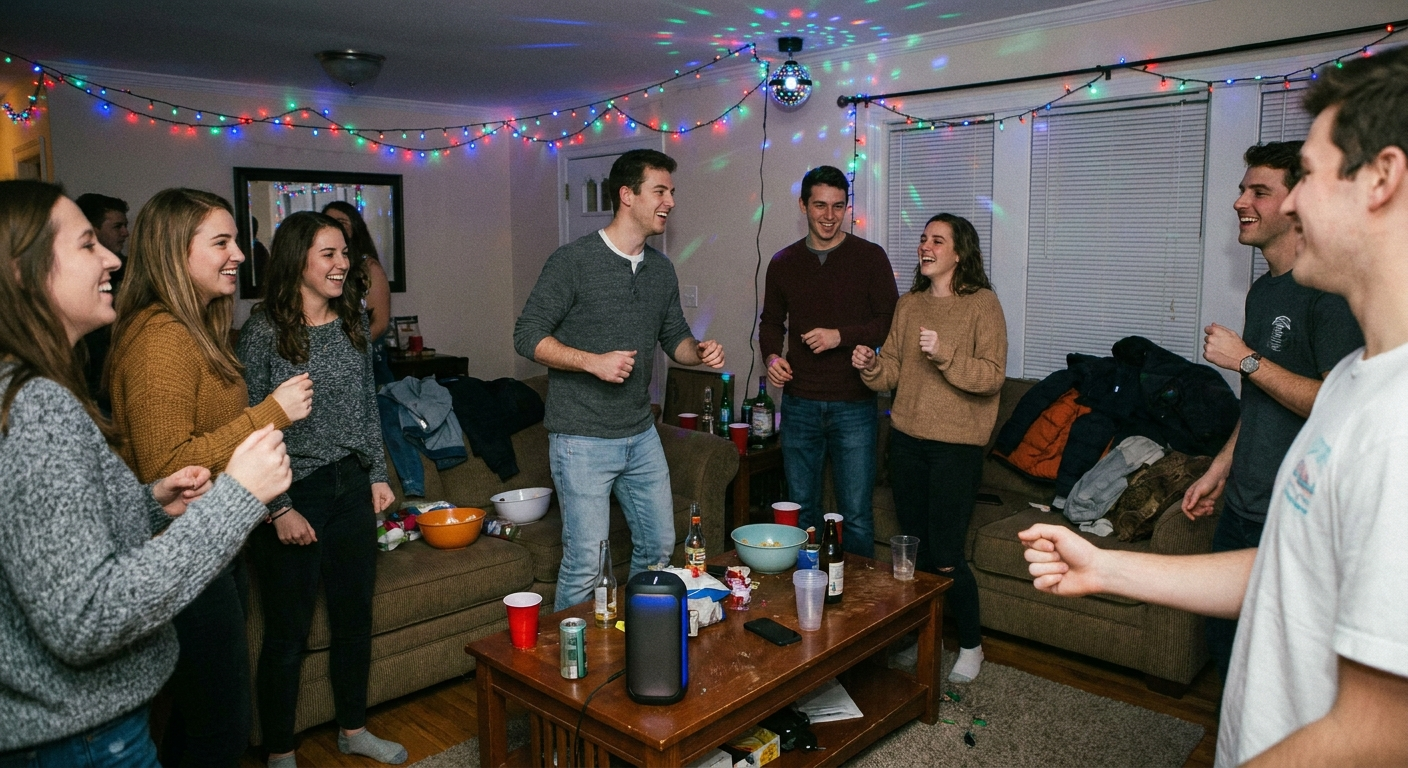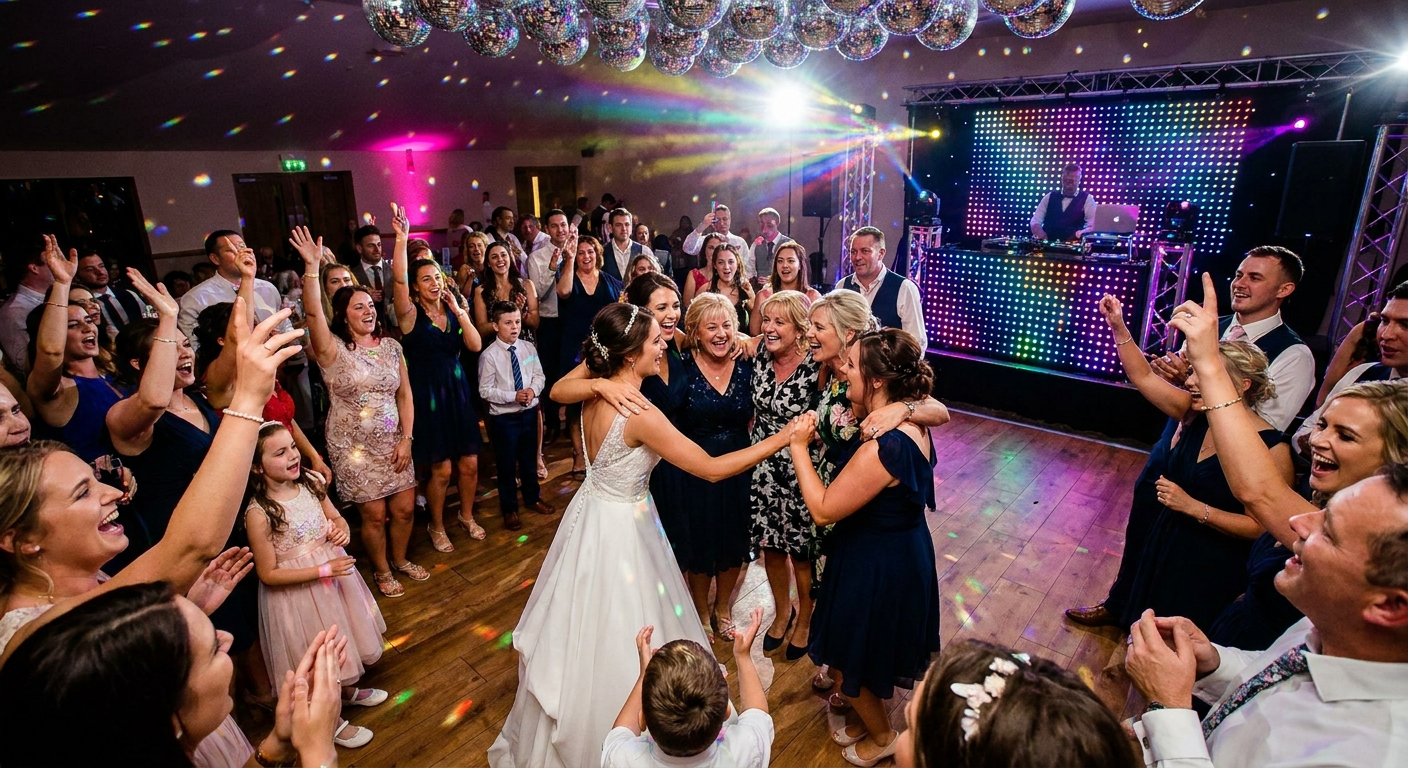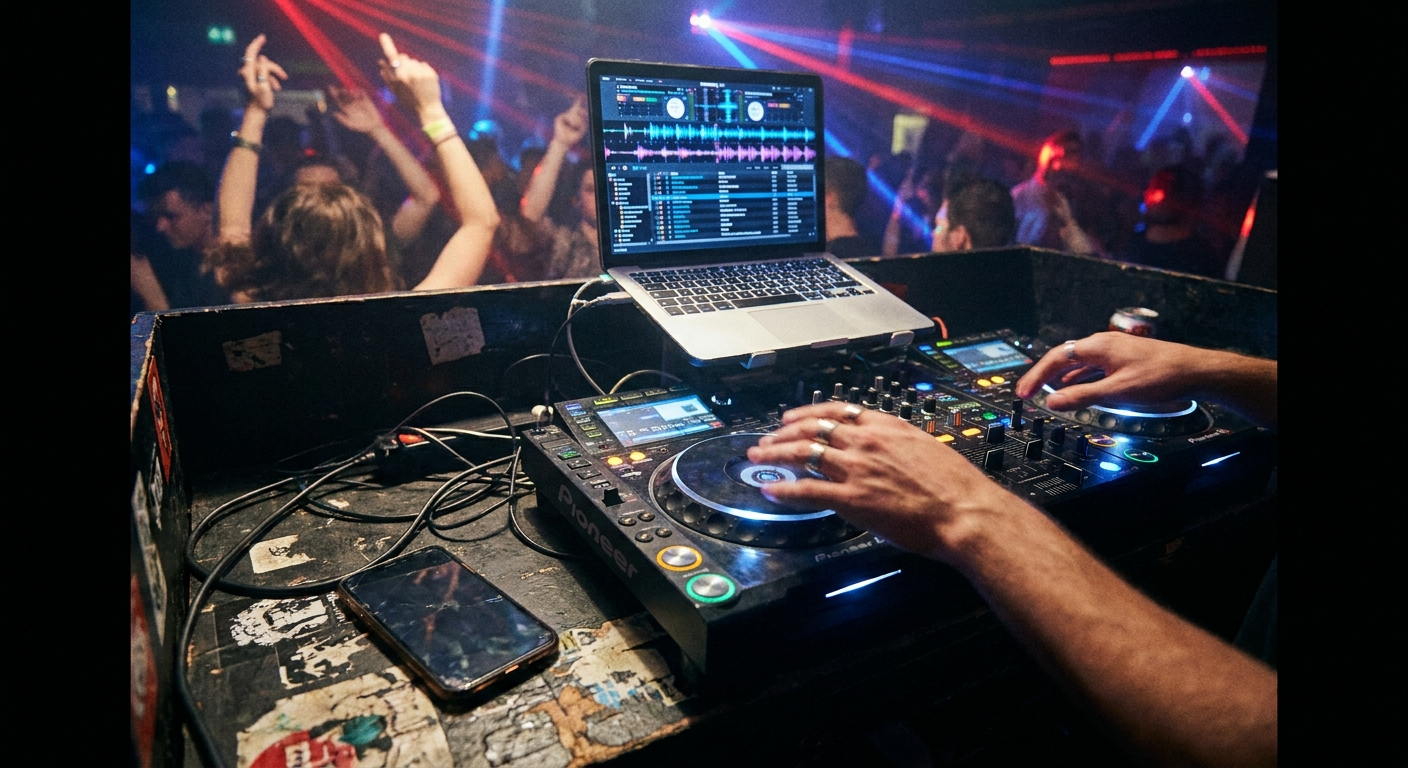
Picture this: You walk into a party. A friend has their phone plugged into a speaker, a Spotify playlist cued up. The music is fine. But something's missing. Now imagine a DJ walks in. Within minutes, the energy shifts. People are on the dance floor. The transitions are seamless. The vibe is electric.
Why does this keep happening, even in 2026? With all the advanced algorithms, AI-curated playlists, and endless streaming libraries, how are professional DJs still outperforming Spotify at live events?
The answer isn't about the music library. It's about something deeper — something the algorithms haven't cracked yet. In this guide, you'll discover the secret reason DJs are still winning, plus practical tips to make your own playlists feel more "human" and dynamic.
We'll cover the science of crowd reading, why energy curves matter more than song selection, and how you can use tools like PartyMusicPlaylist.com to bridge the gap between a static playlist and a live DJ set. By the end, you'll know exactly how to transform your DJ vs Spotify playlist strategy forever.
🎯 Key Takeaways
- DJs win because they can read the room and adjust energy in real-time — something no algorithm can do
- Static Spotify playlists fail because they lack dynamic energy curves and crowd feedback loops
- You can replicate 80% of a DJ's magic with strategic playlist structuring and song ordering
- Tools like PartyMusicPlaylist.com give you DJ-level control without needing turntables
- The secret weapon: creating multiple "mood zones" within a single event to keep energy flowing
The Algorithm Trap: Why Spotify Playlists Go Flat
Spotify's algorithms are incredible. They analyze your listening history, suggest new tracks, and create personalized playlists that feel almost psychic. But there's a fundamental flaw when it comes to live events: algorithms can't see the room.
Imagine you're hosting a dinner party. You've curated a perfect chill playlist. But suddenly, someone starts telling a hilarious story, and the mood shifts. Spotify doesn't know that. It keeps playing mellow tracks while the room is buzzing with laughter. The energy dies.
This is the core problem in the DJ vs Spotify playlist debate. A playlist is static. It follows a predetermined sequence, regardless of what's happening in real life. A DJ, on the other hand, is a live energy conductor.
💡 Pro Tip: When building a playlist for a party, always leave 20-30% of the slots "flexible." These are songs you can swap in or out depending on the crowd's reaction. Tools like PartyMusicPlaylist.com let you create multiple backup lists for exactly this purpose.
The numbers back this up. A 2024 study by Eventbrite found that 78% of party attendees said they noticed when the music didn't match the room's energy. And 62% said they'd leave earlier if the music felt like a "background playlist" instead of a curated experience.
What DJs Do That Spotify Can't (The Secret Sauce)
Let's get specific. Here are the five things a human DJ does that a Spotify playlist simply cannot replicate:
- Reads the room in real-time — DJs watch body language, eye contact, and dance floor density. If people are nodding heads but not dancing, they switch genres. Spotify can't see that.
- Adjusts energy on the fly — If a song bombs, a DJ cuts it after 60 seconds. A Spotify playlist plays the whole track, killing momentum.
- Creates seamless transitions — Beatmatching, key mixing, and crossfading are art forms. Spotify's crossfade feature is basic at best.
- Builds emotional arcs — DJs think in sets, not individual songs. They plan peaks, valleys, and climaxes. Playlists are just a list of songs.
- Responds to requests intelligently — A DJ can say "not right now, but in 20 minutes." Spotify has no social intelligence.
This is why the DJ vs Spotify playlist debate isn't really about technology. It's about human intuition. But here's the good news: you can hack that intuition.
How to Build a DJ-Worthy Playlist (Without Being a DJ)
You don't need to spend years learning to beatmatch. You just need to understand the energy curve. This is the secret to every great DJ set.
An energy curve maps out how the intensity of music changes over time. Think of it like a roller coaster. You start with a slow climb (cocktail hour), hit a few small dips (dinner), then build to a massive peak (dance floor), and finally cool down (end of the night).
Here's a step-by-step framework to build your own energy curve:
- Map out your event timeline. Write down every segment: arrival, mingling, dinner, toasts, dancing, winding down. Assign an energy level (1-10) to each segment.
- Select songs for each energy level. For energy 1-3, use mellow acoustic or lo-fi. For 4-6, use pop and indie. For 7-10, use dance, EDM, or hip-hop.
- Create "bridges" between energy levels. You can't jump from a 3 to a 9 instantly. Add 2-3 songs at level 5-6 to ease the transition.
- Build in 2-3 "peak moments." These are the songs everyone will remember. Place them at 40%, 60%, and 80% through the event.
- Use a tool to visualize the curve. PartyMusicPlaylist.com lets you drag and drop songs and see your energy curve in real time. It's like having a DJ dashboard.
📝 Note: The most common mistake is making the energy curve too flat. People get bored if it's all the same tempo. Give them peaks and valleys.
The 5 Song Categories Every Playlist Needs
To beat the algorithm, you need variety. Here are the five essential song categories for any party playlist, with real examples:
- Opener Songs (Energy 2-4) — These set the tone without demanding attention. Think "Sunday Morning" by Maroon 5 or "Banana Pancakes" by Jack Johnson.
- Builders (Energy 5-6) — Songs that start conversations and get heads nodding. "Levitating" by Dua Lipa or "Blinding Lights" by The Weeknd work perfectly.
- Peak Anthems (Energy 7-8) — These fill the dance floor. "Uptown Funk" by Mark Ronson ft. Bruno Mars or "Get Lucky" by Daft Punk are timeless.
- Climax Bangers (Energy 9-10) — The moments everyone cheers. "Levels" by Avicii or "Sandstorm" by Darude (yes, it still works).
- Cool-Down Tracks (Energy 1-3) — Wind it down gracefully. "Fast Car" by Tracy Chapman or "Chasing Cars" by Snow Patrol.
Can't-Miss Tracks for Your DJ-Style Playlist
- "One Dance" by Drake — Perfect bridge between chill and dance energy
- "Shape of You" by Ed Sheeran — Proven crowd-pleaser across all ages
- "I Wanna Dance with Somebody" by Whitney Houston — Instant peak moment
- "Stairway to Heaven" by Led Zeppelin — For those epic emotional arcs
- "Music Sounds Better with You" by Stardust — The ultimate transition track
Why "Mood Zones" Destroy Static Playlists
Here's a concept that separates pros from amateurs: mood zones. Instead of a single linear playlist, create 3-4 separate mini-playlists for different moments of the night.
For example, at a wedding reception, you might have:
- Cocktail Hour Zone — Jazz, acoustic covers, soft pop (energy 2-4)
- Dinner Zone — Instrumental, light indie, singer-songwriter (energy 3-5)
- Dance Zone — Top 40, disco, house, hip-hop (energy 7-10)
- Late Night Zone — Deep house, slow jams, throwbacks (energy 4-7)
When you switch between zones, you create a psychological reset. Guests feel like they're entering a new chapter of the night. This keeps them engaged longer.
⚠️ Heads Up: Don't let your mood zones overlap too much. If your cocktail zone has a 145 BPM track, it ruins the vibe. Keep each zone's tempo range tight — within 10-15 BPM max.
Using PartyMusicPlaylist.com, you can create separate "mood zone" lists and switch between them with one click. It's like having four DJs in one app.
The Science of Crowd Reading (You Can Learn It)
Crowd reading sounds mystical, but it's a skill anyone can learn. DJs use these five cues to decide what to play next:
- Foot tapping vs. full body dancing — If only toes are tapping, you need a faster BPM or a bigger drop.
- Cluster density — Are people gathered in small groups or on the dance floor? Dense clusters mean the energy is high.
- Phone usage — If people are on their phones, the music isn't engaging them. Switch to something more familiar or energetic.
- Sing-along moments — When a chorus hits and people sing, you've hit the sweet spot. Follow it with another sing-along track.
- Exits and entrances — Are people leaving the room? That's a red flag. Are new people arriving? You might need to reset the vibe.
You can't do this with a static playlist. But you can simulate it by pre-planning "escape routes" in your playlist. For every song, have a backup plan. If "Bohemian Rhapsody" clears the floor, jump to "Crazy in Love" immediately.
This is why the DJ vs Spotify playlist debate will never truly be settled. A human can pivot in 10 seconds. An algorithm needs three songs to figure out it's failing.
Real-World Examples: DJ Sets That Killed It
Let's look at three famous DJ sets and break down why they worked. You can steal these techniques for your own playlists.
Example 1: David Guetta at Tomorrowland 2024 — Guetta opened with a 5-minute build using "Titanium" instrumental. Then he dropped "I'm Good (Blue)" right at the peak. The energy curve was textbook: slow climb, massive peak, short valley, then another peak. His BPM range stayed within 128-132 for the entire first 30 minutes.
Example 2: D-Nice at the 2025 Super Bowl Party — The "Club Quarantine" DJ used a completely different approach. He started with 90s R&B (energy 4), then slowly introduced house beats over 45 minutes. By hour two, he was playing Afrobeat at 120 BPM. The secret: he never jumped more than 10 BPM at once.
Example 3: Local wedding DJ in Austin, Texas — A Reddit user shared their setlist from a 2025 wedding. The DJ played 45 songs over 3 hours, but only 12 were "hits." The rest were deep cuts and transitions. The bride said it was the best party she'd ever been to. The lesson: you don't need hit songs — you need smart sequencing.
How to Use PartyMusicPlaylist.com Like a DJ
Now for the practical part. Here's exactly how to use our free tool to build a DJ-worthy playlist:
- Set your event type — Choose from wedding, birthday, corporate, or custom. This sets default energy curves.
- Add songs from our library or YouTube — We integrate with YouTube so you can pull any song. No account needed.
- Use the energy curve visualizer — Drag songs up or down to adjust energy levels. The graph updates in real time.
- Create mood zones — Click "Add Zone" and name it (e.g., "Dinner"). Assign songs to each zone.
- Enable guest requests — Share a link with guests. They can suggest songs before or during the event. You approve them with one click.
- Export to your DJ software — One-click export to Serato, Rekordbox, or Traktor. Or just play directly from our site.
- Find a local DJ — If you decide you want a pro, our directory connects you with verified DJs in your area.
💡 Pro Tip: Use the "Emergency Reset" feature. If a song kills the vibe, click the red button and our AI suggests three alternative tracks instantly. It's like having a co-pilot.
Common Mistakes That Kill Your Playlist (And How to Fix Them)
Even with the best intentions, people make these five errors when building playlists. Avoid them at all costs:
- Mistake #1: Playing the same genre for too long. Fix: Switch genres every 3-4 songs. Go from pop to hip-hop to house and back.
- Mistake #2: Ignoring BPM progression. Fix: Use a tool that shows BPM. Increase by no more than 5 BPM per song during building phases.
- Mistake #3: Playing too many "big" songs in a row. Fix: Every peak needs a valley. After "Don't Stop Believin'," play something at energy 5-6.
- Mistake #4: Forgetting the ending. Fix: Plan your last 3 songs. They should be nostalgic, sing-along tracks that leave people smiling.
- Mistake #5: Not testing the playlist. Fix: Play it while you're cooking or driving. If you skip a song, your guests will too.
⚠️ Heads Up: The biggest mistake is overthinking. A good playlist is 80% planning and 20% spontaneity. Leave room for happy accidents.
Expert Tips for the Advanced Playlist Builder
You've got the basics. Now here's how to level up:
- Use key mixing principles. Songs in the same musical key (e.g., C major) flow smoothly. Free tools like Mixed In Key can analyze your library.
- Create "anchor songs." These are the 3-4 songs everyone will remember. Build the rest of the playlist around them.
- Layer in sound effects. DJs use risers, drops, and vocal samples to punctuate transitions. You can find free sound effect packs online and insert them between songs.
- Study live DJ sets. Go to 1001Tracklists.com and study how pros structure their sets. Steal their sequencing, not just their songs.
- Record yourself "mixing." Use a free tool like Audacity to practice transitions. It sounds silly, but it trains your ear for flow.
TL;DR: DJs beat Spotify because they read rooms, adjust energy, and create emotional arcs. You can replicate this with smart planning, mood zones, and tools like PartyMusicPlaylist.com. Focus on energy curves, not just song selection. And always leave room for spontaneity.
Frequently Asked Questions
PartyMusicPlaylist Team
Helping you create the perfect soundtrack for life's most memorable moments. Expert tips on event music planning, DJ coordination, and playlist curation.
Learn MoreReady to Plan Your Event Music?
Create the perfect playlist for your special event. Search songs, organize your timeline, and share with your DJ.
Get Started FreeRelated Articles
Continue reading