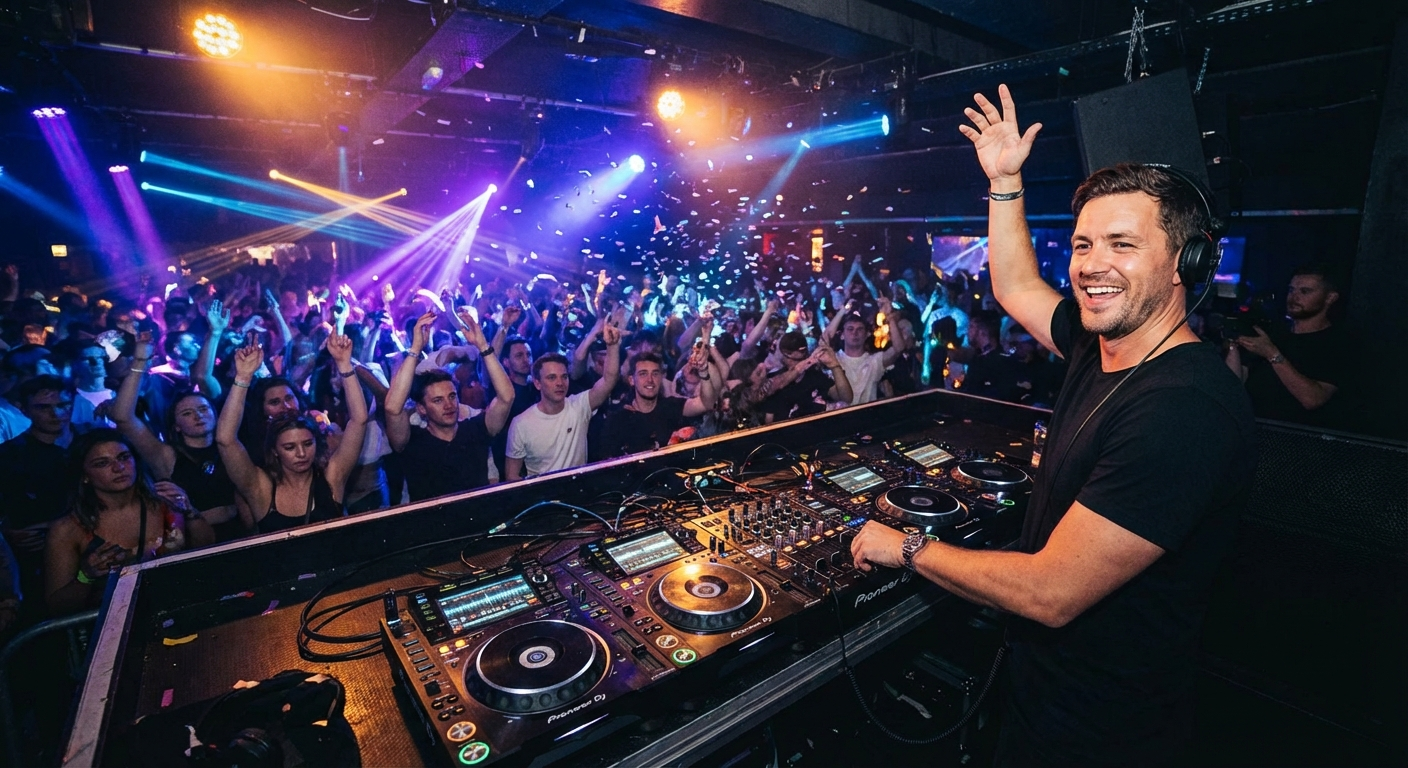
You've spent hours crafting the perfect playlist for your wedding, corporate event, or house party. But when you look at the clock, a cold wave of panic hits you.
Do you have enough music? Too much? Will the dance floor go silent at the worst possible moment?
Every DJ and party planner has faced this nightmare. The fear of the awkward silence is real. But the solution isn't guesswork. It's a simple, proven formula.
In this guide, I'm pulling back the curtain on the secret DJ formula for how many songs per hour. You'll learn the exact math, the genre-specific tricks, and the pro strategies to keep the energy high from the first beat to the last dance. By the end, you'll never stress about playlist length again.
🎯 Key Takeaways
- The golden rule for song count: 15-20 songs per hour for most parties and DJ sets.
- Genre matters more than you think — a DJ set will have more songs per hour than a dinner playlist.
- Your event's "moments" (cocktail hour, dinner, dancing) each have their own optimal song count.
- Using a tool like PartyMusicPlaylist helps you plan your timeline with precision.
- Always over-prepare by 20% to handle unexpected requests and extended dance floors.
The Simple Answer: How Many Songs Per Hour?
Let's cut to the chase. The standard answer for a general party or DJ set is 15 to 20 songs per hour.
Why this range? It accounts for the average length of a popular song, which is between 3 and 4 minutes. If you play songs back-to-back without long pauses, you'll land right in this sweet spot.
But wait — is that the final answer? Absolutely not. The real magic happens when you adjust this number based on the energy and setting of your event.
Why 15-20 Songs Per Hour Works
Think about the last time you were at a great party. The DJ didn't play every song from start to finish. They mixed, they faded, and they kept the momentum going. A 4-minute song in a club set might get cut to 2 minutes and 30 seconds.
This is where the "secret" comes in. Professional DJs often play 20 to 25 songs per hour because they're constantly transitioning and blending tracks.
For a casual party host using a playlist, 15 songs per hour is a safe, comfortable number. It gives you breathing room between tracks and avoids the feeling of being rushed.
"The difference between an amateur and a pro is knowing when to let a song breathe and when to cut it. That's the art behind the science of song count."
The Genre Breakdown: Song Count by Music Style
Not all music is created equal. The number of songs per hour changes drastically depending on what genre you're playing. Here's the breakdown you need to know.
High-Energy Genres (EDM, House, Hip-Hop, Top 40)
Target: 20-25 songs per hour
These genres are built for the dance floor. DJs mix quickly, often using short edits and quick transitions. A house track might only play for 2 minutes before the next one drops.
- "Calabria 2008" by Enur — A classic house track that works in short bursts for maximum energy.
- "Humble" by Kendrick Lamar — A hip-hop banger that hits hard and fast.
- "Levitating" by Dua Lipa — Modern pop with a dance beat that keeps the floor packed.
Mid-Tempo & Groove (R&B, Funk, Disco, Rock)
Target: 12-16 songs per hour
These songs are meant to be enjoyed. People want to hear the chorus, the guitar solo, or the iconic bassline. You'll let these tracks play closer to their full length.
- "September" by Earth, Wind & Fire — A must-play that everyone needs to hear in full.
- "Superstition" by Stevie Wonder — The groove demands you let it breathe.
- "Uptown Funk" by Mark Ronson feat. Bruno Mars — A modern funk anthem that commands attention.
Low-Energy & Background (Jazz, Lounge, Acoustic, Dinner Music)
Target: 10-12 songs per hour
This is "wallpaper" music. It sets the mood but doesn't demand attention. You'll play full tracks or even longer instrumental versions. The goal is a seamless, relaxing atmosphere.
- "The Girl from Ipanema" by Stan Getz & Astrud Gilberto — Bossa nova perfection for a cocktail hour.
- "Fly Me to the Moon" by Frank Sinatra — A timeless standard that fills the room with class.
- "Banana Pancakes" by Jack Johnson — Easy-going acoustic vibes for a daytime event.
💡 Pro Tip: Use PartyMusicPlaylist to create separate playlists for each part of your event. This way, you can set a different song-per-hour target for cocktail hour, dinner, and dancing.
The Event Timeline Method: Songs for Every Moment
Your event isn't one long party. It's a series of distinct moments, each with its own energy level and song count requirement. Let's walk through a typical wedding timeline to see how the formula applies.
Cocktail Hour (60 minutes)
Song Count: 10-12 songs
Guests are mingling, grabbing drinks, and finding their seats. You want background music that's pleasant but not overpowering. Stick with jazz, acoustic covers, or light pop.
- Focus on instrumental versions of popular songs.
- Avoid songs with loud, distracting choruses.
- Keep the volume at a conversational level.
Dinner & Speeches (90 minutes)
Song Count: 15-18 songs
Dinner music needs to be engaging but not distracting. You can play full-length tracks, but avoid anything with heavy bass or intense vocals. This is the time for soft rock, R&B, and classic love songs.
- "At Last" by Etta James — A timeless first dance or dinner classic.
- "Can't Help Falling in Love" by Elvis Presley — Pure romance for the seated portion.
- "Thinking Out Loud" by Ed Sheeran — Modern wedding staple for the meal.
Open Dancing (2-3 hours)
Song Count: 40-60 songs total (20 per hour)
This is the main event. Your energy needs to be high, and your transitions need to be tight. You'll play a mix of high-energy genres, cutting songs short to keep the momentum going.
Dance Floor Essentials
- "Yeah!" by Usher feat. Lil Jon & Ludacris — A guaranteed floor-filler that needs no explanation.
- "Don't Stop Believin'" by Journey — The ultimate singalong anthem for any crowd.
- "Blinding Lights" by The Weeknd — A modern hit with a retro feel that bridges generations.
- "I Wanna Dance with Somebody" by Whitney Houston — Pure joy in a three-minute track.
- "Shut Up and Dance" by Walk the Moon — An indie pop banger that commands movement.
The DJ Formula: How Pros Calculate Song Count
Professional DJs don't guess. They use a simple formula that accounts for song length, transition time, and energy management. Here's how you can do the same.
Step 1: Determine Your Total Event Time
Write down the exact start and end times for your music. A 4-hour party is 240 minutes. A 6-hour wedding reception is 360 minutes. Be precise.
Step 2: Calculate Your "Active" Music Time
Subtract time for speeches, games, cake cutting, and announcements. If your 4-hour party has 30 minutes of non-music moments, your active music time is 210 minutes.
Step 3: Apply the Genre Factor
Use the genre breakdown above to set your song-per-hour target. For a high-energy dance party, that's 20 songs per hour. For a dinner party, it's 12 songs per hour.
Step 4: Do the Math
Take your active music time (in hours) and multiply it by your target songs per hour. For a 3.5-hour dance party at 20 songs per hour, you need 70 songs.
"I tell every new DJ the same thing: plan for 15 songs per hour, then add 20% for emergencies. That buffer has saved me more times than I can count."
The 20% Buffer Rule: Why You Need Extra Songs
Here's a hard truth: your playlist will never go exactly as planned.
A guest will request a song you didn't include. The dance floor will be packed and you'll want to extend the high-energy block. Or a song will flop and you'll need to pivot quickly.
This is why every pro builds a 20% buffer into their playlist. If your math says you need 70 songs, prepare 85 to 90 songs. This extra stockpile gives you flexibility and peace of mind.
- Emergency Favorites: Keep 10-15 "safety" songs that always work — think "Sweet Caroline" or "Livin' on a Prayer."
- Genre Switches: Have a few songs ready to change the energy level instantly (slow song to fast, or vice versa).
- Requests: Leave room in your playlist for 5-10 guest requests. It makes people feel involved.
⚠️ Heads Up: Don't make the buffer songs your "B-team." Every song in your playlist should be a potential winner. If you're not excited about a track, cut it. Your crowd will feel your lack of enthusiasm.
Real-World Examples: Playlists for Different Events
Let's put this all together with three common event scenarios. Each one shows you exactly how many songs you need and what kind of music to include.
Example 1: Backyard BBQ (4 Hours)
Total Songs Needed: 55-65
This is a casual, mixed-age event. You'll need a blend of classic rock, country, pop hits, and summer anthems. Energy should be medium-high, with peaks and valleys.
- "Brown Eyed Girl" by Van Morrison — A timeless singalong.
- "Wagon Wheel" by Old Crow Medicine Show — Crowd-pleaser for all ages.
- "Cruel Summer" by Taylor Swift — Modern pop that younger guests will love.
- "Sweet Home Alabama" by Lynyrd Skynyrd — A classic rock staple.
- "Party in the U.S.A." by Miley Cyrus — Pure nostalgia for millennials.
Example 2: 30th Birthday Party (5 Hours)
Total Songs Needed: 75-85
High energy is the name of the game. You'll play a mix of 90s/2000s throwbacks and today's top hits. Expect a packed dance floor for most of the night.
Birthday Party Power Hits
- "Get Low" by Lil Jon & The East Side Boyz — A 2000s club classic that still slaps.
- "Turn Down for What" by DJ Snake feat. Lil Jon — Pure adrenaline for the peak of the night.
- "We Found Love" by Rihanna feat. Calvin Harris — A dance-pop anthem that unites the crowd.
- "Mr. Brightside" by The Killers — The ultimate karaoke-style singalong.
- "I Gotta Feeling" by The Black Eyed Peas — The perfect party closer.
Example 3: Corporate Holiday Party (3 Hours)
Total Songs Needed: 40-45
This is a professional setting with a mix of networking and dancing. Start with background music, then gradually build to a dance set. Keep it clean and crowd-friendly.
- "All I Want for Christmas Is You" by Mariah Carey — The ultimate holiday banger.
- "Last Christmas" by Wham! — A seasonal classic everyone knows.
- "Happy" by Pharrell Williams — Upbeat and positive without being too intense.
- "Can't Stop the Feeling!" by Justin Timberlake — Pure joy in song form.
- "Shake It Off" by Taylor Swift — A safe, fun choice for a mixed crowd.
Common Mistakes That Ruin Your Song Count
Even with the perfect formula, there are traps that can derail your playlist. Here are the most common mistakes and how to avoid them.
⚠️ Heads Up: Mistake #1 — Playing Every Song in Full
You don't need to hear the outro of every track. For high-energy sets, learn to cut songs at the 2-minute mark. Your dance floor will thank you.
⚠️ Heads Up: Mistake #2 — Ignoring the Crowd's Energy
If the dance floor is packed, don't switch to a slow song just because your playlist says so. Be flexible. Read the room and adjust your song count accordingly.
⚠️ Heads Up: Mistake #3 — Overloading on One Genre
Variety is the spice of life — and parties. If you play 20 hip-hop songs in a row, you'll lose the guests who prefer rock or pop. Mix it up to keep everyone engaged.
"The best DJs don't play for themselves. They play for the room. Your song count is just a number — the energy you create is what matters."
Technology Tools to Perfect Your Playlist
You don't have to do this math on a napkin. Modern tools make playlist planning effortless. Here's how to leverage them.
Use a Playlist Builder
Platforms like PartyMusicPlaylist let you input your event time and genre preferences, then automatically calculate the ideal song count. You can drag and drop tracks, see your total time, and export directly to DJ software.
Leverage Streaming Services
Spotify and Apple Music show you the total duration of any playlist. Use this to double-check your math. A 4-hour playlist should be around 240 minutes of music, plus your buffer.
Time Your Transitions
Practice your transitions at home. Use a stopwatch to see how long it takes you to move from one song to the next. This will help you refine your song-per-hour estimate.
📝 Note: The most successful party hosts don't just build a playlist — they build a timeline. Use PartyMusicPlaylist's free templates to map out every hour of your event, complete with song suggestions and energy targets.
Expert Tips for Mastering Your Song Count
You've got the formula. You know the numbers. Now let's talk about the advanced strategies that separate good playlists from legendary ones.
The "Energy Arc" Method
Don't start at 100% and stay there. Build your energy over time. Start with 10-12 songs per hour during the warm-up, peak at 20-25 songs per hour during the main set, and then cool down with 12-15 songs per hour for the wind-down.
The "Momentum Breaker" Strategy
Every 4-5 high-energy songs, drop a "momentum breaker" — a well-known singalong or a crowd participation moment. This gives people a chance to catch their breath and grab a drink. It also makes the next high-energy song hit even harder.
The "Emergency Reset" Playlist
Keep a separate playlist of 10-15 "reset" songs. These are tracks that work in any situation — a slow dance that turns into a fast one, or a song that bridges two different genres. Having this in your back pocket is a lifesaver.
💡 Pro Tip: Record your events (audio only). Listen back and note which songs worked and which didn't. Over time, you'll build an intuitive sense of how many songs per hour your specific crowd needs.
Frequently Asked Questions
PartyMusicPlaylist Team
Helping you create the perfect soundtrack for life's most memorable moments. Expert tips on event music planning, DJ coordination, and playlist curation.
Learn MoreReady to Plan Your Event Music?
Create the perfect playlist for your special event. Search songs, organize your timeline, and share with your DJ.
Get Started FreeRelated Articles
Continue reading