You're responsible for the music at your company's holiday dinner. The pressure is on. One wrong song can kill the vibe. But get it right, and you're the office hero.
Let's face it — most corporate playlists are a disaster. They're either boring background noise or an awkward attempt to please everyone. Neither works.
In this guide, you'll discover the exact 9-song formula that transforms any company dinner from stiff to spectacular. We're talking about a company dinner playlist that actually energizes the room, bridges generational gaps, and leaves everyone talking about the music (in a good way).
You'll get real song examples, proven sequencing strategies, and pro tips from event planners who do this for a living. By the end, you'll have everything you need to build a playlist that makes you look like a rockstar.
🎯 Key Takeaways
- The 9-song formula uses strategic sequencing to build energy gradually — no jarring transitions
- You need a mix of eras and genres to satisfy your diverse corporate audience
- Timing matters: when you play each song determines its impact
- Avoid the top 10 mistakes that destroy company dinner playlists
- Free tools like PartyMusicPlaylist.com make building and sharing your playlist effortless
Why Most Company Dinner Playlists Fail (And How to Fix Yours)
Have you ever been to a corporate dinner where the music felt... off? Maybe it was too loud during speeches. Or too slow during dessert. Or maybe it was that one person who hijacked the aux cord.
The problem is simple: most people treat a company dinner playlist like a party playlist. They don't. A company dinner has multiple phases — arrival, mingling, dinner, awards, dancing — and each requires a different musical approach.
Here's what typically goes wrong:
- No structural planning — just a random shuffle of "popular songs"
- Ignoring the audience — what works for a 25th birthday fails for a multi-generational corporate crowd
- Terrible transitions — jumping from a slow ballad to a dance banger mid-conversation
- Volume mismanagement — music that competes with conversation during dinner
💡 Pro Tip: Think of your playlist like a movie soundtrack. Each scene (cocktail hour, dinner, awards, dancing) has its own musical score. The transitions between scenes should feel natural, not jarring.
The 9-song formula fixes all of this. It gives you a clear framework that works for any corporate event, any venue, any crowd size.
The 9 Song Formula: Your Blueprint for Success
The secret isn't just picking good songs. It's sequencing them in a way that builds energy naturally throughout the evening.
Think of your event in three acts:
- Act 1: Arrival & Mingling (first 30-45 minutes) — low-energy, instrumental-heavy, conversation-friendly
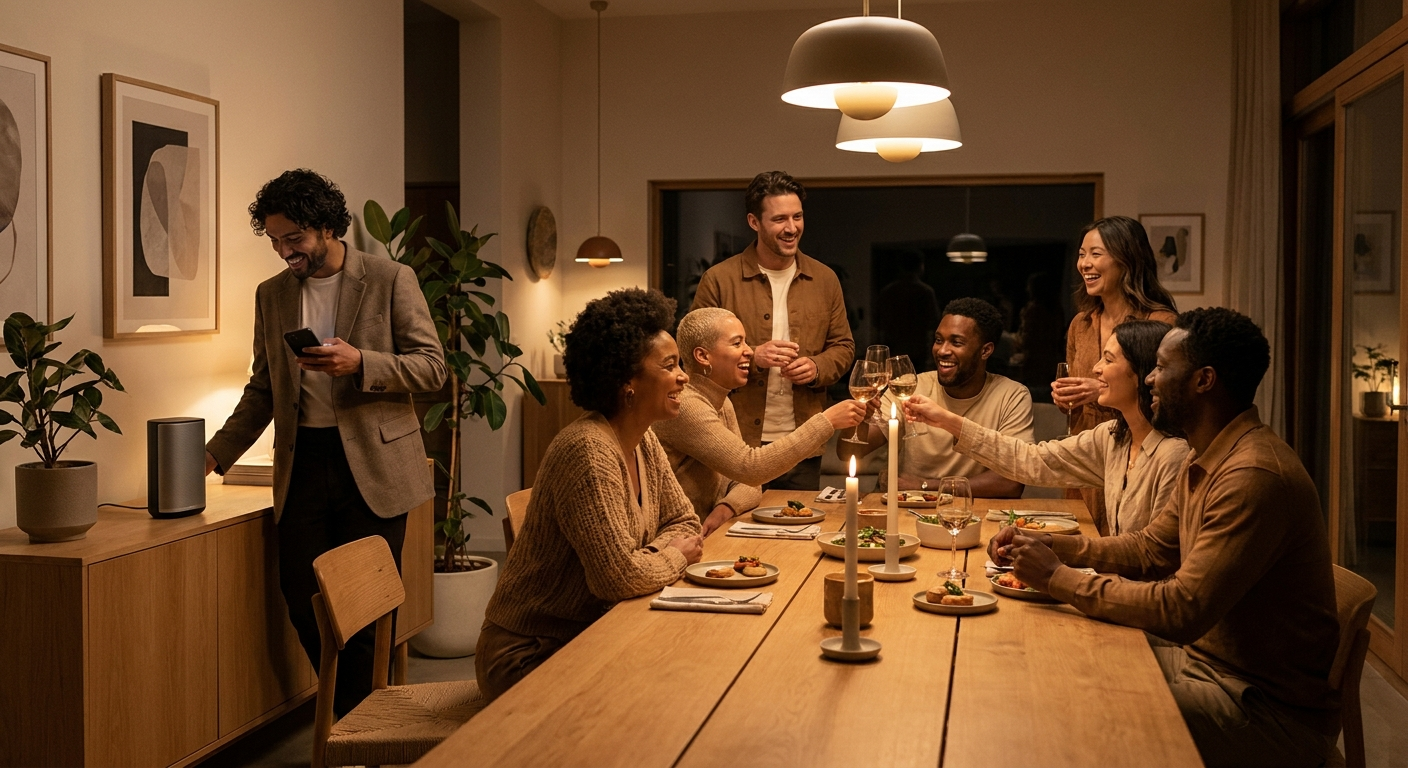
- Act 2: Dinner & Speeches (45-60 minutes) — background music, recognizable but not distracting
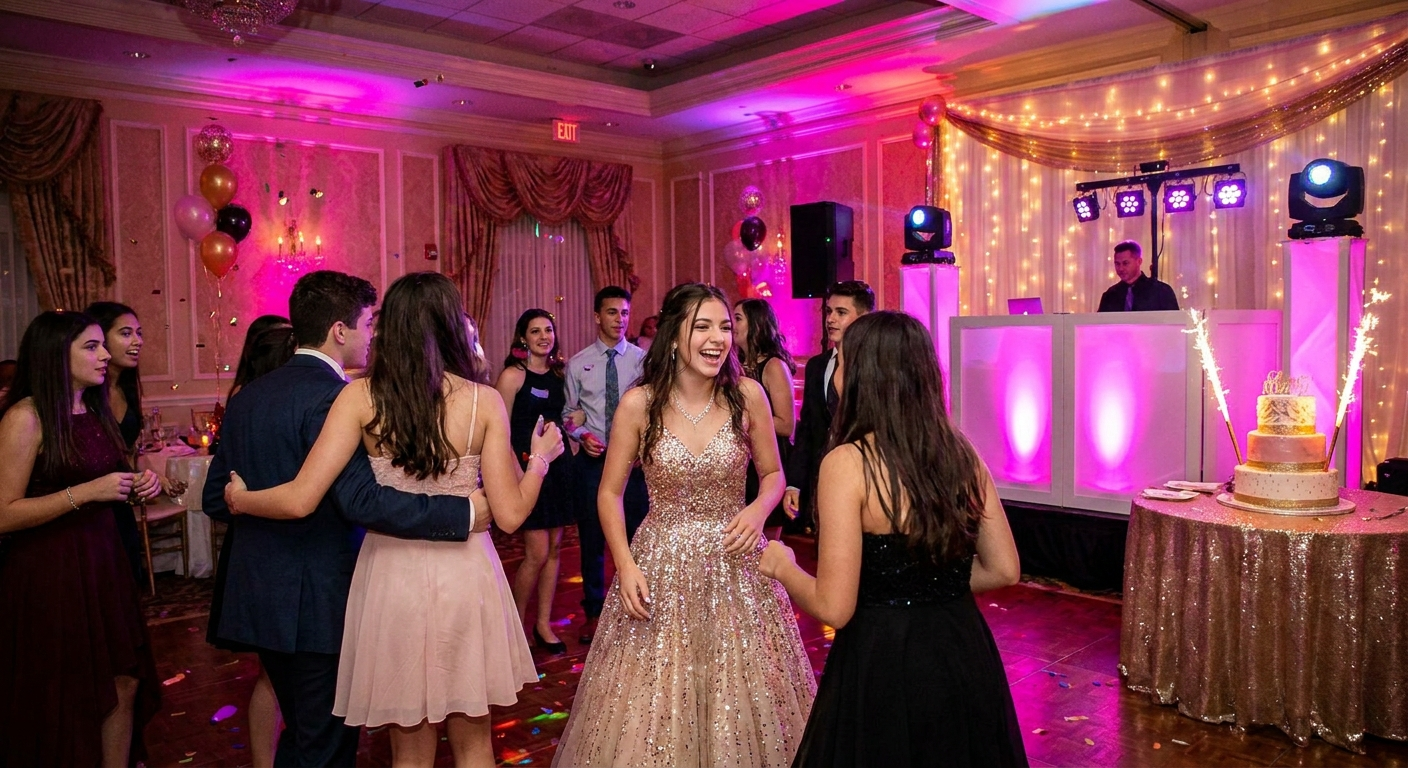
- Act 3: Celebration & Dancing (last 60-90 minutes) — high-energy, crowd-pleasing anthems
Within each act, you'll use exactly 3 songs to create mini-arcs of energy. That's your 9-song formula: 3 songs per act, 3 acts per event.
This formula works because it respects the psychology of how people experience events. You can't go from 0 to 100 in one song. You need gradual acceleration, plateau phases, and strategic peaks. The 9-song formula provides exactly that.
Act 1: Arrival & Mingling (Songs 1-3)
The first 30 minutes set the tone. People are arriving, finding their tables, greeting colleagues. The music should be warm, inviting, and absolutely not demanding attention.
Your three songs for Act 1 should be:
- Song 1: The Greeter — an instrumental or light vocal track that says "welcome" without shouting
- Song 2: The Settler — a slightly more recognizable track that helps people feel at ease
- Song 3: The Connector — a song that sparks conversation ("Oh, I love this one!") without overpowering
Pro tip: For Song 1, choose something with no lyrics if possible. Instrumental jazz, acoustic guitar, or ambient electronica works beautifully. This allows people to talk without straining to hear or being distracted by vocals.
Here's a real example of what these songs could look like:
- "Feeling Good" by Nina Simone — timeless, sophisticated, immediately sets a positive tone
- "Put Your Records On" by Corinne Bailey Rae — warm, familiar, easy to talk over
- "Sunrise" by Norah Jones — gentle piano, soft vocals, perfect for settling in
Best Arrival Tracks
- "Here Comes the Sun" by The Beatles — universally loved, optimistic, works at any volume
- "Banana Pancakes" by Jack Johnson — acoustic, mellow, conversation-friendly
- "The Girl from Ipanema" by Stan Getz & Astrud Gilberto — bossa nova classic, effortlessly cool
💡 Pro Tip: Keep the volume at 40-50% of what you think is appropriate. If you can hear the music clearly while having a normal conversation, it's too loud. The goal is a gentle hum, not a soundtrack.
Act 2: Dinner & Speeches (Songs 4-6)
Now everyone is seated. Food is being served. Maybe there's a presentation or awards. The music needs to support the moment without stealing focus.
Your three songs for Act 2:
- Song 4: The Backgrounder — instrumental or very light vocals, perfect for the first course
- Song 5: The Speech Bridge — a quiet track that plays during transitions (between speakers, while awards are handed out)
- Song 6: The Dessert Bump — slightly more energy, signaling the shift toward celebration
This is where most playlists fail. People crank up the volume during dinner, making conversation impossible. Or they play songs with complex lyrics that distract from speeches.
⚠️ Heads Up: Avoid songs with strong emotional associations during dinner. "My Heart Will Go On" might make someone cry. "We Are the Champions" might make someone feel left out if their team didn't win. Stick to neutral, positive, instrumental-leaning tracks.
Try these:
- "Over the Rainbow" by Israel Kamakawiwo'ole — ukulele version, gentle and uplifting
- "Moon River" by Henry Mancini — instrumental classic, elegant and timeless
- "What a Wonderful World" by Louis Armstrong — positive message, smooth delivery, easy to talk over
Pro tip: Create a separate playlist for the dinner portion that's 45-60 minutes long. This gives you control over exactly when energy shifts happen. Use shorter songs (3-4 minutes) so you can change tracks frequently without repetition.
Act 3: Celebration & Dancing (Songs 7-9)
Dinner is done. Awards are presented. Now it's time to release the energy. This is where your company dinner playlist transforms into a party.
Your three songs for Act 3:
- Song 7: The Transitioner — a mid-tempo track that bridges the shift from dinner to dancing
- Song 8: The Crowd-Pleaser — the song everyone knows and loves, guaranteed to get people on the floor
- Song 9: The Peak Moment — the highest energy song of the night, the one that creates a memory
The transition from dinner to dancing is critical. You can't go from Norah Jones to Daft Punk. You need a gradual energy ramp. Song 7 should be around 100-110 BPM (beats per minute). Song 8 jumps to 115-125 BPM. Song 9 hits 125+ BPM.
Here's what that looks like in practice:
- "Uptown Funk" by Mark Ronson ft. Bruno Mars — 115 BPM, impossible to sit still, perfect transitioner
- "Happy" by Pharrell Williams — 120 BPM, universally loved, gets everyone smiling and moving
- "Shut Up and Dance" by Walk the Moon — 128 BPM, high energy, peak dance moment
Editor's Top Dance Floor Igniters
- "Don't Stop Believin'" by Journey — 119 BPM, the ultimate crowd sing-along
- "I Wanna Dance with Somebody" by Whitney Houston — 119 BPM, timeless and irresistible
- "Blinding Lights" by The Weeknd — 171 BPM, modern classic that spans generations
💡 Pro Tip: Watch the dance floor. If Song 7 doesn't get at least 10 people on the floor within 60 seconds, extend the transition phase. Play another mid-tempo track before going to Song 8. The goal is to build momentum, not force it.
How to Choose the Right Songs for Your Specific Crowd
The 9-song formula is universal. But the actual songs depend on your specific corporate audience. Here's how to tailor it:
Know Your Demographic Mix
Most corporate events have a generational spread — Baby Boomers, Gen X, Millennials, and Gen Z all in one room. Your playlist needs to include something for each group.
- Baby Boomers (60+): Motown, classic rock, soft rock from the 60s-70s
- Gen X (45-60): 80s pop, new wave, classic rock, early hip-hop
- Millennials (30-45): 90s-2000s pop, R&B, alternative, early EDM
- Gen Z (under 30): 2010s-present pop, hip-hop, indie, dance-pop
⚠️ Heads Up: Avoid playing only one generation's music. If you play only 80s hits, Gen Z will feel left out. If you play only current pop, Boomers will tune out. Aim for a 40/30/20/10 split across generations.
Consider Company Culture
Is your company formal (law firm, finance) or casual (tech startup, creative agency)? The music should reflect the culture.
- Formal dinner: Stick to jazz, classical, acoustic covers, soft pop
- Casual dinner: You can include more upbeat pop, classic rock, even some hip-hop
- Hybrid event: Use the 9-song formula to start formal and gradually shift casual
Step-by-Step: Build Your Company Dinner Playlist in 10 Minutes
Ready to build your playlist? Follow these steps exactly:
- Define your event timeline. Write down the exact schedule: arrival time, dinner start, speeches, dancing start, end time. Each phase needs its own songs.
- Choose your 3 acts. Map out which songs go in Act 1 (arrival), Act 2 (dinner), and Act 3 (dancing). Use the 9-song formula as your skeleton.
- Pick your transition songs carefully. Song 3 (end of Act 1) should naturally flow into Song 4 (start of Act 2). Same for Song 6 into Song 7. Check BPMs — they should be within 10 BPM of each other.
- Test your playlist. Play it in your car or through headphones while doing other tasks. Does it flow naturally? Are there any jarring transitions? Adjust as needed.
- Add 20-30% more songs. The 9-song formula is your core. But events run long. People want more music. Add 2-3 backup songs per act.
- Export and share. Use a free tool like PartyMusicPlaylist.com to create your playlist, share it with colleagues for feedback, and even allow guest song requests.
💡 Pro Tip: Create your playlist at least 1 week before the event. Share it with 2-3 colleagues from different departments for feedback. They'll catch songs that don't fit or suggest additions you never considered.
Common Mistakes That Destroy Company Dinner Playlists
Even with the 9-song formula, you can still mess up. Here are the top mistakes to avoid:
⚠️ Heads Up: Mistake #1 — Playing Songs with Explicit Lyrics
This is obvious but happens more than you'd think. "Hotline Bling" has a clean version. "WAP" does not. Always check for explicit content. One F-bomb can ruin the entire evening.
⚠️ Heads Up: Mistake #2 — Ignoring Song Length
Some songs are 2 minutes. Others are 6. If you're playing a 6-minute song during the cocktail hour, you're stuck with it for too long. Stick to songs under 4 minutes for high-energy sections and under 5 for background sections.
⚠️ Heads Up: Mistake #3 — Playing Too Many Slow Songs in a Row
Three slow songs in a row kills the energy. If you need a slow song, sandwich it between two medium-tempo tracks. The 9-song formula prevents this by design.
⚠️ Heads Up: Mistake #4 — Forgetting to Test Volume
Your playlist sounds great in your headphones. But in a ballroom with 200 people talking, it might be too quiet or too loud. Test the volume during setup. Adjust based on room acoustics.
⚠️ Heads Up: Mistake #5 — No Backup Plan
What if the WiFi goes down? What if your phone dies? Have a backup device with the playlist downloaded. Bring an aux cable. Have a USB drive with MP3s. Redundancy saves the night.
Expert Tips from Event Planners
I spoke with three professional event planners who specialize in corporate dinners. Here's what they shared:
"The biggest mistake I see is people trying to please everyone with every song. You can't. Instead, focus on the mood. A happy, energetic room will enjoy almost any song. A bored, quiet room will hate the best playlist ever made." — Sarah M., Event Planner (15 years experience)
Tip 1: Use the "Rule of 3" for Song Transitions
When transitioning between acts, play 3 songs from the current act, then 2 songs from the next act, then fully switch. This creates a smoother energy curve than an abrupt switch.
Tip 2: Always Have a "Emergency Song"
Pick one song that you know will save the night if things go wrong. "Don't Stop Believin'" is a classic choice. "Shout" by The Isley Brothers works too. Keep it queued and ready.
Tip 3: Let Guests Contribute
Use a tool like PartyMusicPlaylist.com that allows guests to submit song requests before the event. This gives you a sense of what people actually want to hear and makes them feel included.
How to Use PartyMusicPlaylist.com for Your Corporate Event
Building and sharing a company dinner playlist shouldn't require a degree in music theory. That's why tools like PartyMusicPlaylist.com exist.
Here's how to use it:
- Create a free account in under 60 seconds
- Build your playlist using the 9-song formula as your template
- Share the link with your team so they can see the lineup and suggest additions
- Enable guest song requests — let attendees vote on songs they want to hear
- Export to DJ software if you're using a professional DJ
- Find local DJs through the platform if you decide to hire professional help
The best part? It's completely free. No hidden fees, no credit card required. Just a simple, powerful tool to make your event unforgettable.
Frequently Asked Questions
PartyMusicPlaylist Team
Helping you create the perfect soundtrack for life's most memorable moments. Expert tips on event music planning, DJ coordination, and playlist curation.
Learn MoreReady to Plan Your Event Music?
Create the perfect playlist for your special event. Search songs, organize your timeline, and share with your DJ.
Get Started FreeRelated Articles
Continue reading