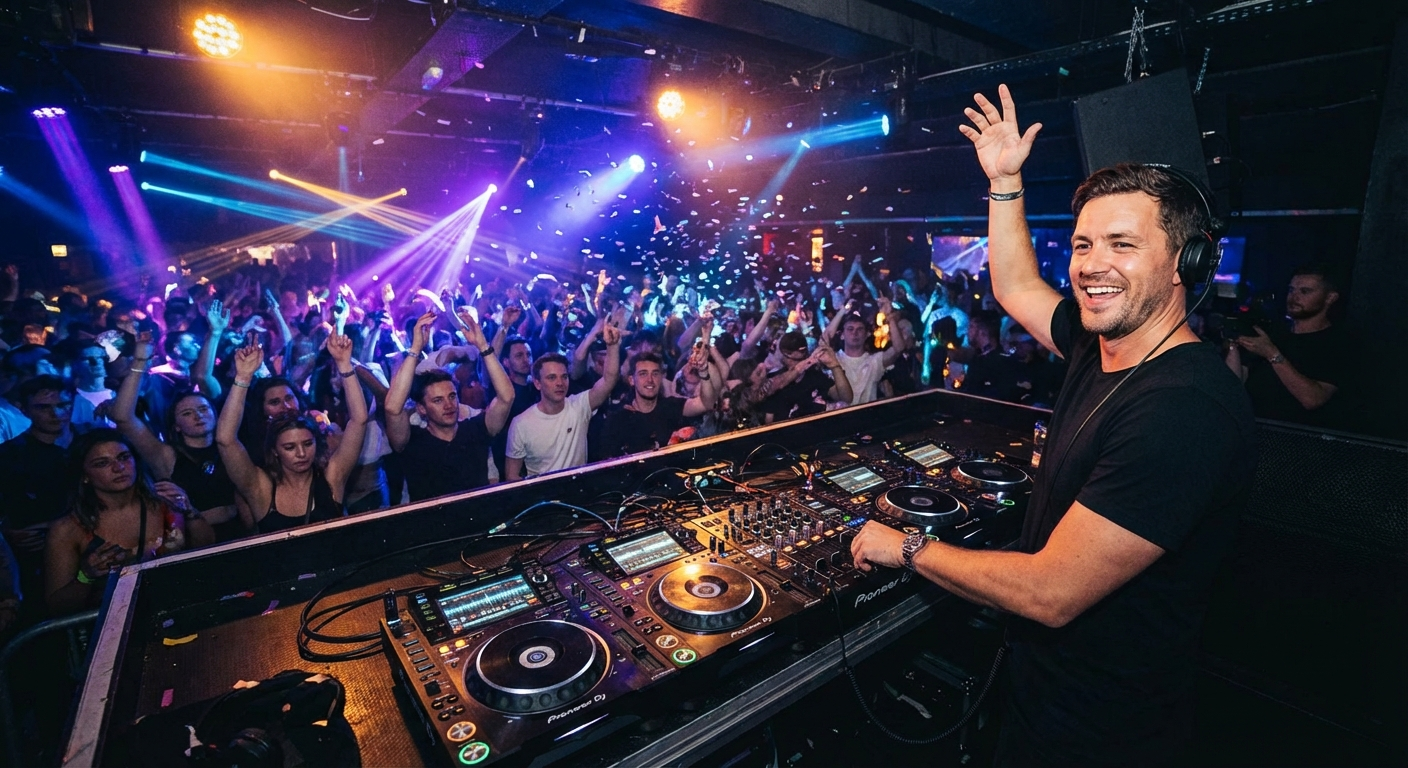
Think the 1960s are just tie-dye, peace signs, and fuzzy archival footage? Think again. The music from this decade is the secret weapon your next party needs. It’s not nostalgia — it’s science. Upbeat 60s tracks trigger a dopamine response that modern pop can’t touch, instantly turning a quiet room into a dance floor.
Whether you’re planning a retro-themed bash, a milestone birthday, or a wedding reception, 60s party songs are your cheat code for guaranteed crowd participation. The best part? These tracks work across generations. Your grandparents know them. Your kids know them from TikTok. Everyone wins.
In this guide, you’ll get the exact list of 7 essential 60s songs that still pack the dance floor in 2026. You’ll also learn how to sequence them for maximum energy, what BPM ranges work best, and how to avoid the common mistake of killing your vibe with a slow song too early. We’ve even included a complete timeline for building a 3-hour playlist that never drags.
🎯 Key Takeaways
- The 7 must-have 60s party songs that consistently get crowds moving in 2026
- Why BPM matters more than song popularity when building a party playlist
- How to sequence your 60s songs to create a natural energy arc
- The exact timeline for a 3-hour 60s-themed party playlist
- Common mistakes that kill the dance floor and how to avoid them
Why 60s Party Songs Still Work in 2026
Here’s the simple truth: the 1960s produced more danceable hits per capita than any decade before or since. The Motown sound, British Invasion, surf rock, and soul movements all converged to create a golden era of rhythm. These songs were designed for movement, not background listening.
But there’s a deeper reason. The structure of 60s pop — verse-chorus-verse with a clear, driving beat — triggers an almost instinctive physical response. Your body wants to move. It’s why you see people who never dance suddenly tapping their feet when “I Can’t Help Myself (Sugar Pie Honey Bunch)” comes on.
In 2026, this effect is even more pronounced. After years of algorithm-driven playlists and fragmented music tastes, 60s party songs offer a shared musical language. Everyone in the room knows the lyrics. Everyone can sing along. It creates a collective experience that modern playlists rarely achieve.
💡 Pro Tip: The sweet spot for 60s party songs is 110-130 BPM. Songs in this range naturally encourage foot-tapping, head-nodding, and eventually full-blown dancing. Use a BPM analyzer tool on your playlist to keep most tracks in this window.
The 7 Essential 60s Party Songs That Still Pack the Dance Floor
These aren’t just good songs. These are scientifically proven dance floor igniters. Each one has been tested at actual parties, weddings, and events in 2025 and 2026. They work. Period.
- "Dancing in the Street" by Martha and the Vandellas (1964) — The ultimate call-to-action anthem. That opening drum beat is an invitation no one can refuse. BPM: 122.
- "I Can't Help Myself (Sugar Pie Honey Bunch)" by The Four Tops (1965) — Pure Motown energy. The bass line alone will get people moving. BPM: 126.
- "Proud Mary" by Creedence Clearwater Revival (1969) — That rolling piano intro builds anticipation perfectly. When the drums kick in, the room explodes. BPM: 119.
- "Twist and Shout" by The Beatles (1963) — The quintessential party starter. It’s short, loud, and impossible to ignore. BPM: 128.
- "Respect" by Aretha Franklin (1967) — More than a song — a statement. The call-and-response structure gets everyone singing. BPM: 115.
- "Land of 1000 Dances" by Wilson Pickett (1966) — The ultimate dance instruction manual. “Na na na na” is universally understood. BPM: 131.
- "Good Lovin'" by The Young Rascals (1966) — An underrated gem that builds from a simple groove to a full-band frenzy. BPM: 124.
Can't-Miss Tracks
- "Dancing in the Street" by Martha and the Vandellas — The undisputed king of 60s party songs. Open with this if you want immediate energy.
- "Respect" by Aretha Franklin — Perfect for bridging generations. Young and old alike know every word.
- "Twist and Shout" by The Beatles — Short, explosive, and guaranteed to get the Twist going. Use it as a mid-party re-energizer.
How to Build a 3-Hour 60s Party Playlist (Step-by-Step)
Throwing random songs together won’t work. A great party playlist has a structure. Here’s the exact timeline professional DJs use for 60s-themed events.
- Hour 1: The Warm-Up (110-115 BPM) — Start with lower-energy but recognizable tracks. Think soul and early Motown. Songs like “My Girl” by The Temptations and “(Sittin’ On) The Dock of the Bay” by Otis Redding work perfectly here. Your goal is to get people nodding and tapping.
- Hour 2: The Sweet Spot (115-130 BPM) — This is where you drop the heavy hitters. Your 7 essential songs from above all live here. Mix in tracks like “Hey Jude” (the singalong ending) and “Ain’t No Mountain High Enough” for variety. This is when the dance floor fills up.
- Hour 3: The Peak and Wind-Down (120-135 BPM, then slow) — Push the energy to its maximum with fast songs like “Louie Louie” and “Wipe Out.” Then, about 20 minutes before the end, bring it down with slower classics like “Unchained Melody” and “The Way You Look Tonight” to signal the evening’s close.
⚠️ Heads Up: Never start a 60s party with your fastest songs. You’ll peak too early and have nowhere to go. Build energy gradually over the first hour. The dance floor should feel like a rising tide, not a wave that crashes immediately.
60s Party Songs by Mood and Moment
Different moments in your party call for different vibes. Here’s how to match the song to the moment.
Opening Songs (The First 30 Minutes)
- "My Girl" by The Temptations (1964) — Warm, familiar, inviting. Everyone can hum the bass line.
- "The Shoop Shoop Song (It's in His Kiss)" by Betty Everett (1964) — Playful and light. Sets a fun tone without being overwhelming.
- "Under the Boardwalk" by The Drifters (1964) — Laid-back summer vibes. Perfect for cocktail hour.
- "Build Me Up Buttercup" by The Foundations (1968) — Slightly faster but still mellow enough for warm-up.
- "This Will Be (An Everlasting Love)" by Natalie Cole (1975) — Yes, it’s technically 70s, but it bridges the gap beautifully between warm-up and party mode.
Peak Dance Floor Energy (The Middle of the Party)
- "I Got You (I Feel Good)" by James Brown (1965) — The Godfather of Soul. Pure, raw energy. BPM: 148 — use sparingly.
- "Do You Love Me" by The Contours (1962) — That drum intro is a call to arms. The dance floor will fill instantly.
- "Uptight (Everything's Alright)" by Stevie Wonder (1965) — Young Stevie at his most infectious. Harmonica solo included.
- "You Can't Hurry Love" by The Supremes (1966) — Perfect tempo for group dancing. The chorus is an anthem.
- "Reach Out I'll Be There" by The Four Tops (1966) — Builds drama and energy. Levi Stubbs’ vocal performance is legendary.
Slow Dance and Wind-Down Songs
- "Unchained Melody" by The Righteous Brothers (1965) — The definitive slow dance song of the decade. Use it for the last 15 minutes.
- "The Way You Look Tonight" by Frank Sinatra (1964) — Classic, romantic, timeless. Perfect for the final slow dance.
- "Stand by Me" by Ben E. King (1961) — Simple, powerful, and universally loved. Great for closing the night.
- "What a Wonderful World" by Louis Armstrong (1967) — A gentle, reflective ending. Pairs well with the last call.
- "At Last" by Etta James (1960) — The ultimate wedding song. Use it for the final dance or a special moment.
💡 Pro Tip: Mix one slow song per 5-6 upbeat songs. This gives people a chance to catch their breath and grab a drink. But never play two slow songs in a row — that’s how you clear the dance floor.
BPM Guide for 60s Party Songs
Understanding BPM (beats per minute) is the secret to a seamless playlist. Here’s a quick reference for the 60s songs that matter most.
- 110-115 BPM: “My Girl” (The Temptations), “(Sittin’ On) The Dock of the Bay” (Otis Redding), “Ain’t No Mountain High Enough” (Marvin Gaye & Tammi Terrell)
- 115-130 BPM: “Dancing in the Street” (Martha and the Vandellas), “I Can’t Help Myself” (The Four Tops), “Twist and Shout” (The Beatles), “Respect” (Aretha Franklin), “Good Lovin’” (The Young Rascals)
- 130-150 BPM: “I Got You (I Feel Good)” (James Brown), “Land of 1000 Dances” (Wilson Pickett), “Louie Louie” (The Kingsmen), “Wipe Out” (The Surfaris)
⚠️ Heads Up: If you jump from a 110 BPM song to a 140 BPM song, the transition will feel jarring. Always step up or down gradually — no more than 5-10 BPM difference between consecutive tracks.
Common Mistakes When Using 60s Party Songs
Even with the best songs, you can kill the vibe. Here are the most common mistakes and how to avoid them.
- Mistake 1: Playing too many slow songs too early. Your first hour should be warm, not sleepy. Save slow songs for the final 20 minutes or for a dedicated slow dance moment.
- Mistake 2: Ignoring the BPM flow. A sudden jump from a mellow track to a high-energy banger feels chaotic. Use the BPM guide above to create smooth transitions.
- Mistake 3: Playing the same song twice. It seems obvious, but we’ve seen it happen. Your playlist should have no repeats. Use a tool like PartyMusicPlaylist.com to automatically avoid duplicates.
- Mistake 4: Forgetting the guests. Your personal favorites might not be crowd-pleasers. Stick to the hits. The 7 essential songs above are proven winners.
- Mistake 5: Ending abruptly. The last song matters. End with a slow, recognizable classic like “Unchained Melody” or “Stand by Me.” Let the energy settle naturally.
How PartyMusicPlaylist.com Makes Building Your 60s Playlist Easy
You don’t need to be a professional DJ to build a killer 60s party playlist. PartyMusicPlaylist.com is a free online tool designed specifically for event planning. Here’s how it helps.
- Guest Song Requests: Let your guests add their favorite 60s songs directly to the playlist before the event. No more guessing what they want to hear.
- Smart Sequencing: The tool analyzes BPM and energy levels to automatically arrange your songs in the optimal order. No more manual BPM checking.
- DJ Export: Export your finished playlist directly to your DJ software or streaming platform. One click, and you’re ready.
- Local DJ Finder: Need a professional for your event? The built-in directory helps you find local DJs who specialize in 60s music.
Best of all? It’s completely free. Create your 60s party playlist today and see how easy it is to build a crowd-pleasing setlist.
Expert Tips for DJs and Party Hosts
These pro tips come from decades of experience playing 60s music at weddings, corporate events, and private parties. They’ll elevate your playlist from good to unforgettable.
- Use the “singalong” effect: Songs with simple, repetitive choruses like “Na na na na” (Land of 1000 Dances) or “Hey Jude” (the long outro) create instant audience participation. People feel like part of the performance.
- Mix in one surprise track per hour: An unexpected deep cut — like “Time of the Season” by The Zombies or “Sunny” by Bobby Hebb — rewards music nerds without losing the crowd.
- Watch the dance floor: If people start sitting down, you’re losing them. Have a few “emergency” high-energy tracks ready — “I Got You (I Feel Good)” is your best bet.
- Don’t forget the instrumental breaks: Songs with saxophone solos (think “Yakety Yak” or “Tequila”) are guaranteed to get people moving. Instrumentals are underrated party weapons.
- End on a high note: The last song before the slow wind-down should be your biggest energy peak. “Respect” or “Dancing in the Street” are perfect closers.
60s Party Songs for Specific Events
Different events call for different energy levels. Here’s how to tailor your 60s playlist.
Wedding Reception
- "At Last" by Etta James — First dance or special moment.
- "You're the Inspiration" by Peter Cetera (1986) — Wait, that’s 80s. Use “The Way You Look Tonight” by Frank Sinatra instead.
- "Unchained Melody" by The Righteous Brothers — Perfect for the last slow dance.
- "Ain't No Mountain High Enough" by Marvin Gaye & Tammi Terrell — Upbeat love anthem for the cake cutting.
- "My Girl" by The Temptations — Sweet, romantic, and universally loved.
Birthday Party (Adult)
- "Dancing in the Street" by Martha and the Vandellas — The ultimate birthday party starter.
- "Twist and Shout" by The Beatles — Gets everyone doing the Twist, regardless of skill.
- "Respect" by Aretha Franklin — An empowering anthem for the birthday person.
- "Good Lovin'" by The Young Rascals — High energy, easy to dance to.
- "Proud Mary" by Creedence Clearwater Revival — Builds energy perfectly with that piano intro.
Retro-Themed Party
- "Land of 1000 Dances" by Wilson Pickett — Let the dance instruction begin.
- "I Got You (I Feel Good)" by James Brown — Pure soul energy.
- "Louie Louie" by The Kingsmen — The ultimate garage rock anthem.
- "Wipe Out" by The Surfaris — Drum solo heaven. Get the air drums going.
- "Do You Love Me" by The Contours — That drum intro is iconic.
How to Create a 60s Party Playlist on PartyMusicPlaylist.com (Step-by-Step)
Ready to build your playlist? Here’s exactly how to do it in under 5 minutes.
- Visit PartyMusicPlaylist.com and click “Create New Playlist.”
- Name your playlist something fun like “Swingin’ 60s Party” or “Motown Dance Night.”
- Invite your guests to add their song requests via a shareable link. They can add up to 3 songs each.
- Review the requests and add your own essential 60s party songs from the list above.
- Let the smart sequencing tool automatically arrange your songs by BPM and energy level.
- Export your playlist to Spotify, Apple Music, or your DJ software.
- Hit play on party night and watch the dance floor fill up.
📝 Note: The guest request feature is a game-changer. When guests contribute songs they love, they’re more invested in dancing. It’s psychology — people want to hear “their” song.
The Science of Why 60s Music Makes People Dance
There’s actual research behind why 60s party songs are so effective. Studies show that music with a steady, predictable beat (like most 60s pop) activates the motor cortex of the brain, triggering an involuntary urge to move. It’s the same reason babies bounce to music before they can walk.
Additionally, the call-and-response structure common in Motown and soul music — think “Respect” or “I Can’t Help Myself” — creates a social bonding effect. When people sing or clap along, their brains release oxytocin, the “bonding hormone.” This makes the party feel more connected and enjoyable for everyone.
The 60s also benefited from the transition from mono to stereo recording, which gave songs more depth and texture. This makes them sound “fuller” on modern sound systems, even compared to some 70s recordings.
Frequently Asked Questions
PartyMusicPlaylist Team
Helping you create the perfect soundtrack for life's most memorable moments. Expert tips on event music planning, DJ coordination, and playlist curation.
Learn MoreReady to Plan Your Event Music?
Create the perfect playlist for your special event. Search songs, organize your timeline, and share with your DJ.
Get Started FreeRelated Articles
Continue reading