Let’s be honest. You’ve spent hours crafting the perfect Spotify playlist. You’ve curated every track. You’ve balanced tempos. You’ve even added deep cuts to impress your music-snob friends.
Then the party starts. And within thirty minutes, someone yells “Can we get a DJ?”
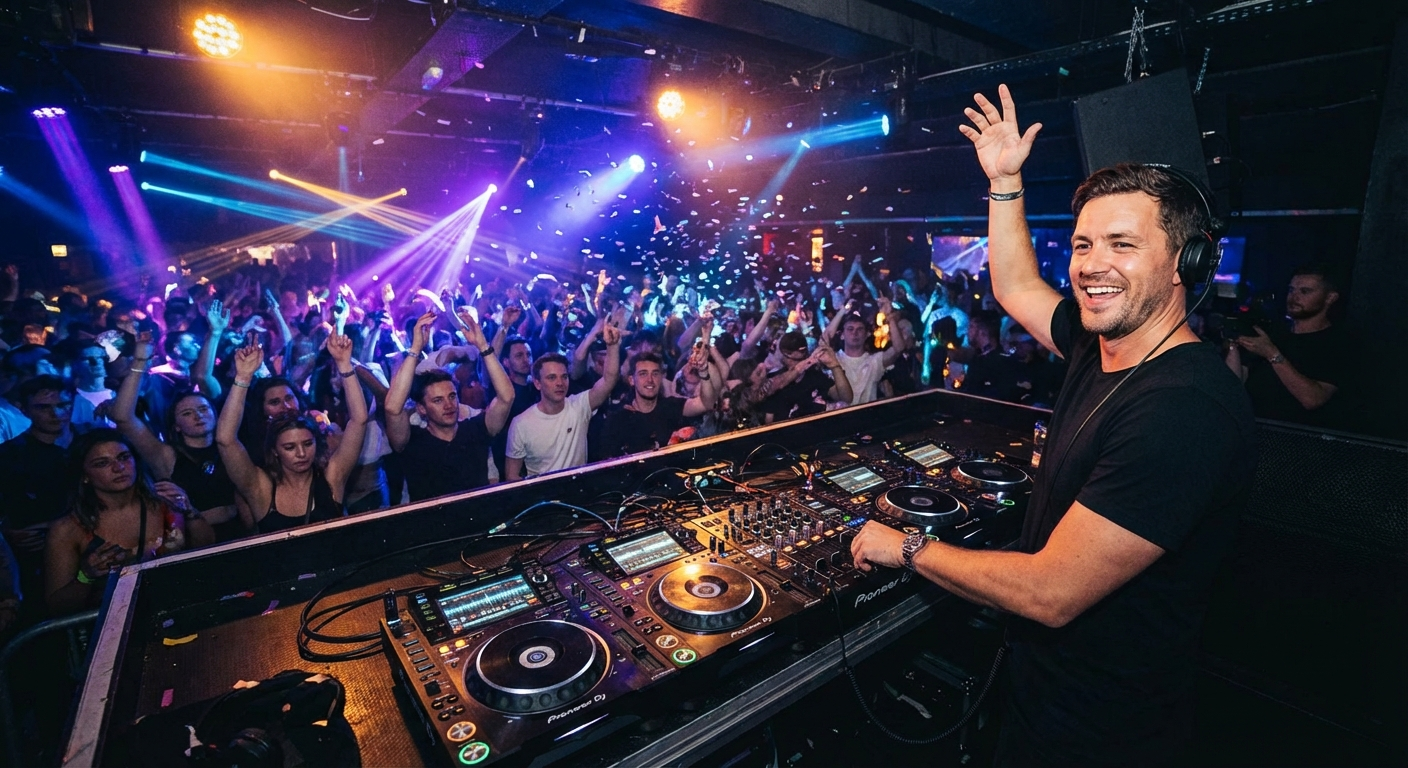
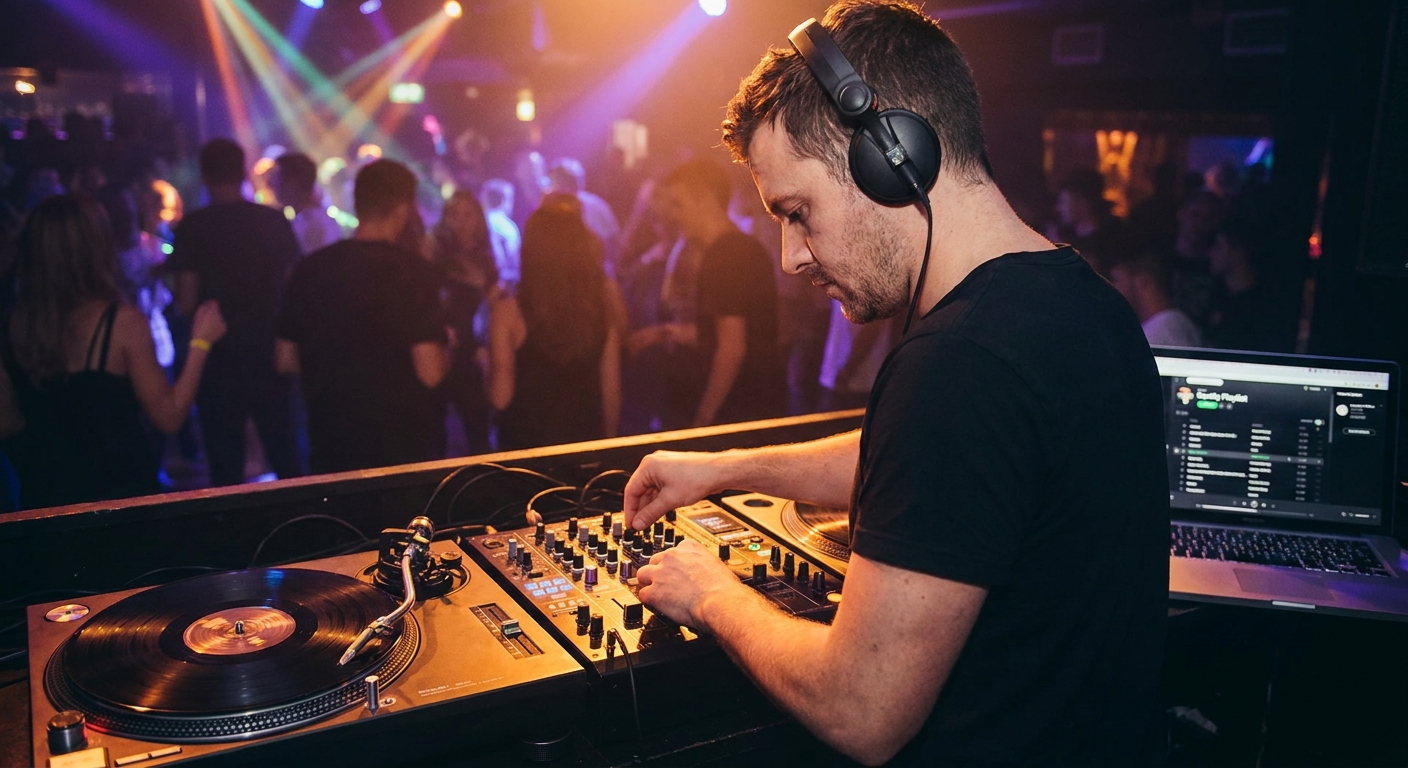
It hurts. But it happens every time. Why? Because a static playlist—no matter how good—can never match the live energy, adaptability, and crowd-reading skills of a professional DJ. The DJ vs Spotify playlist debate isn’t about which has better songs. It’s about which creates a real party experience.
In this guide, you’ll learn the 9 essential DJ skills that make live mixing crush any pre-made playlist. You’ll discover exactly what separates a DJ’s set from your carefully organized song list—and how you can use these insights to throw better parties, whether you hire a DJ or build a smarter playlist yourself.
🎯 Key Takeaways
- DJs read the room in real-time and adjust music instantly—something no playlist can do
- Beatmatching and seamless transitions keep energy flowing without awkward silences
- A DJ’s ability to “read the crowd” determines whether a party lives or dies
- You can simulate some DJ skills using smart playlist tools like PartyMusicPlaylist.com
- Understanding these skills helps you build better playlists—or know when to hire a pro
Why Your Perfect Spotify Playlist Falls Flat at a Party
You’ve been there. You spent an hour curating “Friday Night Bangers 2026.” The first ten songs are perfect. But by song eleven, people are on their phones. By song fifteen, half the room has migrated to the kitchen.
What went wrong? A playlist has no brain. It can’t see that people are getting tired of hip-hop. It can’t tell that the energy peaked too early. It can’t pivot when Aunt Carol requests “September” by Earth, Wind & Fire and suddenly the whole room comes alive.
A DJ, on the other hand, is a human music computer with emotional intelligence. They watch the dance floor. They notice when people start drifting. And they make split-second decisions to pull everyone back in.
“A playlist is a recording of a party that already happened. A DJ creates the party happening right now.” — Professional insight from the PartyMusicPlaylist team
Don’t get me wrong—Spotify playlists are incredible tools. For background music at a dinner party or a road trip? Perfect. But for a high-energy social event where you want people to dance, mingle, and stay? You need the skills that only a live DJ (or a very smart playlist strategy) can provide.
Skill #1: Reading the Room in Real-Time
This is the number one skill that separates DJs from playlists. A DJ watches the crowd like a hawk. They notice body language. They see who’s dancing and who’s checking their watch.
When the energy dips, a DJ doesn’t wait for the next song to finish. They transition immediately to something that re-engages the room. Maybe a familiar singalong. Maybe a slower song to let people catch their breath. Maybe a genre switch entirely.
What Does “Reading the Room” Look Like?
- Scanning the dance floor — Are people moving? Smiling? Or standing with crossed arms?
- Checking exits — If people are heading to the bar during your “banger,” you’ve lost them
- Listening to requests — Not just playing them, but understanding why people want that song
- Watching energy peaks — Knowing when to push harder and when to pull back
A playlist can’t do any of this. Your Spotify queue plays “Levels” by Avicii at 11:02 PM whether the room is packed or dead. A DJ plays it at the exact moment the crowd is ready to explode.
💡 Pro Tip: If you’re building a playlist for a party, don’t set it in stone. Leave room to skip, repeat, or shuffle based on what’s happening. Use PartyMusicPlaylist.com’s request feature to let guests suggest songs live—it’s the closest you’ll get to DJ-style crowd reading without hiring one.
Skill #2: Seamless Transitions and Beatmatching
Ever notice how a Spotify playlist has that awkward 0.5-second silence between songs? It kills momentum. People stop dancing. They check their phones. The vibe resets.
DJs eliminate this entirely. They use beatmatching—syncing the tempo of two songs so they blend together seamlessly. One song fades in as the other fades out, creating a continuous flow of music.
The Difference is Measurable
- Spotify crossfade — Maxes out at 12 seconds, but doesn’t match beats. Songs can clash.
- DJ transitions — Can last 8-32 bars (15-60 seconds) with perfectly aligned beats and keys
- Energy preservation — No silence = no momentum loss = people stay on the floor
Think about the last time you heard a DJ mix “One More Time” by Daft Punk into “Get Lucky”. The transition probably felt natural, almost invisible. That’s beatmatching at work.
“The best DJ sets feel like one long song. The worst playlists feel like a shuffle of unrelated tracks.” — Industry observation
⚠️ Heads Up: Don’t try to manually beatmatch in Spotify. It’s not designed for it. Instead, use the crossfade feature (set to 6-12 seconds) and sequence songs by BPM. Group songs with similar tempos together to minimize jarring transitions.
Skill #3: Building a Narrative Arc
A great DJ doesn’t just play songs. They tell a story. The set has a beginning, middle, and end with intentional energy peaks and valleys.
Think of a movie. You don’t start with the car chase. You build tension. You introduce characters. Then you hit the climax. DJs do the same with music.
The Classic DJ Set Arc
- Warm-up (first 30 minutes) — Familiar, mid-tempo tracks. People are arriving, getting drinks. Energy is 4/10.
- Building (next 45 minutes) — Increase BPM gradually. Introduce bigger hits. Energy rises to 7/10.
- Peak (next 60 minutes) — High-energy bangers. Crowd is fully engaged. Energy is 10/10.
- Cool-down (last 30 minutes) — Slower tempos. Familiar singalongs. Energy drops gracefully.
A Spotify playlist can’t do this dynamically. Your “Party Mix 2026” might accidentally play “Sandstorm” by Darude right after “Lean On Me” by Bill Withers. The whiplash will clear the floor.
- Start slow — Open with recognizable but chill tracks. “Sunday Morning” by Maroon 5 works.
- Build gradually — Increase BPM by 5-10 every few songs. Don’t jump from 90 to 130 BPM.
- Plan peaks — Place your biggest songs 60-90 minutes into the set. That’s when alcohol and energy peak.
- End strong — Finish with a crowd-favorite singalong. “Don’t Stop Believin’” is a classic closer.
Skill #4: Reading and Responding to Requests
Here’s the truth: Not all requests are good requests. Some will kill the vibe. A drunk uncle asking for “Free Bird” at 11:45 PM? That’s a vibe-killer.
Professional DJs have a secret weapon: they know how to handle requests without destroying the flow. They might play the request, but only at the right moment. Or they might politely decline and play something similar that fits better.
How DJs Handle Requests vs. How Playlists Handle Them
- DJ approach — “I’ll play it in a few minutes” (then plays it when the energy matches)
- Playlist approach — Someone grabs your phone, searches for “Despacito,” and plays it immediately. Chaos ensues.
- Smart approach — Use PartyMusicPlaylist.com’s guest request feature. Guests submit songs, you approve them at the right time.
The key is context. If the room is vibing to house music and someone requests a slow country ballad, a DJ knows to wait. A playlist doesn’t.
💡 Pro Tip: Create a “request queue” on your playlist. Let guests submit songs via a QR code or link. You control when they play. This gives you DJ-style request management without the turntables.
Skill #5: Genre and BPM Management
Your Spotify playlist probably has a mix of everything you like. Pop, hip-hop, rock, EDM, maybe some 80s throwbacks. That’s fine for personal listening. For a party? It’s a mess.
DJs manage genres and BPMs carefully. They know that jumping from 128 BPM house to 70 BPM R&B will confuse the dance floor. They also know that certain genres mix better than others.
The BPM Flow Rule
Professional DJs follow a simple rule: never change BPM by more than 5-10% in a single transition. If you’re at 120 BPM and want to play a 90 BPM song, you need to gradually slow down over 3-4 tracks.
Sample BPM Flow for a Party
- Warm-up: 100-110 BPM (Funk, Disco, Motown)
- Building: 110-120 BPM (Pop, Dance-pop)
- Peak: 120-130 BPM (House, EDM, Hip-hop)
- Cool-down: 90-100 BPM (R&B, Slow jams)
A playlist that jumps from “Uptown Funk” (115 BPM) to “Bohemian Rhapsody” (72 BPM) will kill the energy. A DJ would never do that without a gradual slowdown.
- Group songs by BPM range — Create mini-sets of 3-5 songs at similar tempos
- Use genre bridges — Transition from house to hip-hop using songs that blend both (e.g., “Get Lucky” works as a bridge)
- Know your crowd — A college party wants 120+ BPM. A wedding reception wants 100-120 BPM with variety
Skill #6: Creating “Moments” with Cues and Loops
This is where DJs truly shine. They can create moments that a playlist simply cannot. Think about a DJ who builds tension by looping a drum fill, then drops the beat at the perfect moment. The crowd loses their minds.
Or a DJ who cues up the iconic guitar riff from “Seven Nation Army” and lets it play for 16 bars before the vocals kick in. Everyone knows what’s coming. The anticipation is electric.
What Playlists Can’t Do
- Loop a section — Repeat the best 8 bars of a song to extend the peak
- Use hot cues — Jump to the chorus instantly instead of waiting through the verse
- Build tension — Gradually increase volume, filter frequencies, or add effects
- Drop at the right moment — Time the beat drop to match the crowd’s energy peak
These micro-moments are what make live DJ sets unforgettable. A playlist just plays the song from start to finish, missing every opportunity for dramatic effect.
“The difference between a DJ and a playlist is the difference between a live concert and a recording. Both can be great, but only one creates a shared, in-the-moment experience.”
⚠️ Heads Up: Don’t try to manually cue or loop in Spotify. It’s not possible. Instead, choose songs with built-in dramatic moments—long intros, iconic riffs, or explosive choruses. Songs like “Levels” by Avicii or “Strobe” by Deadmau5 have natural peaks you can work with.
Skill #7: Adapting to the Unexpected
Parties are unpredictable. The power goes out. Someone spills a drink on the speakers. The bride decides she wants to change the first dance song five minutes before.
A DJ adapts instantly. They have backup equipment. They know how to read the room when things go wrong. They keep the party going no matter what.
A playlist? It just stops playing when the Wi-Fi drops.
Real-World Scenarios
- Wi-Fi goes down — DJ has downloaded tracks locally. Spotify playlist is dead.
- Crowd changes — DJ switches from hip-hop to salsa when the late-night crowd arrives. Playlist can’t pivot.
- Technical issues — DJ has a backup laptop, cables, and even vinyl. Playlist has… a phone battery.
- Special requests — DJ can pull up any song from their library. Playlist only has what you pre-loaded.
If you’re using a playlist, always download it offline and have a backup device. That’s the closest you can get to DJ-level preparedness.
Skill #8: Energy Management Across Hours
A four-hour party requires energy management. You can’t play bangers for four hours straight. People will burn out. You also can’t play slow songs for two hours. People will leave.
DJs plan energy in waves. They know exactly when to push and when to pull back. They use “reset” moments—a slower song, a crowd participation moment, or a genre switch—to let people recharge before the next peak.
📝 Note: The average person can dance at high intensity for about 20-30 minutes before needing a break. Smart DJs schedule a “recovery song” (slower tempo, singalong, or instrumental) every 3-4 high-energy tracks. This keeps people on the floor longer overall.
The Energy Wave Pattern
- Peak 1 (45 min in) — First big moment. Play your second-biggest song.
- Recovery (55 min in) — Slower track. Let people catch their breath.
- Peak 2 (75 min in) — Bigger than Peak 1. This is the main event.
- Recovery (90 min in) — Another breather. Maybe a singalong or throwback.
- Peak 3 (120 min in) — The finale. Play your biggest song.
- Cool-down (last 30 min) — Gradual descent to end the night.
A playlist can follow this pattern if you sequence it intentionally. But it can’t adjust if the crowd is tired at 60 minutes instead of 75. That’s where a DJ’s real-time reading wins.
Skill #9: Curating for the Room, Not for Yourself
This is the hardest lesson for playlist creators. Your party isn’t about your music taste. It’s about what makes the room happy.
DJs understand this deeply. They might hate “Despacito” personally, but if it gets the crowd moving, they play it. They don’t let their ego get in the way of a good party.
Playlist creators often do the opposite. They add obscure indie tracks to “show their taste.” They skip obvious bangers because they’re “overplayed.” The result? A playlist that impresses nobody and dances nobody.
The DJ’s Mindset vs. The Playlist Creator’s Mindset
- DJ: “What song will make the most people dance right now?”
- Playlist creator: “What song fits my personal brand?”
- DJ: “Let me play the safe hit before the risky deep cut.”
- Playlist creator: “I’ll just shuffle my ‘Discover Weekly’ and hope for the best.”
If you want a party playlist that works like a DJ, prioritize crowd-pleasers. Save your experimental tracks for solo listening. The dance floor wants familiarity, energy, and singability.
Crowd-Pleasing Essentials (Always Works)
- “Uptown Funk” by Mark Ronson ft. Bruno Mars — Universal energy, everyone knows it
- “Shut Up and Dance” by Walk the Moon — Instant dance floor filler
- “Get Lucky” by Daft Punk ft. Pharrell Williams — Genre-blending magic
- “Happy” by Pharrell Williams — Works for all ages
- “September” by Earth, Wind & Fire — Timeless, cross-generational banger
Common Mistakes When Trying to “DJ” with a Playlist
You might be thinking: “I don’t need a DJ. I can just build a better playlist.” And you’re partially right. But most people make these mistakes:
⚠️ Heads Up: Mistake #1 — Too Many Songs. A 6-hour playlist with 200 songs is overwhelming. No one knows what’s coming next. Curate, don’t collect. Aim for 50-70 songs for a 4-hour party.
⚠️ Heads Up: Mistake #2 — No Flow. Random shuffle is not a DJ set. Organize by BPM and energy. Build an arc.
⚠️ Heads Up: Mistake #3 — Ignoring Requests. If guests want to hear a song and you don’t have it, they’ll leave. Use a request system like PartyMusicPlaylist.com to let guests contribute.
⚠️ Heads Up: Mistake #4 — Playing for Yourself. Remember: it’s not about your taste. It’s about the room. If you’re the only one dancing to your obscure remix, change the song.
How to Build a “DJ-Quality” Playlist Without Hiring a DJ
You can simulate many DJ skills with a smart approach. Here’s how:
- Use crossfade — Set Spotify crossfade to 6-12 seconds. It won’t beatmatch, but it reduces silence.
- Sequence by BPM — Group songs into blocks of similar tempos. Use a tool like SongBPM to check.
- Plan your arc — Create 4-5 “mini-sets” for warm-up, build, peak, recovery, and cool-down.
- Use guest requests — PartyMusicPlaylist.com lets guests submit songs. Approve them at the right moment.
- Prepare backups — Download everything offline. Have a second device ready.
- Stay flexible — Don’t be afraid to skip songs, repeat songs, or change the order mid-party.
💡 Pro Tip: For the best results, use PartyMusicPlaylist.com’s playlist creator. It lets you build a dynamic setlist, incorporate guest requests, and even export to DJ software if you want to level up. It’s the closest you’ll get to a DJ experience without the gear.
Frequently Asked Questions
PartyMusicPlaylist Team
Helping you create the perfect soundtrack for life's most memorable moments. Expert tips on event music planning, DJ coordination, and playlist curation.
Learn MoreReady to Plan Your Event Music?
Create the perfect playlist for your special event. Search songs, organize your timeline, and share with your DJ.
Get Started FreeRelated Articles
Continue reading