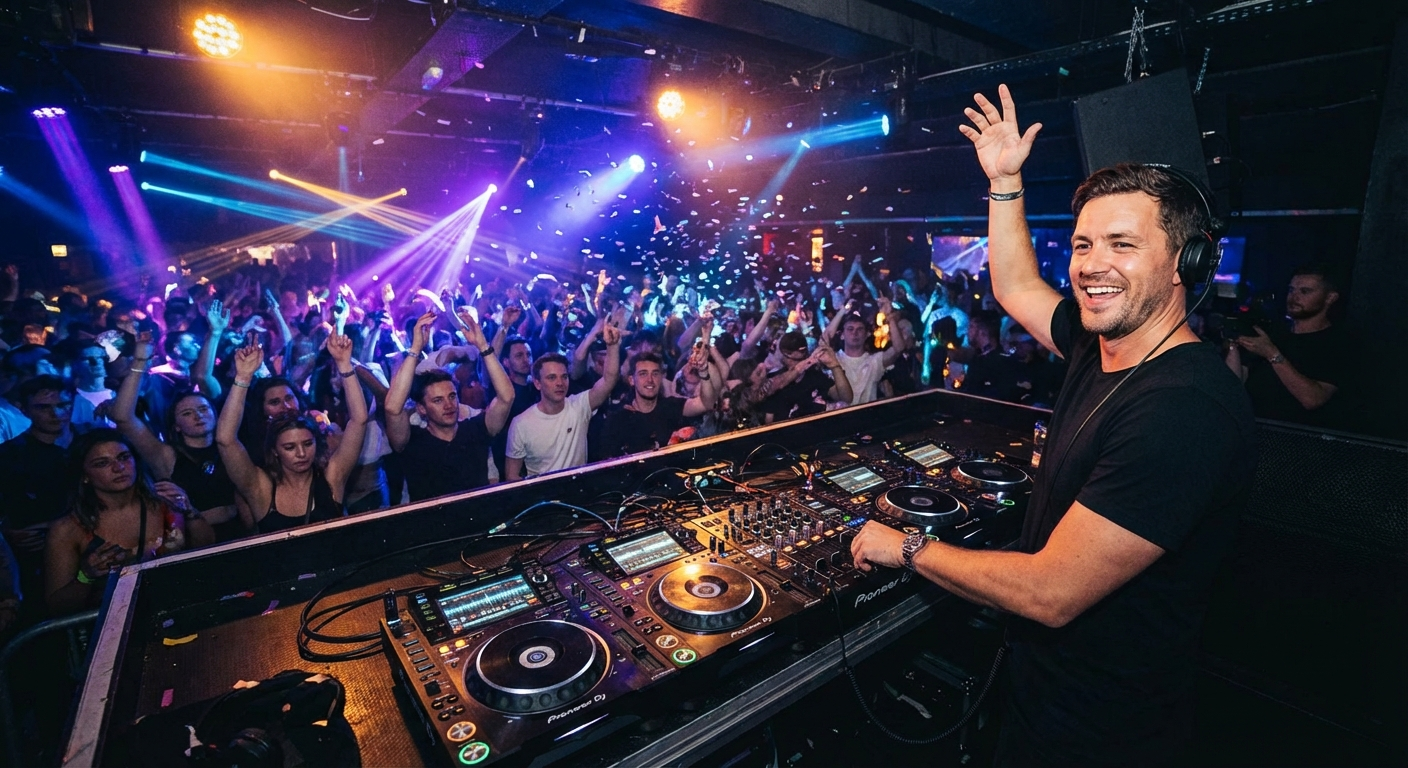
Why Event Music Volume Can Make or Break Your Party
You spent hours crafting the perfect playlist. You agonized over every song choice, balanced genres, and timed transitions like a pro. But when the music started playing at your event, something felt off.
Was it too loud? Too quiet? Did guests have to shout to order drinks? Or was the bass so heavy it rattled the china?
Event music volume is the silent killer of great parties. Get it wrong, and your carefully curated song list becomes background noise or a reason for guests to leave early. Get it right, and the energy flows naturally from cocktail hour to dance floor frenzy.
In this comprehensive guide, you'll learn exactly how to master event music volume for any occasion in 2026. We'll cover venue acoustics, crowd psychology, speaker placement, and even the perfect decibel levels for every moment of your event. Plus, we'll share real song suggestions that work at different volumes.
Whether you're planning a wedding reception, corporate gala, or backyard barbecue, this guide has everything you need to create the perfect sonic experience.
🎯 Key Takeaways
- Event music volume directly impacts guest engagement and conversation flow — get it right to control the vibe
- Different moments of your event need different volume levels, from 60 dB during cocktail hour to 90+ dB for peak dance floor energy
- Speaker placement and room acoustics matter more than your speaker wattage — position them for even coverage
- Use a decibel meter app (free) to check levels during setup and adjust in real-time
- Always plan a gradual volume ramp-up across the event timeline to build energy naturally
What Is Event Music Volume & Why It Matters
Event music volume isn't just about turning a knob up or down. It's a strategic tool that shapes the entire guest experience. Think of volume as a dimmer switch for social energy.
When volume is too low, music becomes background hum that nobody notices. Guests may feel awkward silence between conversations, and the energy flatlines. When volume is too high, conversations become impossible, people strain to hear, and you risk driving guests away from your carefully planned event.
But when volume is just right? Magic happens. Guests naturally sync their energy to the music. Conversations flow easily during dinner, then transition seamlessly to the dance floor when the volume rises. The music becomes a conversation starter and a mood enhancer without dominating the experience.
The Psychology of Volume Perception
Human ears don't perceive volume linearly. A 10 dB increase actually feels twice as loud to our ears. That means turning your volume from 70 dB to 80 dB creates a dramatically different atmosphere.
Here's how different volume levels affect guest behavior:
- 55-65 dB — Ideal for background music during dinner, cocktail hour, or networking events. Conversations happen naturally without raising voices.
- 65-75 dB — Perfect for mingling with a beat. Guests feel the rhythm but can still chat easily. Great for pre-dinner or casual parties.
- 75-85 dB — The sweet spot for building energy. Guests start tapping feet and moving to the music. Conversation becomes slightly louder but still comfortable.
- 85-95 dB — Dance floor territory. Guests need to lean in to talk, but the focus shifts to dancing. This is your peak party zone.
- 95+ dB — Earplug territory. Prolonged exposure can damage hearing. Use sparingly for peak moments only.
💡 Pro Tip: Use a free decibel meter app on your smartphone to check levels during setup. Place the phone at ear height where guests will be standing, not near the speakers. This gives you a guest-centric reading.
How Room Acoustics Control Event Music Volume
Your speakers are only half the equation. The room itself shapes how sound travels and how guests perceive volume. A room with hard floors, high ceilings, and glass walls reflects sound like a canyon. A room with carpet, curtains, and soft furniture absorbs sound like a sponge.
Before you even touch your volume knob, consider these factors:
Room Size & Shape
A large banquet hall needs more speaker power than a cozy living room. But size isn't everything. Long, narrow rooms create echo problems. Square rooms distribute sound more evenly. Odd-shaped rooms with alcoves or pillars create dead spots where music sounds quieter.
Surface Materials
Hard surfaces (wood, tile, concrete, glass) reflect sound waves, making music feel louder and potentially muddy. Soft surfaces (carpet, drapes, upholstered furniture, acoustic panels) absorb sound, reducing echo and making the music sound cleaner at lower volumes.
- Check your venue's flooring — carpet absorbs, tile reflects. Adjust volume accordingly.
- Look at ceiling height — high ceilings need more power to fill the space.
- Count windows and mirrors — glass surfaces reflect sound and can create harsh echoes.
- Note any curtains or drapes — heavy fabric absorbs sound and softens the room.
- Identify pillars or obstacles — these create sound shadows where music is quieter.
Speaker Placement Strategy
Where you put your speakers changes everything. Here's the golden rule: speakers should point toward the middle of the dance floor or main gathering area, not toward walls or corners.
Corners amplify bass frequencies. If your speakers are too close to corners, the bass will overwhelm the mids and highs, making vocals and instruments sound muffled. Move speakers at least 2-3 feet from walls for cleaner sound.
⚠️ Heads Up: Never place speakers directly on the floor if you can avoid it. Floor placement lets bass rumble through the ground and makes the sound muddy. Use speaker stands to elevate them to ear level for clearer, more controlled sound.
Event Music Volume by Event Type
Different events demand different volume strategies. A wedding reception has multiple phases, each requiring careful volume adjustment. A corporate conference needs music that supports networking without dominating. A house party needs energy from the first song.
Let's break down volume strategies for the most common event types.
Wedding Receptions
Weddings are the ultimate volume challenge because they have the most transitions. You need music that works during cocktail hour, dinner, toasts, first dance, parent dances, and open dance floor.
- Cocktail hour (60-65 dB) — Soft jazz, acoustic covers, or instrumental versions of love songs. Think "At Last" by Etta James (instrumental) or "Can't Help Falling in Love" by Kacey Musgraves.
- Dinner (55-60 dB) — Even quieter. Guests need to hear table conversations. Use "Lover" by Taylor Swift (acoustic version) or "Perfect" by Ed Sheeran at low volume.
- First dance (70 dB) — The spotlight moment. "All of Me" by John Legend or "Thinking Out Loud" by Ed Sheeran at moderate volume lets everyone hear the couple's moment.
- Open dance floor (75-90 dB) — Gradual ramp-up. Start with "Uptown Funk" by Bruno Mars at 75 dB, build to "Don't Stop Believin'" by Journey at 85 dB, peak with "Yeah!" by Usher at 90 dB.
Wedding Volume Sweet Spots
- "At Last" by Etta James — Perfect at 60 dB for cocktail hour, sets romantic tone without overpowering conversation
- "Can't Stop the Feeling!" by Justin Timberlake — Ideal at 75 dB to transition from dinner to dance floor
- "Shut Up and Dance" by Walk the Moon — Works great at 85 dB for peak energy without distortion
Corporate Events & Galas
Corporate events prioritize networking. Music should support conversation, not compete with it. Keep volume lower than you think — 55-65 dB is usually ideal.
Choose instrumental or light vocal tracks. Think "Smooth Jazz" playlists or "Lounge" genres. Avoid songs with heavy bass or complex vocals that distract from conversations.
- "Feeling Good" by Nina Simone — At 60 dB, it adds class without demanding attention
- "Fly Me to the Moon" by Frank Sinatra — Timeless and unobtrusive at moderate volume
- "Steppin' Out" by Joe Jackson — Upbeat but conversational at 65 dB
- "The Girl from Ipanema" by Stan Getz & Astrud Gilberto — Bossa nova perfection for background ambiance
💡 Pro Tip: For corporate events, consider using PartyMusicPlaylist.com to create separate playlists for different event phases. You can set volume reminders for each transition so you never forget to adjust.
House Parties & Backyard BBQs
These events are more casual, but volume still matters. A backyard BBQ with music too loud can annoy neighbors. A house party with music too quiet feels flat.
The sweet spot for house parties is 70-80 dB. Loud enough that guests feel the energy, quiet enough that people can chat near the food table.
- "Happy" by Pharrell Williams — Universal crowd-pleaser at 75 dB
- "I Gotta Feeling" by The Black Eyed Peas — Party anthem that works at 80 dB
- "Party in the U.S.A." by Miley Cyrus — Nostalgic energy at 75 dB
- "Shape of You" by Ed Sheeran — Modern hit that fills the room at 78 dB
- "Levitating" by Dua Lipa — Danceable without overwhelming at 80 dB
How to Gradually Ramp Up Event Music Volume
One of the biggest mistakes event hosts make is starting the dance floor music too loud. Guests who were comfortably chatting during dinner suddenly feel like they're in a club. They either retreat to another room or leave early.
The solution is gradual volume ramping. Think of it as a journey, not a switch.
- Start low (55-60 dB) during guests' arrival. This sets a welcoming atmosphere without demanding attention.
- Increase slightly (60-65 dB) during dinner or mingling. The music becomes more noticeable but still supports conversation.
- Mid-event boost (65-75 dB) as dinner winds down or before the main activity. This signals that energy is building.
- Peak ramp-up (75-85 dB) for the main event — dancing, speeches, or celebration moments.
- Optional peak (85-90 dB) for short bursts of maximum energy. Use for the last 30 minutes or special moments.
⚠️ Heads Up: Never increase volume more than 5-10 dB at a time. A sudden jump from 65 dB to 85 dB shocks guests and creates an uncomfortable atmosphere. Small, gradual changes feel natural and keep people engaged.
Song Selection by Volume Level
Not every song works at every volume. Some tracks are designed for low-volume background listening. Others demand to be played loud. Matching song energy to volume level is an art.
Low Volume (55-65 dB) — Background & Ambiance
These songs have soft dynamics, gentle instrumentation, and smooth vocals. They enhance the space without dominating.
- "Come Away with Me" by Norah Jones — Whisper-quiet vocals work perfectly at 60 dB
- "Banana Pancakes" by Jack Johnson — Laid-back acoustic vibe
- "Dreams" by Fleetwood Mac — Iconic melody that fills space softly
- "Here Comes the Sun" by The Beatles — Optimistic and gentle
- "Put Your Records On" by Corinne Bailey Rae — Warm and inviting at low volume
Medium Volume (65-75 dB) — Mingling & Energy Building
These songs have a clear beat and more energy but still allow conversation. They make guests feel the groove without forcing them to dance.
- "Treasure" by Bruno Mars — Funky and upbeat without being overwhelming
- "Sugar" by Maroon 5 — Catchy chorus that invites singing along
- "Dancing in the Moonlight" by Toploader — Carefree energy at 70 dB
- "Walking on Sunshine" by Katrina & The Waves — Infectious positivity
- "Shake It Off" by Taylor Swift — Empowering and danceable at medium volume
High Volume (75-90 dB) — Dance Floor & Peak Energy
These songs demand to be played loud. They have powerful bass, driving beats, and anthemic choruses that fill the room with energy.
- "Uptown Funk" by Bruno Mars — Absolute must-play at 85 dB
- "I Wanna Dance with Somebody" by Whitney Houston — Timeless dance floor filler
- "Get Lucky" by Daft Punk ft. Pharrell Williams — Disco revival perfection at 85 dB
- "Don't Stop Me Now" by Queen — High-energy anthem that works at 90 dB
- "One More Time" by Daft Punk — Peak dance floor energy at 88 dB
- "Blinding Lights" by The Weeknd — Modern classic that fills any room
🎵 Our Secret Weapon: When planning your event music volume, use PartyMusicPlaylist.com to create volume-tagged playlists. You can note the target decibel level for each song and set reminders for when to adjust. It's free and takes 2 minutes to get started.
Common Event Music Volume Mistakes (And How to Fix Them)
Even experienced hosts make volume mistakes. Here are the most common pitfalls and how to avoid them.
Mistake #1: Setting Volume Based on Empty Room Sound
An empty room sounds completely different than one filled with people. Bodies absorb sound. When you set volume during setup (when the room is empty), it will feel too quiet once guests arrive.
Fix: Set volume 3-5 dB higher than you think when the room is empty. As guests fill the space, the volume will settle into the sweet spot.
Mistake #2: Ignoring the "Sweet Spot" Zone
Many hosts set volume once and never touch it again. But the perfect volume for dinner is wrong for dancing. Static volume kills the energy curve.
Fix: Plan 3-5 volume changes across your event timeline. Use a timer or app reminders to prompt adjustments.
Mistake #3: Cranking Bass to Compensate for Quiet Mids
When music sounds thin, many hosts turn up the bass. This makes the sound muddy and overwhelming. Guests feel the vibration but can't hear the melody or vocals.
Fix: Adjust your EQ (equalizer) settings. Boost mids slightly for clarity, then adjust overall volume. Clean sound at moderate volume beats muddy sound at high volume.
Mistake #4: Forgetting About Neighbors or Other Spaces
If your event has multiple rooms, adjacent spaces need different volume. The dance floor might be 85 dB, but the lounge or patio should stay at 65 dB.
Fix: Use separate speakers or sound zones if possible. If you have one speaker, position it to direct sound toward the dance floor and away from quiet zones.
Tools & Techniques for Perfect Event Music Volume
You don't need expensive equipment to master volume. Here are practical tools every host can use.
Decibel Meter Apps (Free)
Your smartphone has a built-in microphone that can measure sound pressure levels. Download a free decibel meter app like Decibel X (iOS/Android) or Sound Meter (Android).
- Calibrate your app by testing in a quiet room (should read 30-40 dB)
- Test at guest ear height — hold the phone where people will be standing
- Check multiple spots — the dance floor, the bar, the seating area
- Re-check after guests arrive — bodies change the acoustics
Speaker Placement Checklist
- Position speakers at ear level (4-6 feet high) using stands
- Aim speakers toward the center of the gathering area
- Keep speakers 2-3 feet from walls to avoid bass overload
- Avoid corners — they amplify bass and create muddy sound
- Test sound from multiple positions in the room
Volume Adjustment Schedule
Create a timeline for volume changes. Here's a sample schedule for a 4-hour event:
- Hour 1 (Arrival/Cocktail): 60 dB — Soft background music
- Hour 2 (Dinner/Mingling): 65 dB — Gentle energy building
- Hour 3 (Main Event/Dancing): 75-85 dB — Gradual ramp-up
- Hour 4 (Peak/Wind Down): 80-90 dB peak, then 60 dB for last 15 minutes
TL;DR: Event music volume is about gradual changes, not static settings. Use a decibel meter app, plan 3-5 volume adjustments across your event, and always match song energy to volume level. Start low, build gradually, and never shock guests with sudden loudness.
Expert Tips for Mastering Event Music Volume in 2026
After years of hosting events and studying sound dynamics, here are our insider tips that will elevate your volume game.
Use the "Conversation Test"
Stand in the middle of your gathering area and try to have a conversation with someone at normal speaking volume. If you can hear each other without straining, the volume is right for that moment. If you have to lean in or shout, it's too loud.
Create "Volume Zones"
If your event space has multiple areas, create different volume levels for each. The dance floor should be 5-10 dB louder than the lounge area. Use separate speakers or position your main speakers to create natural zones.
Plan for the "Volume Dip"
When a song ends and a new one starts, there's a natural volume dip. This is normal. Don't rush to increase volume during transitions. Let the music breathe for 2-3 seconds before adjusting.
Respect the "Last Song" Rule
The last song of your event should be played at 60-65 dB. This signals the event is ending and helps guests transition from dancing to leaving. Never end on a high-energy song at 90 dB — it feels abrupt and leaves guests disoriented.
Frequently Asked Questions
PartyMusicPlaylist Team
Helping you create the perfect soundtrack for life's most memorable moments. Expert tips on event music planning, DJ coordination, and playlist curation.
Learn MoreReady to Plan Your Event Music?
Create the perfect playlist for your special event. Search songs, organize your timeline, and share with your DJ.
Get Started FreeRelated Articles
Continue reading